




Think you make your own choices? The Loop author Jacob Ward shows how AI preys on the autopilot brain, and what a little friction can do to fight back.
What We Discuss with Jacob Ward:
- How nearly all our daily decisions run on autopilot, made by the ancient shortcut part of the brain rather than the rational sliver that makes us human, and why that makes us so easy to steer.
- Why AI rarely seizes your choices outright and instead narrows the menu until you pick what it wanted, turning feeds, risk scores, and recommendations into rails that only feel like freedom.
- How unauditable algorithms quietly absorb old biases like redlining, and why the harm falls hardest on the powerless: denied loans, food stamps, and Medicare claims no human can explain.
- Why recent verdicts against Meta and YouTube establish “behavioral harm” as a new legal category, and how lawsuits, like the ones that reined in Big Tobacco, may be the only real check here.
- What a little friction can do to hand decision-making back to you, from leaving your phone at home to bricking the apps that hook you, and why treating your brain as a separate voice helps.
- And much more…
Like this show? Please leave us a review here — even one sentence helps! Consider including your Twitter handle so we can thank you personally!
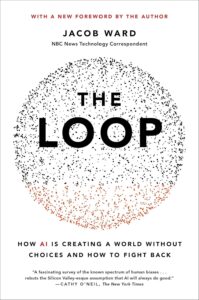
When it comes to making life choices, you like to think you’re the one steering. You weighed the options, you made the call, you chose. But what if most of your decisions were settled long before your conscious mind ever showed up to the meeting? Behavioral science keeps landing on an uncomfortable truth: the vast majority of what we do runs on autopilot, handled by an ancient shortcut machine in the brain while the thoughtful, rational part of us takes the credit. Now imagine a technology built specifically to study that autopilot, flatter it, and quietly arrange the furniture of your life so you keep bumping into exactly what someone else wanted you to choose.
Journalist and technology correspondent Jacob Ward, author of The Loop: How AI Is Creating a World Without Choices and How to Fight Back, joins us to explain how convenience becomes control. Jacob breaks down why AI rarely needs to seize your choices outright when it can simply narrow the menu until you order what it wanted all along, how unauditable algorithms quietly absorb old biases like redlining and inflict the most damage on the powerless, and why recent verdicts against Meta and YouTube may have cracked open the door to reining these companies in the way lawsuits once reined in Big Tobacco. He also offers a way out that doesn’t depend on willpower: reintroduce a little friction, treat your brain like a third person at the table, and make at least one choice this week the algorithm didn’t pre-chew for you. Whether you’re a parent worried about your kids’ screens, a skeptic of the AI hype, a policy wonk, or just someone who’d like to feel like they’re driving again, this conversation will change how you look at the device in your pocket. Listen, learn, and enjoy!
Please Scroll Down for Featured Resources and Transcript!
Please note that some links on this page (books, movies, music, etc.) lead to affiliate programs for which The Jordan Harbinger Show receives compensation. It’s just one of the ways we keep the lights on around here. We appreciate your support!
- Sign up for Six-Minute Networking — our free networking and relationship development mini-course — at jordanharbinger.com/course!
- Subscribe to our once-a-week Wee Bit Wiser newsletter today and start filling your Wednesdays with wisdom!
- Do you even Reddit, bro? Join us at r/JordanHarbinger!
This Episode Is Sponsored By:
- Ground News: 40% off unlimited access Vantage subscription: groundnews.com/jordan
- BetterHelp: 10% off first month: betterhelp.com/jordan
- IQBAR: 20% off: Text “Jordan” to 64,000
- AT&T: Get an iPhone 17 Pro for $0: att.com/iphone or visit an AT&T store for details
Thanks, Jacob Ward!
Click here to let Jordan know about your number one takeaway from this episode!
And if you want us to answer your questions on one of our upcoming weekly Feedback Friday episodes, drop us a line at friday@jordanharbinger.com.
Resources from This Episode:
- The Loop: How AI Is Creating a World Without Choices and How to Fight Back by Jacob Ward | Amazon
- The Rip Current with Jacob Ward Podcast | Apple
- The Rip Current with Jacob Ward Newsletter | Substack
- Hacking Your Mind | PBS
- Website | Jacob Ward
- Exoplanets | NASA Science
- Habitual Use of GPS Negatively Impacts Spatial Memory During Self-Guided Navigation | Scientific Reports
- Blind Man Navigates an Obstacle Course Perfectly with No Visual Awareness | National Geographic
- Emotional Contagion | The Decision Lab
- David Eagleman | How Our Brains Construct Reality | The Jordan Harbinger Show
- Who’s in Charge of Our Minds? The Interpreter | Farnam Street
- Psychological Investigations of Unconscious Perception (e.g., Poetzl/Pötzl Phenomenon) | Journal of Consciousness Studies
- Labors Lost? Memories of Childbirth | Association for Psychological Science
- Human Factors | Avalanche.org
- Turning a Light on Our Implicit Biases | Harvard Gazette
- David Eagleman | Your Prehistoric Brain on Modern Problems | The Jordan Harbinger Show
- Daniel Kahneman | When Noise Destroys Our Best of Choices | The Jordan Harbinger Show
- Meta and YouTube Found Negligent in Landmark Social Media Trial | NPR
- Using Artificial Intelligence Algorithms to Predict Self-Reported Problem Gambling with Account-Based Player Data in an Online Casino Setting | Journal of Gambling Studies
- 1 in 5 High Schoolers Has Had a Romantic AI Relationship or Knows Someone Who Has | NPR
- Screen Time | Skeptical Sunday | The Jordan Harbinger Show
- Minimal Group Paradigm | Wikipedia
- The Hadza | Survival International
- Allen School Researchers Earn NeurIPS Best Paper Award for the “Artificial Hivemind” Effect Across LLM Open-Ended Generation | University of Washington
- Kashmir Hill | Is AI Manipulating Your Mental Health? | The Jordan Harbinger Show
- ChatGPT Is About to Show Ads, and the Future of OpenAI Hangs in the Balance | Calcalist
- Deadline Looms as Anthropic Rejects Pentagon Demands It Remove AI Safeguards | NPR
- Take Back Control of Your Screen Time | Brick
- AI Exhibits Racial Bias in Mortgage Underwriting Decisions | Lehigh University
- AI Will Soon Have a Say in Approving or Denying Medicare Treatments | KFF Health News
- AI Algorithms Intended to Root Out Welfare Fraud Often End Up Punishing the Poor Instead by Michele Gilman | The Conversation
- Lawsuit Claims Discrimination by Workday’s Hiring Tech Prevented People over 40 from Getting Hired | CNN Business
- ‘Dune’ Tried to Warn Us against AI | Popular Science
- Dune by Frank Herbert | Amazon
- Benn Jordan | The Surveillance State Stalking You Without Consent | The Jordan Harbinger Show
- Why Regulators Can’t Stop an AI Company That Scraped Billions of Photos | TIME
- ‘The Computer Got It Wrong’: How Facial Recognition Led to a False Arrest in Michigan | NPR
- Brazil Takes a Page from China, Taps Facial Recognition to Solve Crime | The Christian Science Monitor
- The Global Expansion of AI Surveillance | Carnegie Endowment for International Peace
1342: Jacob Ward | How AI Turns Convenience Into Control
This transcript is yet untouched by human hands. Please proceed with caution as we sort through what the robots have given us. We appreciate your patience!
Jordan Harbinger: [00:00:00] Coming up next on The Jordan Harbinger Show.
Jacob Ward: If you were to summarize all of behavioral science over the last hundred years, it's basically that we make a tiny fraction of our decisions for ourselves. The vast majority of the time, we're making decisions on autopilot. These companies are like, "Oh, we can prey on people's instincts."
Are we going to use it to empower the best parts of being human, that tiny sliver of us, the cool part of being human, or are we going to try and make money off of the instinctive stuff, the tribalism and all of the instinctive stuff that we've spent literally 200,000 years trying to get away from?
Jordan Harbinger: Welcome to the show. I'm Jordan Harbinger. On The Jordan Harbinger Show, we decode the stories, secrets, and skills of the world's most fascinating people and turn their wisdom into practical advice that you can use to impact your own life and those around you. Our mission is to help you become a better informed, more critical thinker through long-form conversations with a variety of amazing folks, spies to CEOs, athletes, authors, thinkers, and performers, even the [00:01:00] occasional hostage negotiator, legendary actor, or Emmy-nominated comedian.
And hey, if you're new to the show or you want to tell your friends about the show, I suggest our episode starter packs. These are collections of some of our favorite episodes on topics like persuasion and negotiation, psychology and geopolitics, disinformation, China, North Korea, crime and cults, and more.
It'll help new listeners get a taste of everything we do here on the show. Just visit jordanharbinger.com/start or search for us in your Spotify app to get started. Today, I'm talking with Jacob Ward, a journalist, technology correspondent, CNN contributor, and author of The Loop: How AI Is Creating a World Without Choices and How to Fight Back.
Now, when people hear AI threat, they're usually picturing, I don't know, a chrome murder skeleton kicking down the door and turning humanity into office furniture. But Jacob's argument is a lot creepier because it's less cinematic and frankly, much more pathetic. AI doesn't need to become conscious and enslave us.
It just needs to understand the dumbest, fastest, most tribal parts of us and then quietly [00:02:00] arrange the furniture of our lives so we keep bumping into exactly what it wants us to choose. And this episode is not really the robots are coming, it's the robots already know that you're tired, hungry, lonely, angry, suggestible, and weirdly vulnerable to a product with free shipping.
Jacob explains how our brains don't really show us reality. They show us a heavily edited trailer for reality, then convince us we watched the whole movie. We get into perception, bias, system one and system two thinking, why smart people make dumb decisions with better vocabulary, and how recommendation engines, risk scores, social feeds, hiring tools, and AI co-pilots, they can make us feel like we're driving when we're really on a Disneyland Autopia rail for adults with credit cards.
We'll discuss why I did my own research is often availability bias wearing a fake lab coat, why I'm not biased might be the most biased thing you could possibly say, and how AI doesn't have to take away your choices if it can simply narrow the menu until you order what it wanted you to in the first place.
So here we go with Jacob Ward. [00:03:00] Jacob, you start with this wild idea of a generation ship, a spacecraft that takes so long to reach another planet that nobody who launches it is going to arrive there. It's going to be their kids, grandkids, whatever. Why start a book about AI and human choice with a rocket ship?
Jacob Ward: So at the time that I was writing it, you just heard from so many billionaires their ambitions about going to other planets, and that somehow we would just switch apartments was the rhetoric. You had Elon Musk and Jeff Bezos and others talking about needing to get out into the world. And when I had done all the research into this book, the big theme of the book is how little we understand of ourselves and how complicated human civilization is And yet how simple the companies seeking to reorganize it through AI seem to feel it is.
And I just wanted a story that would take that billionaire craziness, because I do consider it craziness, a [00:04:00] microcosm of just how complicated society really is, and just how important it is that we stay here and figure all this stuff out rather than fantasizing about leaving. So that's why I put that all together, because I had done the math on it, and the closest habitable planet, this was at a time when these exoplanets were being discovered by the Kepler NASA programs.
Exoplanets are these theoretically livable planets, because they have the right proportion of size to distance to their sun that would make them-
Jordan Harbinger: We've covered these on the show, and the problem is they're not that close, and there's not that many. No. And oh, the atmosphere might actually be totally nitrogen or whatever.
Jacob Ward: It's like- That's exactly right. 200,000 years to get to one of these, to the nearest one, the one that's, like, right down the block. And so when I looked at that, and then I looked at the whole of human history, we have only really been our modern evolutionary form for about 200,000 years. And so I was just trying to make the point to everybody, two points.
One, we're not going to other planets. Like, that's not happening, and so everybody needs to get focused on making the most of this one. And the innocent, naive kind [00:05:00] of science fiction idea that we would somehow build a ship that people would grow up and have kids and die, and new kids come along, and f- all these generations go by.
One thing that all of my reporting experience has taught me is we are so bad at thinking into the future. One of the reasons that a guy like Darwin was such an amazing breakthrough thinker is he was able to think many, many, many generations into the future, think about effects that take huge amounts of time to take place.
And one of the things that I've worried about so much when it comes to AI is the long-term generational effects. And so all of that just came together for me in this-
Jordan Harbinger: Yeah ...
Jacob Ward: science fiction idea of a generation ship.
Jordan Harbinger: Even in sci-fi movies, they freeze people, right? Because they're going to be there for so long.
But yeah, 200,000 years, the idea that we could make something mechanical that would last that long is laughable with current technology.
Jacob Ward: Like, what would happen with clothing? 200,000 years in a self-contained vessel. We're not growing new cotton. We're not [00:06:00] pumping oil out of the ground to make nylon. What are we even wearing at the end of that thing?
So yeah, I'm, I love how people think about that stuff in the best possible terms, and then when you really do the math, you're like, "Oh, this is a bad idea."
Jordan Harbinger: There is sort of a tech bro obsession with leaving Earth, even if just to go to Mars, and I don't know if Elon means it this way, but there's this underlying concern or philosophy that's, man, the Earth is so screwed.
We got climate change, we got all this stuff, we got all these things. We're never going to fix those problems. Let's just erase and start over by going to Mars, and it's, whoa, whoa, wait. That's not realistic, so maybe we do actually want to focus on figuring out how to make clean environments to live in and not have a .1% that can survive and everybody else is in Mad Max.
Jacob Ward: There's the creepy, like, these guys will go and run the other planets concept, which I'm not crazy about. And there's also-- it's just such a, like, college freshman, naive id-- lack of experience that would lead someone to think that's a good plan. I did a, a detour in my career as an architecture and [00:07:00] design writer.
I would go and talk about the problems that various buildings were trying to solve, basically was my way of doing that work. And at that time, there was this sort of transition going on. This was in the late '90s. Basically, architects love to think about an environment in which they get to just make a totally new building on a totally unbuilt site, and that's called greenfield architecture.
That's the dream. Whereas almost every project is actually what's called brownfield architecture, where you have to adapt an old building, or you've got to adapt to a site in a way that you weren't ready for. And today, architects understand that greenfield development is impossible. Nobody's doing that. It wouldn't even be responsible to do that.
And it feels to me like the AI world is so gripped by this kind of like young person's lack of experience with the world, such that they're imagining this kind of greenfield opportunity, when in fact it's all brownfield, and we've got to be thinking about it that way.
Jordan Harbinger: Yeah. That's interesting. Tell us what the loop [00:08:00] is essentially in one sentence.
You can skip, maybe make it less academic and more dinner party.
Jacob Ward: No problem. So my dinner party thing is that I worry that AI is going to do to our ability to make good decisions for ourselves what Google Maps did to our sense of direction. It's going to rebuild Our expectations about making choices for ourselves such that we just rely on the thing to make all kinds of choices for us.
And pretty soon, because we know this to be true, your ability to make good choices is a muscle. It's not some computer you can turn off and put away for 10 years and take out of the closet and turn back on. It's a muscle. So if you don't use it, it's going to get weaker and eventually atrophy away. The same way that, like, I don't know how you are, Jordan, but, like, for me, when I'm trying to get around even my own town, I've got to use Google Maps for everything.
It's ridiculous. I can't find my way five miles in my own town that way, and that's because your brain is built to give away decision-making wherever. It's, in a way, our evolutionary gift, but in this moment it has [00:09:00] become this curse.
Jordan Harbinger: I can get around my local area because I walk a lot, and I don't need maps for that.
But you're right, if I go, "Oh, how do I get to that one place that I go to three times a week? The road is closed in this area," I can't problem solve for that at all. Whereas I could tell you my best friend's phone number when I was a kid, and his mom still lives there, no problem. I could walk around the neighborhood mentally where I grew up, no problem, all the way extend that thing way out.
I could tell you where the bakery was, how to drive to school, the speed limit on each road probably. But here it's, "Oh, I have to go one block that way in a way that I don't always go every single da-" I know the name of the street I live on, the one on each end, and I couldn't tell you a single non-main road in my entire new neighborhood.
And by new I mean, like, five years.
Jacob Ward: Totally. I mean, if, if I get arrested and I've got to call somebody and my wife doesn't pick up, I literally don't have another phone call.
Jordan Harbinger: I'm just-- Yeah, just call 911 on yourself.
Jacob Ward: Yeah. I have no idea what I would do. And one of the things I would just say, like, for me a really, like, galvanizing experience in [00:10:00] understanding just how automatic our choices really are as people and why it is that we're so quick to outsource our decision-making.
So I did this documentary series for PBS called Hacking Your Mind. The producers there, very smart people, came up with this way of explaining sort of the autopilot that we are on the vast majority of the time. If you were to summarize all of behavioral science over the last 100 years, it's basically that we make a tiny fraction of our decisions for ourselves.
The vast majority of the time we're making decisions on autopilot. The way we know this, one way of many that we know this is, so for instance, I had today to drive a kid from our house to an unusual place, and I accidentally drove her to school, which we've all done.
Jordan Harbinger: Yeah. So that's why we had to push the interview for f- okay.
Jacob Ward: Yeah, yeah, no. Oh my God. There were so many reasons we had to push this interview, but, but that was one of them. So you sort of, like, come to in the parking lot of your kid's school, and you're like, "Wait a minute, she's supposed to be at the doctor. What am I doing?" If you think about it, you have been [00:11:00] unconsciously guiding this death box- I
Jordan Harbinger: know, it's scary.
Yeah ...
Jacob Ward: for all that time, and you have no memory of how you got there. Like, your brain just is a shortcut machine and takes that over. But you go to England and try and drive there, there's no way to tune out because you're on the wrong side of the room. Making a right-hand turn is a nightmare. Your brain is crackling with electricity the whole time, because you've got to process everything raw.
Jordan Harbinger: With your manual transmission on cobblestones, and the people- Yeah, yeah ... are yelling at you because they're crossing from the way you're not
Jacob Ward: looking. Yeah. Yeah. The signs don't say what you expect them to say, and everything's wrong. And that raw experience of driving in England is that tiny part of your brain that is very rarely getting involved.
What all of the evolutionary science tells you is that part of the brain is the new human part that distinguishes us from all the other species on the planet. It's your creative center, it's your rationality, it's your ability to think about weird abstract concepts and what happens after we die, all of the stuff that makes [00:12:00] us human in the way that we're proud of.
That's the tiny part of your brain that does that. The rest of your brain is driving without consulting you. Is a shortcut machine. That's the whole thing.
Jordan Harbinger: This is why it's so exhausting to speak a foreign language all day, right? When I was an exchange student, my host family made fun of me constantly because I would come home from school and I would sleep every day.
And it's not like I was getting an inadequate number of hours of sleep at night, I was just exhausted. And then the brother in that family, he came and stayed with my family, and he slept every day after school, and my parents made fun of him, too, and they would compare notes. And I was like, "Guys, you don't understand.
I woke up this morning and I had to speak German from 8:00 AM until 4:00 PM. That's a whole week of my brain working in America."
Jacob Ward: You are overclocked, right? This is the experience of life as a toddler. They are learning to speak German all day in that same way, which is why those kids sleep their brains out and why everything is amazing and shocking.
That's why your memory of your childhood [00:13:00] is so huge and vivid, is because everything you were doing was the first time you were doing it. Whereas today, years can go by and I'm like, "Man, I don't know. What have I been doing?" It all can slide by in that way, because your brain is, it's a shortcut machine that just doesn't want to have to process stuff raw.
It doesn't want to d- drive on the wrong side of the road. It just wants to do what it knows how to do.
Jordan Harbinger: I stopped talking on the phone while driving because one time in college or law school, I forget which, this is obviously, like, 25-plus years ago, I drove all the way home and I went I don't even remember driving home.
It was a long phone call, right? It was like 45 minutes, and I just thought, "Wow, I don't remember getting in my car. Did I bring my back- Okay, I did. All right, good. Did I take the highway? I don't even remem-" Like, I remembered none of it. It was complete blur.
Jacob Ward: Here's a crazy story about that part of the brain and why that part of the brain is such a sort of both amazing thing, because it keeps us going.
You don't have to be exhausted every day. You get to live your life in this really functional and efficient way because of that part of your brain. [00:14:00] So there's a researcher named Beatrice de Gelder who did this really amazing work studying people who had been struck blind by a stroke, and basically what had happened is that a stroke had cut the connection between the brain and the eye.
The eye is working, still functions. The brain's working fine. It's just the circuitry between them has been disconnected. So she was looking for people with that condition because she had read these reports from decades earlier about how people with that kind of condition were just doing weird things.
And so she brought in a couple of people doing that, and she spent a whole day t- experimenting with them on all kinds of things, and it just wasn't working. And at lunch, just for the hell of it, they set up this little obstacle course in front of this one guy, and he's blind. He shows up with his wife.
He's got a cane, the whole thing She sets up this obstacle course in the hallway and doesn't tell him, and tells him instead, "Can you just walk down this hallway? Please hand me your cane and walk down this hallway." And he says, "Okay." He walks down the hallway, and there's incredible footage of this. He [00:15:00] walks down the hallway, and at the first wastebasket that is, that's in front of him, he stops, and he turns sideways and he goes around it, and then he edges his way past this thing and that thing, and he picks his way through this obstacle course.
And he gets to the end of the hallway and everybody l- loses their mind, running over to him, and they're like, "How did you do that?" You're
Jordan Harbinger: not blind anymore,
Jacob Ward: right. Yeah, you're not blind. How did you do that? And he says, "Do what?" He had no conscious memory of doing any of that, and yet he, for all intents and purposes, is blind.
It's just his eyes work and his brain works, they're just not connected to each other in the way that we understand vision to involve. And yet, with that cutoff, he can do all of this. And not only is his brain somehow receiving signals about what's in front of him from his eyes, it's telling his motor functions, "Turn sideways and step over this."
And none of that is consulting his conscious mind.
Jordan Harbinger: So he still has the navigational part, but he doesn't have the whole you're [00:16:00] seeing this, here's the image part.
Jacob Ward: And as she says, she's like, "We don't know what that is. We have no idea what, how he's processing that." And what's really crazy is then they took him and a bunch of other people like him, and they rigged up kind of like a movie theater where they sit them down in front of this big screen, and they flash videos of people making emotional faces in front of them, these huge faces that are frowning or smiling or looking sad.
And they then ask these people, "What do you see?" And these people all are like, "Are you kidding me? I keep telling you, I'm blind. I don't see anything. I'm just sitting here, you know, listening to the projector." But when they rig these people up with little sensors on their faces that can detect the micro-musculature of the face, they discover that when you show someone smiling, the face begins to make the little movement of trying to smile back.
You make them frown, they start frowning back. So what her whole thing is, what Beatrice de Gelder has basically come up with is this idea that we run on autopilot all the time. We have some kind of way of picking up visual [00:17:00] stimulus that doesn't go through the optic nerve in the normal way, and we are like emotion transmission machines.
If you and I are in a room together and a snake comes into the room and I make a face that's like, "Oh my God," I don't have to say to you like, "Hey, Jordan, snake, and I think it's a bad one."
Jordan Harbinger: Your eyes just have to go wide and mine will also go wide.
Jacob Ward: Totally.
Jordan Harbinger: Yeah.
Jacob Ward: Everyone in the room goes wide. This is that thing of, you know that joke Cedric the Entertainer makes about, he's like when he sees Black people run, he can't help but run?
Jordan Harbinger: I have not heard that. That's hilarious.
Jacob Ward: It's really funny, and he, you know, it's hilarious. But he's actually plugging into, like, all these different researchers who found that's totally true in terms of catching panic It's also true that you're much more influenced by that stuff when the person looks like you.
It's just incredible. He's intuited this incredible thing, or maybe, who knows, he's a secret PhD. But the lesson of the last, like, 15 years of research for me has just been learning that we're not making our own choices. We like to think we are, but we are not the vast majority of the time. And that's why I got into thinking so much about AI, is because [00:18:00] it's the perfect technology for playing on these automatic systems that are driving the ship.
Jordan Harbinger: This is a question for David Eagleman. I know you wrote about him in the book. I feel like he would be able to explain this really well because-
Jacob Ward: Yep ...
Jordan Harbinger: it's the kind of thing he would test for. What can blind people see when their eyes don't work in certain ways, or where their eyes are fine but the stroke did something to their brain? Because I, I'm guessing in this test where the guy navigated the hallway, his eyes were totally fine. It's just that somewhere between maybe the nerve, the optic nerve was fine, but the part of his brain that was supposed to see, that part got damaged. But all of the other places where the optic nerve or whatever goes to, those are still around.
So he just had a processing error, not a perception error.
Jacob Ward: What Eagleman and others have proven, all the way back into the 19th century, is that we are not experiencing reality in a live feed. What we're doing is assembling it as a story [00:19:00] as it's happening, but a little bit delayed. Which is why when people describe schizophrenia, when they've looked into it and tried to explain it scientifically, it's much more about things happening out of order, in the wrong order, than it is totally invented hallucinations.
And so there's just something about we're not experiencing reality in the way we are. And the thing that just drives me so crazy is everyone is so certain, and I was until I started doing this research, that they're on top of it. They're like, "No, I've got this. I'm driving the car. I'm a great driver." And none of us, I think, are built to recognize just how little of reality we're actually experiencing, to how little of our decision-making is actually ours.
I would die happy if I could just teach everybody, like- You are so much more vulnerable to manipulation and error than you think you are, and you have to, in the same way that I, as a recovering alcoholic, I'm like, "I can't drink anymore." Nobody would ever say to me like, "You should just pull yourself together.
You can drink. Like, you need to be-- have better [00:20:00] self-control." In the same way you would never say to somebody like, "You have a peanut allergy? Like, come on, tough it out."
Jordan Harbinger: Just eat a few peanuts, right?
Jacob Ward: Yeah, just eat a couple peanuts. You love peanuts. We need to start treating this stuff like allergies or like addiction so that we can start to compensate for it, and certainly before we start allowing these fly-by-night companies to use AI systems to convince us that we don't have to make any choices at all.
Jordan Harbinger: Multi-billion dollar/trillion dollar fly-by-night companies. It's true. The idea here is, is consciousness is not the CEO. It's the press secretary explaining decisions after they've already happened.
Jacob Ward: Yeah. It's a good analogy. That's right.
Jordan Harbinger: I should have told you AI came up with that. I guess if I was a quicker thinker.
We'll be right back after this, and yes, it's an ad, refreshingly primitive, really. No dopamine casino, no behavioral score, no AI pretending it just thought you might like this. Just capitalism in a little coat. See you on the flip.
This episode is sponsored in part by Ground [00:21:00] News. One of the big themes in today's conversation with Jacob Ward is that we like to think we're making independent decisions, but a lot of the time we're operating inside systems that quietly shape what we see and what we think about and even what we believe, and nowhere is that more obvious than the news.
That's why I like Ground News. I've liked these guys for a long time. When the product came out, I was stoked about it. It lets you compare how the same story is being covered across the political spectrum, so you can see the framing in real time. For example, I was looking at coverage of reports that Trump may lift the naval blockade around the Iranian ports as part of a potential deal with Iran, and Ground News pulled together dozens of sources covering the story News Gazette framed it as Trump preventing Iran from getting a nuclear weapon.
Meanwhile, Ynetnews focused on skepticism from Iranian officials and whether the concessions were even real. Same story, same basic facts, very different emotional takeaway and coverage. That's exactly why Ground News is useful. It helps you slow down and see how the story is being packaged before you react to it and get all angry and go post [00:22:00] on Reddit.
I also use their blind spot feed, which shows stories getting major coverage from one side of the political spectrum and almost none from the other side. Where there's smoke, there's fire, or where there's no smoke at all. Sometimes there's even more fire. I don't know. If you listen to this show, you know I'm always interested in what's missing from the conversation, not just what is being amplified.
Jen Harbinger: Go to groundnews.com/jordan to get 40% off their unlimited access vantage subscription. That's groundnews.com/jordan. Again, groundnews.com/jordan. Use that link so they know we sent you.
Jordan Harbinger: This episode is also sponsored in part by BetterHelp. Summer's a funny time because it can make life feel really full in the best way, and also in the how the heck are we supposed to do all this kind of way.
Maybe your calendar's packed with travel, work deadlines, weddings, family visits, trying to see friends, trying to actually relax, and somehow feeling guilty that you're not making the most of the season. For us, it's been especially chaotic. There's school events, getting ready to be away for a month on a long family trip, packing, schedules, work, logistics.
We're definitely losing our minds a little bit, and that's why summer can [00:23:00] be a really good time to check in with somebody who is trained to help. Not because anything has to be wrong, but because life moves fast. Therapy can help you zoom out, figure out what actually matters, and make choices that line up with the life that you want to be living. Because you only get one of these, and the goal isn't to have a perfect summer. It's to build a life where you feel more present, more grounded, and more connected to what matters. BetterHelp has over 30,000 fully licensed therapists in the US, has served over 6 million people globally, and helps match you with a therapist through a short questionnaire.
If it's not the right fit, you can switch at any time. You don't have to say yes to everything this summer. Find support in therapy. Sign up and get 10% off at betterhelp.com/jordan. That's better H-E-L-P .com/jordan. I want to let you in on a little inside baseball most people might not know. When you use our promo code, it really does help support the show.
We don't get a percentage of sales. It's not like that. But the company knows you're using the code. That means you're hearing the ad. They're more likely to renew their ad campaigns with us. So if you're signing up, please use our code. It's usually Jordan, but the real code is always on the deals page, so please [00:24:00] check the deals page.
It's a win-win. You get a discount, and you help keep the show going strong. Thank you for your support. Now back to Jacob Ward You mentioned the panic spreading thing. You might not be able to answer this. This is totally tangential, but I was at LAX, this is years ago, and I heard boom, and my brain went, "Oh, somebody dropped a briefcase and it made a really loud slamming noise on the floor."
But then I heard, "Shooter, shooter," and everyone ran, including the TSA agents who bugged out the emergency exit. Everyone ran towards the back of the airport and got jammed up towards the exits and the gates all the way in the back, because they just ran indoors as far as they could see. A bunch of people ran out the d- emergency gates where they were at the gate.
But I either have the survival instincts of a potato or I just knew that that was not a shooter, because I know what a gunshot sounds like. I don't have military experience. I could've been wrong about that. I basically calmly hid behind something, but it wasn't bulletproof really, and I looked around, and everyone was screaming and going out the doors.
I locked eyes with [00:25:00] another guy who looked like either a veteran or just a badass, and him and I were like, "What is happening?" And I go, "I don't think that was a gunshot." He goes, "Yeah, me neither." And it wasn't. Somebody dropped a bag. The TSA guy was a moron and just panicked everyone, screamed shooter, had no evidence for it whatsoever, and yeah, caused a massive LAX shutdown.
Jacob Ward: I mean, this is the whole thing, right? This is why it's illegal in the United States, even under the First Amendment, to scream fire in a crowded theater, is because it works on your brain in a way that's way out of your control and way beyond society's ability to deal with it. This is also why, like, when detectives and prosecutors will tell you that in witness testimony, they're always saying, "Oh, I saw the crash of these two cars, when in fact what they actually did was hear the crash, turned around, saw the aftermath, but their brain reconstructs that as if they witnessed it in real time, and they become utterly convinced that they've seen it.
This is this ... There's a term for it w- from the Austrians who first came up with it, but I can't [00:26:00] remember what the German ... I, I don't speak German, but the term is basically piecemeal delivery into consciousness.
Jordan Harbinger: I don't know that one. I'll have to look that up, the German
Jacob Ward: for that. Reality being delivered in these drips and drabs.
It's like a bunch of people arriving at different times to a dinner party, and it's your brain that then seats them at the table and gets them talking. But your memory is of everyone already seated. You don't think about all of these pieces, these drips and drabs showing up in your brain over time. It's a guy named Otto Potzel, was the originator of this.
He was a sort of a, he was a guy doing work during World War I, and then during World War II, he's helpful to the Nazis in a way that is no good. But he made these really amazing sort of contributions to how we know about consciousness. There's still a term for when weird things happen during the day and then it comes to you in a weird way in your dreams, is called the Potzel effect, P-O-T-Z-E-L.
And we are still grappling with this, and this is why it makes me so crazy when I hear technologists say, "We're building an upgrade to human consciousness," or [00:27:00] I was at a gathering once where a guy was saying he was going to build a set of universal human values or build an AI that was based on universal human values.
And I just want to shake these people by the shoulders and be like, "Yo, we don't know anything about anything. What are you talking about? We barely understand how we make our way to our kid's school versus the dentist. What are you talking about these
Jordan Harbinger: universal human values?" Yeah, universal human values like hoarding things and killing each other for arbitrary reasons that make absolutely no sense.
Jacob Ward: Show me two people who could sit down and agree on a pair of shared values. It's crazy. Again, it's like college freshmen ruling the world.
Jordan Harbinger: The reason I brought up that LAX panic story, not to be like, "Oh, I'm tough, I don't get panic," but whenever I hear that story about like, oh, there was a caveman and another caveman, and there was a rustle in the bushes, and one of them ran away and the other one stayed there, I'm the guy that stayed there and got eliminated from the gene pool.
Jacob Ward: Your people, there aren't many of you left. It's the runners that survived in the evolutionary tree.
Jordan Harbinger: That's right. That's what keeps me up at night. Had that been a shooter, I'm just standing there like drinking my fricking Peet's
Jacob Ward: Coffee like all calm. No, with your cigarette. It was a gunshot. Yeah, exactly.
Exactly. No, it's true. This is the same thing about like, I know you have kids and I have [00:28:00] kids, like the very common human things is women being forgetful about how awful childbirth is.
Jordan Harbinger: Yes, my wife is like that. Should we have another one? Oh, yeah, I want eight more months of complaining every single day constantly.
Jacob Ward: Totally, and the, and the, you know, near death experience that it is to actually birth a child, for some reason the brain says never mind and makes this fairy tale memory. And I just always think about, oh, that's so interesting, like there's some past version of human beings somewhere else on the family, on the evolutionary tree that are like Man, that sucks.
I'm never doing that again. Yes. And they are long dead. They're
Jordan Harbinger: long dead.
Jacob Ward: They're not with us anymore. It's only the amnesiac birthers that are still with us all, you know?
Jordan Harbinger: It's so true. My wife loved having kids, and being pregnant, she was quite miserable a lot of the time, and then she did two home births.
So we're talking about in the bathtub, no anesthetic, doctor right there, but not a full crash cart hospital situation, right? So she's not [00:29:00] getting an epidural or anything like that. And then it was like after the second one, she was like, "I am never doing this again." And I thought, "Didn't you say that the first time?"
There really is amnesia when it comes to this, and I remember thinking, "I should film this for you next time." And I did, and she was like, she watched it, and she was like, "Holy smokes. No, sir."
Jacob Ward: A message from your past self.
Jordan Harbinger: Exactly. Don't do
Jacob Ward: this.
Jordan Harbinger: Here's the message from your past self. You screaming in the bathtub and being like, "You bastard, you put this in me."
That's right. Maybe you don't want to do that again, babe.
Jacob Ward: Yeah, exactly. Um,
Jordan Harbinger: there's a little bit of a practical I can take out of this first part of the book, which is like a reality gap check. When I have a strong reaction, fear, disgust, or outrage, or maybe just certainty about something, what question should I ask myself before I trust that reaction?
Jacob Ward: The first thing to understand is that this same thing of our brains wanting to outsource decision-making wherever they possibly can, go on autopilot [00:30:00] whenever it possibly can, the same thing that has you driving from place to place without remembering how you got there, zoning out behind the wheel, also applies to your relationship to your emotions.
So one thing that all the researchers tell you is that if your emotions are also an outsourced system for making choices. One example of this is backcountry rescue people, those who go way out into the wilderness to try and rescue people. I've spent time with some of these folks, and their shovels that they use to dig shelters and do the testing for avalanche potential have a thing on there that literally say, "Don't make this choice with your emotions.
Make it with the math," because they have to go through this elaborate and very boring process for testing the avalanche potential of snow. And that's because it turns out that the vast majority of people who are killed in avalanches tend to set it off themselves. And those people are very often, as [00:31:00] the research has shown, if you are excited about the fun of a thing, your brain is much more likely to downgrade the risk from what it actually is.
Jordan Harbinger: That explains all extreme sports pretty much, right?
Jacob Ward: Totally. Exactly. Like, this is going to be awesome.
Jordan Harbinger: Yes.
Jacob Ward: It's not that risky. It'll be fine, right, is the sort of the calculus that people do. And so the experts are trained literally to know that and to push back against it. And so in the same way, when you have the most socially relevant version of this is prejudice, right?
This is also an incredibly well-documented thing. So in that same way that we were talking about with Suge the entertainer, when I see Black people, I can't help but run is what he says. Trusting your own tribe over other tribes is an ancient and very deeply wired thing in us that just comes from the days when you were like, the same way you were avoiding snakes and fire, you were also avoiding enemy tribesmen.
And so we're just not built for trusting people who don't look like us, trusting people who are different from us. That's [00:32:00] just not how we're constructed.
Jordan Harbinger: What is the risk thing? It's called affect heuristic or something
Jacob Ward: where you- Yeah, so the affect heur- heuristic is your, how your emotions take over. And when it comes to your decision-making about people around you, you are much more likely to make negative assumptions about people that don't look like you.
And we, as members of modern society know, or at least I hope everybody understands, that your brain's going to do that, and you've got to be like, "off, brain. I don't know this guy. I don't know anything about this guy. He might be the most awesome person ever. Just because I'm unfamiliar with him doesn't mean I shouldn't trust him," right?
There's a Harvard researcher named Mahzarin Banaji who studies this stuff. She is a fascinating person. She's got 40 years of bias research on gender, body image, race, all of these things. People have been filling out her forms since the '90s, and so she's got this timeline of bias in the United States.
She can tell which way it's going and what's going on. So she starts every [00:33:00] speech she gives with this wonderful little line about, she's standing in front of a big hall full of people and she'll say, "I'd like to congratulate everybody here on being the first crowd like this in history where no one's going to die today.
No one here is going to get burned for being different. We're all just going to sit here together and cohabitate peacefully during this talk, and I just want to congratulate you all on that." Because human beings are not wired for that. We are wired to be deeply prejudiced about people that are not like us, and our ability to get along as we do with the incredible variety of people that we have in the United States, for instance, is one of the great triumphs of humanity.
And like almost all great triumphs of humanity, it's because we didn't give in to the instincts that you're talking about, and we didn't make the instinctive choice. We made a conscious decision to push back against those kinds of instincts. I'm just so proud of us for our ability to do that kind of thing.
Jordan Harbinger: One of the things we cover all the time on this show is cognitive bias, right? Whether it's anchoring or availability, confirmation [00:34:00] bias, all kinds of stuff. I meant to bring this up earlier, but When someone says something like, "I did my own research," that's just what, availability bias, wearing a lab coat at that point?
Jacob Ward: It's so many things, right? Yeah, it's availability. The thing that you bumped into made a big impression on you. Recency is another one like that, or the thing that you most recently saw. If you read a thing about a airplane crash, then you're less likely to book airplane tickets, even though the math on airplane safety hasn't changed at all.
Jordan Harbinger: My wife is like this, right? Like, "Oh my God, don't book that airline. They had a safety issue three years ago." And they've flown 10,000 flights since this thing, zero incidents, and they had a crash while they were testing something or, like, a domestic Chinese you know, flight crashed.
Jacob Ward: You look into it with the math and the statistics, maybe there is something you need to worry about, but your instinct is utterly wrong about this.
So the people, I'm sure you guys have talked endlessly about Kahneman and Tversky- Oh, yeah ... who are the researchers that coined all of this stuff. Yeah, Kahneman's really cool. So he, he's a sort of central figure in my- He is ... book and how I think about so much of this stuff. And the constellation of [00:35:00] researchers that he sort of inspired and all of this sort of behavioral science around him, one of their experiments, their famous ones, was giving people an example of a person.
They're like, "He's quiet, he's shy, he wears tweed and glasses, he likes books," this, that, and the other. Which of the following is he most likely to be? And they're like, salesman, farmer, librarian, cop, or something like that. And everybody says librarian. Of course they do, right? When in fact, if you look at the math, at the time, there are far more farmers and salespeople than there are librarians.
The chances of that guy being a librarian are incredibly small from a math perspective. It's just that we are conditioned by the impression that is made on our brains to make a snap judgment as quick as we can, right? That instinctive decision-making system that gets you out of the room when a snake comes in or has you grabbing berries off the tree without really inspecting them fully, that's the stuff that has kept us alive, and it's great, but it means that we're terrible in the modern era.
When people say, "I'm doing my [00:36:00] own research," the whole point of the Enlightenment was you can conquer your instincts, your base self, and turn yourself into an expert. Anyone can turn themselves into an expert if they gather up enough training and research and figure it out really and, and create a collective body of expertise.
That's a thing we can do, and that was the conquest back when we were talking about bleeding people for health reasons or- Yeah, bloodletting. Yeah, exactly ... toads and, yeah, bloodletting and toads in stomachs. That was the doing your own research of the day, and we conquered that stuff, and now we're back to it because there's a whole business model around getting people's attention is, is easier when you make them feel like they can't trust anything.
So that's where we're at. But the thing that bothers me so much about this incredibly technologically sophisticated moment that we are in is how much of it seems to be driving us into a more primitive social state, which is so lame.
Jordan Harbinger: It's a funny way to look at it. Yes, it is lame, and it's funny because these aren't [00:37:00] bugs in the brain.
They're features that just are maybe maladaptive in some ways or are being used against us. One of the biggest problems is that smart people don't think that they are falling for primitive shortcuts. Actually, dumb people especially don't think so either, but almost nobody thinks they're falling for primitive shortcuts, and that's part of the problem is all of these biases are invisible.
Jacob Ward: I had this conversation with this one researcher and she said, "We love to go to the circus or the carnival and stand in front of the fun house mirrors." People love optical illusion. They're like, "Wow, my eyes were deceived by this thing." But the second you tell someone that they were fooled by a cognitive illusion, they're like, "Oh, go F yourself.
I'm my own person. I know what I'm doing." We have a weird allergic reaction to being told that stuff, and especially in the United States. This is what I get so upset about in terms of how we think about policy in this country, is we're so quick to blame people for making bad choices when all of the science and all of the [00:38:00] business, when all the science has proven to us and all the business makes money off of taking choice out of it entirely, tricking us into thinking we're making choices when in fact we're just following our instincts.
That's true of gambling, that's true of drinking, that's true of all kinds of bad choices that we make. In the US, we love to blame the victim, and I just think that's happening at a time when there's such sophisticated behavior modification going on. And I'll say, don't let me get too tangential here, but these social media verdicts that just got handed down like a month or so ago-
Jordan Harbinger: Refresh the audience's memory and my own about this
Jacob Ward: There's two cases that a verdict came down that were basically asking the question fundamentally, can you sue social media companies for the effect that social media is having on kids, in this case? In one court case in New Mexico, it was about whether or not kids are being suckered into sexual situations, scary sexual situations, sex traffic, and so forth.
One in LA was about whether their design of social media is [00:39:00] specifically making kids addicted. One of them in New Mexico was just Meta, so that's Instagram and Facebook and WhatsApp. The one in Los Angeles was both YouTube, which is a very big deal, and Meta. And they both lost. Those companies lost in both cases.
And what those do now is set up the opportunity for literally thousands of cases to go forward against these companies, accusing them of facilitating all kinds of bad stuff in terms of how they're designed. And what I think is so exciting about that from a, a precedent perspective is now we suddenly live in a country which for years, really for almost our entire history as a nation, we've only cared about two kinds of crime, and that was physical damage, physical injury, and financial injury.
Murder and theft. We hate that, and we punish that very s- powerfully, as you know. But now we're talking Behavioral harm, the harm to the choices, to people's ability to make healthy [00:40:00] choices, and that's my whole career is about, is documenting the ways in which technology changes that stuff. And the fact that now juries of everyday people who 20 years ago if you told them, "Kids are making bad choices because they're being guided by the design of this company," they'd be like, "Get out of here.
That's ridiculous. Kids just don't know what they're doing." Now, because in large part of the internal documentation that's coming forward in these cases where you get to see how these companies talk about and design for kids, these juries are being like, "Wait a minute, this stuff is crazy addictive, and they are specifically trying to have this effect on people's behavior, and that is doing harm in huge numbers."
And so I think that even though we're seeing, like, the AI world get a little out of control, it feels like there's no regulation because there really isn't. What there is, however, is a lot of legal precedent being set around if you design a thing that changes someone's behavior and you can demonstrate that in court at scale, then you can actually sue [00:41:00] that company and win.
That's like the cigarette companies, right? That's how those companies got brought under some control, and I think we're on the verge of that now in the tech industry.
Jordan Harbinger: Yeah, it's just crazy the amount of modern decisions we let our caveman brain handle when it comes to politics, dating, hiring people, investing, parenting.
That's just what I've done this week probably. Well, aside from the dating thing. All the decisions I've just outsourced to, "Eh, I don't know. This one kind of feels better than the other." I don't know. Does AI protect me here, or does it just help me rationalize my stupid first reactions?
Jacob Ward: It depends on, on the company.
As with all of these technologies, the technology can do great stuff. There's a law in Canada where casinos have to offer people who have a problem with gambling the opportunity to basically be pulled off of the floor. Basically, what happens is, like, anyone who's been to a casino recently knows you don't put cash down.
You put it all on a card, so you're not thinking about [00:42:00] money anymore really, and that card is what you swipe everywhere in terms of making bets and getting chips or whatever. They don't even really do chips anymore. In Canada, they can tell when you've lost control of yourself as a gambler. The pattern of play is clear enough, and they do that by looking inside the system of the casino.
The casino has data and has analyzed enough gamblers to know when you've lost your mind basically And in the same way, I don't know about you, Jordan, but I'm a TikTok total addict.
Jordan Harbinger: I don't use it.
Jacob Ward: Stick it out if you can. Keep that going if you can do it.
Jordan Harbinger: Yeah.
Jacob Ward: But the crazy thing about TikTok is that when you scroll it long enough, there's a woman that comes up from TikTok who says to me, "Are you scrolling without sleeping again?
Maybe you should go to bed," basically. It's like the bartender being like, "You should leave now." You know, like a drug dealer being like, "You've had enough drugs for the night. Time to go," you know? Two things when that happens. One, they know you're addicted, and two, they know [00:43:00] you'll be back tomorrow.
Jordan Harbinger: Yeah.
Don't worry about it. Just come back tomorrow. We know
Jacob Ward: you will. We'll see you. Get some sleep. Yeah, we'll see you then. So for me, like you can either use that knowledge of behavior through something like AI to grab people, right? And there are companies out there whose whole thing, for instance, is making a fake AI girlfriend that you're going to spend all your time with, and that two in five kids at this point have said that they either have personally or know somebody who've used these systems as a surrogate friend or romantic partner.
You know, like that stuff is just happening because these companies are like, "Oh, we can prey on people's instincts." At the same time, I know a guy who's creating chatbots that are specifically designed to figure out if you have an addiction and be a kind of prosthetic addiction counselor to get you thinking about recovery and thinking about talking to a human counselor or therapist.
And that guy, I've talked to him [00:44:00] about what it's like to try and raise money for a business like that. He says that half the time he would go out to these venture capital firms and say, "Listen, I want to make this thing that helps people with addiction." And they'd say, "Why don't you instead use your knowledge of people's addiction to make products more addictive?"
The technology is the same. It's just are we going to use it to empower the best parts of being human, that tiny sliver of us that makes choices and learns to speak German and is the cool part of being human, or are we going to try and make money off of the instinctive stuff, the tribalism and all of the instinctive stuff that we've spent literally 200,000 years trying to get away from?
Jordan Harbinger: It sure sounds like the latter because that's where the money is, which is really unfortunate. Quick break. Think of this as a system two speed bump, except instead of preventing a bad decision, it funds the podcast that explains why you keep making them. We'll be right back. This episode is sponsored in part by Ground News.
One of the big themes in today's conversation with Jacob Ward is that we like to think we're making independent [00:45:00] decisions, but a lot of the time we're operating inside systems that quietly shape what we see and what we think about and even what we believe, and nowhere is that more obvious than the news.
That's why I like Ground News. I've liked these guys for a long time. When the product came out, I was stoked about it. It lets you compare how the same story is being covered across the political spectrum, so you can see the framing in real time. For example, I was looking at coverage of reports that Trump may lift the naval blockade around the Iranian ports as part of a potential deal with Iran, and Ground News pulled together dozens of sources covering the story.
News Gazette framed it as Trump preventing Iran from getting a nuclear weapon. Meanwhile, Ynetnews focused on skepticism from Iranian officials and whether the concessions were even real. Same story, same basic facts, very different emotional takeaway and coverage. That's exactly why Ground News is useful.
It helps you slow down and see how the story is being packaged before you react to it and get all angry and go post on Reddit. I also use their Blind Spot feed, which shows stories getting major coverage from one side of the political [00:46:00] spectrum and almost none from the other side. Where there's smoke, there's fire, or where there's no smoke at all.
Sometimes there's even more fire. I don't know. If you listen to this show, you know I'm always interested in what's missing from the conversation, not just what is being amplified.
Jen Harbinger: Go to groundnews.com/jordan to get 40% off their unlimited access vantage subscription. That's groundnews.com/jordan. Again, groundnews.com/jordan.
Use that link so they know we sent you
Jordan Harbinger: This episode is sponsored in part by IQBAR, our exclusive snack, hydration, and coffee sponsor. IQBAR protein bars, IQMix hydration mixes, and IQJoe mushroom coffees are the delicious low-sugar brain and body fuel you need to win your day. I like IQBAR. It solves a real problem.
I'm not always near a decent meal when I need one, especially on planes and stuff. What do you eat when... That stuff is disgusting. Between interviews, there's prep, workouts, travel, family life. There's plenty of days I look up and I realize I'm suddenly starving and I need something quick that's not just a candy bar.
The ultimate sampler pack is a great way to try the lineup. Nine IQBARs, eight IQMix [00:47:00] sticks, and four IQJoe sticks. The bars have plant protein, plenty of fiber, no added sugar. IQMix is a zero-sugar hydration mix with electrolytes, and IQJoe is mushroom coffee with 200 milligrams of natural caffeine for mental clarity/to wake your ass up in the morning.
With over 20,000 5-star reviews and counting, more people than ever are fueling their busy lifestyles with IQBAR's brain and body-boosting bars, hydration mixes, and mushroom coffees. Their ultimate sampler pack includes all three.
Jen Harbinger: And right now, IQBAR is offering our special podcast listeners 20% off all IQBAR products, including the ultimate sampler pack, plus free shipping.
To get your 20% off, text Jordan to 64000. Message and data rates may apply. See terms for details.
Jordan Harbinger: This episode is sponsored in part by AT&T. You know why I love summer? All those plans we made, they finally make it out of the group chat. Seems like there's more time to fit everyone in. Whatever you've got in store this summer, capturing those moments is a must.
That's why I love the iPhone 17 Pro I picked up from AT&T. Its center stage front camera [00:48:00] auto-adjusts the frame to fit everyone in group selfies. You don't even have to turn your phone. No awkward cropping or asking strangers to take it, just the perfect group selfie every time. And AT&T makes sharing those moments with everyone easy because you've got to share the pic or it didn't happen, right?
Right now at any AT&T, ask how you can get the iPhone 17 Pro on them with eligible trade-in. Requires eligible plan. Terms and restrictions apply. Subject to change.
Jacob Ward: Visit att.com/iphone or visit an AT&T store for details.
Jordan Harbinger: If you liked this episode of the show, I invite you to do what smart and considerate listeners do.
Take a moment, support our amazing sponsors. They're all searchable and clickable on the website at jordanharbinger.com/deals. If you can't remember the name of a sponsor or find a code or something ain't working, email us Jordan@jordanharbinger.com. We're happy to service codes for you. It's that important that you support those who support the show.
Now, back to Jacob Ward In the book, there's an experiment where the kids get different colored T-shirts, and they quickly favor their own tribe based on the color of T-shirt. [00:49:00] What's the role of the platform here? Is the algorithm creating the tribe, or is it helping people find their existing tribe faster?
Jacob Ward: There was a period of time when Facebook's whole thing was groups. They just started really pushing groups as a concept, and the ads were like, "You and other longboard skateboarders, and you and other people who like to do punk rock knitting." And it is true that you can find cool, like, affinity groups through social media in a way that you've never been able to before, and that's very cool.
On the other hand, it was a way for them to understand you better, because it turns out that the more specific a bucket they can put you into, the better they can predict your behavior and make money off of you. And what every politician has figured out is nobody gets elected saying, "I'm going to unite people."
Everyone's getting elected these days by saying, "They suck. I will take the power back from them and give it to you." The us versus them instinct is so powerful. I once got to spend time with this tribe in Tanzania [00:50:00] that lives the way we all did 30,000 years ago, and they don't have any property. They don't have any last names.
They're still nomadic. They don't raise crops. They just are hunter-gatherers, literally. There's some modern things. They have T-shirts that say Coca-Cola on them. It's weird, but nobody really owns the T-shirt, and, like, they're amazing people, the Hadza. And one of the things that really stood out to me about them is that their language has no word for a number bigger than five.
Jordan Harbinger: Huh. '
Jacob Ward: Cause you don't need it. You would never need to say, "I'm going to meet you in more than five moons," or, "There's 30 pieces of fruit, and we're going to share them." It was like, there's a lot, or there's five or less, and when we were there, there was like, there was a big group, and then there was the families.
But our brains are not built to think about a number of people any bigger than can sit around a campfire. When you think about the idea that we're supposed to somehow hold as important in our mind the [00:51:00] uniting of 370 million people or whatever it is in the United States now, our brains just aren't built for that.
Our brains are built for, like, me and the guy I don't like at the bar, you know? Like, that's what we're made for. So I just think we're fighting so much instinct, and it's so much easier to make money off those instincts, no matter how ugly they are.
Jordan Harbinger: It just seems like that's where the natural attraction is for companies that want to make money, is just appeal to our most base instinct.
I want to jump ahead a little bit. Explain guidance systems, these sort of hidden rails that I guess make us feel free while basically only narrowing our options.
Jacob Ward: Yeah, so there are so many of these, and there's one I'll, I'll describe that has happened more recently than the book. The thing that sucks about writing about technology like I do and trying to put out a big book about it is that your book is dated like immediately and you're always worried about
Jordan Harbinger: being behind Yeah, that forward even prints because
Jacob Ward: you can't change anything.
It's rough that way. In my case, my thesis in the book is basically like we're going to lose human agency and it's going to fool us at the same time into feeling as [00:52:00] if we've got all this agency because we have this sort of access to the world's knowledge. So this year there's this big academic conference called NeurIPS, which is the big gathering of all the top sort of computer science thinkers in AI, and they gave out a bunch of awards every year to the top papers at each conference.
And in this case, the-- one of the top awards went to this paper that I can't remember the name of it, I have a long piece up about it, but called Artificial Hive Mind. I can't remember what the subtitle of it was, but what they were basically doing was saying they took the top 70 at the time, this was last year, the top 70 LLMs that are out there, the big large language models like ChatGPT.
They looked at ChatGPT and Claude and all of these ones all the way through to ones in China, and they took a library of like twenty-seven thousand prompts that were open-ended creative requests. So not stuff like, "What color is this?" But, "Write me a poem about [00:53:00] time," that kind of question. And they would feed it into these LLMs over and over and over again, and they discovered two really scary things.
One Over time, when you're using an LLM and you give it the same kind of prompt, and this is true whether you played with image generation or any of this stuff, it's always true that over time, the resulting answer becomes a narrower and narrower band of answers, and you get a more and more kind of centrist kind of answer.
As opposed to getting like crazy new stuff the more you ask, you get less and less new stuff. And this is the crazy part, it turns out that when you ask the same stuff of all 70 of these LLMs, they all converge on the same sets of answers over time. So, and in this case, it was stuff like you would ask it to write a poem about time, and it would be like, "Time is a river."
And pretty soon all of the LLMs are telling you that time is a river. And what that tells us, and this is what the [00:54:00] authors of this study say, is this is a real problem. You think you're accessing this incredible variety of human experience, and that by shopping between LLMs, you're somehow shopping between worldviews and accessing different bodies of knowledge.
But really what you're doing is sampling the same thing with a different straw. It's just all in the same milkshake. And you're being fooled into thinking that you have consulted the world's intelligence and come up with the best possible result, when in fact, you're just getting the sort of statistical average of it all.
You're not getting new music, you're getting like the same fricking cover band playing the same songs over and over again, just in a different order. And so that's what I think about when I think about guidance systems. We've already seen stuff that plays on our choices in the form of cigarettes and drugs and porn, and there's all kinds of stuff that plays on our instincts and guides us even as we think we're in control of [00:55:00] ourselves.
This stuff I think is especially insidious because it really feels like you're having an intellectual experience. You're like talking back and forth with the LLM, you're like doing your research, blah, blah, blah, and then in the end, you don't realize that you are just tapping into the same old mush, and that the mush is getting grayer and more tasteless and blander over time.
And so one of the jokes I make about The Loop, the whole concept of the book is, you could think of the way of that AI could affect us all as if it's going to be the open wheeling of the universe, the sky wheeling around us, when in fact, the worry I have is that The Loop is actually like a downward spiral, and at the bottom of it, we're all, like, drinking Soylent and wearing beige, and no one knows how to make a joke anymore.
That's the problem.
Jordan Harbinger: Yeah, this is a little bit tangential as well, but you've seen those articles, I assume, and I've covered this on the show. Kashmir Hill writes about this stuff for The Times. Yeah. Now, I'm not talking about mentally ill people who kill someone based on an AI chatbot. They're mentally ill.
There are people that are n- fully not mentally ill [00:56:00] that will think, "I have come up with a new form of mathematics."
Jacob Ward: Oh, yeah. I get a lot of mail from these people.
Jordan Harbinger: I bet you do. Yeah. The scary part is they're not crazy. They've just been deluded, and all of their shortcut buttons have been flipped and switched, and they've been immersed in this for a long time, and they've almost become mentally ill because they're suffering from a delusion.
But there's almost nothing you can diagnose, and there's no prescription other than go outside and touch some grass, pal, because you are talking to a chatbot that's fluffing you up, and you're drinking the Kool-Aid.
Jacob Ward: Yeah. I think this is one of our, like, number one unaddressed mental health challenges that we're going to have to really sort out.
This guy I was talking about who's creating this recovery bot is in part doing so because he believes that there's going to be this incredible rise of addictive behavior around AI-generated content, which I think is a really smart and scary prediction. And so I've already talked to emergency room personnel at big [00:57:00] hospitals across the country who say they are all seeing the same kinds of things, people with no history of mental illness coming in convinced that they're Jesus, coming in convinced there's a secret person inside their LLM talking to them, where there is true AI psychosis on the rise.
And again, it's just because it's just the perfect hack of our instincts. One of the many, many forms of instinctive decision-making in human beings is the tendency to believe that a system where you don't understand how it works is really sophisticated. And right, anthropomorphism is the sort of best understood version of this.
You attribute human characteristics to a system you don't understand because that's your way of making sense of it. And in that same way, we can't help but when a system looks beepy de boop, ones and zeros, flashing lights, we just go, "Wow, this thing knows some stuff, and we should do what it says."
Jordan Harbinger: That's very problematic, right? Because I [00:58:00] know ChatGPT has all of the world's information at my fingertips theoretically, and it's going to synthesize it for me in seconds or maybe in a few minutes if I turn on Extended Pro or whatever the, you know, the thinking version is. But then this thing could, if they wanted to, persuade me to do something over time, whether that's buy something...
That's the most innocuous version, right? Once they start commercializing this in the free version or every version has sponsors, and it's like, "I know you're asking about this right now, but it seems like you're not sleeping that well. What kind of mattress do you have?" And you're like, "I don't know, a regular one."
And it's, "You're probably sleeping too hot. You should get a mattress that cools down. I ha- do you want some recommendations for that?" That's a crude, clunky, and innocuous thing that it could do, but it could also take a really long time and gradually drip feed me pretty much anything, and I would eventually just think that it's my idea.
Jacob Ward: I talked to somebody the other day who said that they have seen people trying to sell advert- you know, so we haven't even entered the age yet of advertising.
Jordan Harbinger: They have a beta going. They invite me to it. Meta invited me to theirs. Oh,
Jacob Ward: did [00:59:00] they invite you to it? Yes.
Jordan Harbinger: OpenAI invited me to theirs, and it's like the top two hundred people, first two hundred people are going to get matching credits, and it's like, how are they going to put ads in here?
Jacob Ward: This is the thing, right? So you've got this system that you have learned to trust, that your brain is screaming at you to trust, and to give all of your work and your bank information and everything else to, right? And now it's going to occasionally be like You know what'd be yummy right now? This kind of cereal.
They say they're not going to do it yet, but they probably will eventually. Like, what happens when political advertising becomes a thing inside these systems, right? And you have to keep in mind, these companies, the LLM companies, owe so much money back to their investors, an ungodly amount of money back to their investors.
Jordan Harbinger: It's literally billions of dollars, is it not?
Jacob Ward: We're approaching half a trillion dollars in the investment just in the servers at this point. So these guys have to make that money back, and that's part of why they are all doing work for the Pentagon now. They all are helping figure out [01:00:00] where the missiles should go when we fire at people in Iran.
I mean- We're
Jordan Harbinger: making Skynet right now.
Jacob Ward: Oh, yeah. They are making military systems for the government. They're making systems that help ICE find people and deport them. We are not in a world in which these companies can afford to take much of a stand on anything. There was this moment where Anthropic had this little standoff with the Pentagon.
Jordan Harbinger: Yeah, what happened there? Because I didn't understand that. I was like, you guys are actually not trying to become Skynet? You're screwed.
Jacob Ward: It's interesting. So Dario Amodei, the head of, of Anthropic, is known as a pretty principled guy. But in this case, his product is the best of the bunch, especially in terms of the work that it does for the governments.
They're the first company that really got put into really classified data in the Pentagon, and they became really helpful to the effort to figure out which people you're going to kill, basically. And what they did in the midst of that was say, "We're fine with all of this, except for two things. You can't use us to [01:01:00] mass surveil Americans, and you can't use us and only our system to determine who's going to die.
You need humans to make choices as well here. You can't just automate the process." And they brought those objections to the Pentagon, and Pete Hegseth, the Secretary of Defense, got into a fight with them about it.
Jordan Harbinger: Secretary of War, by the way .
Jacob Ward: Secretary of War, I know. I just don't want to say it, but I'm going to say Secretary of Defense because I think that title won't last long They got into a fight about that.
And couple of interesting things to note here. So first of all, all the other companies jumped in. Sam Altman from OpenAI, like that week, was like, "We'll do it."
Jordan Harbinger: Yeah.
Jacob Ward: And now Google's doing it, like all these other companies are in the mix and are all starting to operate in classified environments. And the thing to note here is that Anthropic didn't say, "You can't use our system to help decide who's going to die," and they certainly didn't say, "You can't use our system to spy on people outside of America."
Their standards around this stuff are still pretty low when it comes to the moral [01:02:00] use of their stuff for military purposes.
Jordan Harbinger: It was literally just, "You can't use us as a robot that automatically kills people with no human oversight." And w- and the government was like, "That's ridiculous. We are obviously going to do that.
Get out of here."
Jacob Ward: Totally, and the thing that I think is just sort of important to point out here, like I was just talking to a top finance person in Silicon Valley, and he was just explaining like these guys cannot afford to say no to almost any money. They need all the money they can get, and even if they get all the money they're currently pursuing, that's nowhere near enough to turn a profit.
Jordan Harbinger: Right, it has to be for the next 30 years. I'm surprised that this guy at Anthropic is still running the comp- You would think his board and shareholders were like, "How did you blow this? You're fired."
Jacob Ward: At the same time, he's drummed up a huge amount of positive press for himself through that, and OpenAI had a huge number of cancellations at that time, and Anthropic got a bunch of new users.
Jordan Harbinger: From people who didn't want to build Skynet and kill everyone.
Jacob Ward: I guess so. You know, it's like, it's good marketing in a way. I don't [01:03:00] think that was his purpose. I think he honestly believes that there is a distinction to be made here, but-
Jordan Harbinger: I'm sure he does, or he wouldn't have screwed up, but taking a gamble, he could've easily resulted in him getting fired and his company getting totally nuked.
Jacob Ward: Totally. I don't think we should fool ourselves into believing that there's any form of weirdness that these companies aren't going to be willing to experiment with if it makes them money. And in the same way that social media companies just fell into the incentive structure of turning people against each other and trying to get kids to look at the screen before they go to school in the morning, and all of the stuff the money makes necessary or makes people feel is necessary, all of that is going to apply in the AI world as well.
So I worry about that.
Jordan Harbinger: Where does personal responsibility start to fit into all this? Because listeners are going to say, "Okay, fine, so AI's convincing us to do stuff slowly. Does that just mean nobody's responsible for anything anymore?" I mean, what's the uncomfortable middle ground between it's all your fault and you have no [01:04:00] agency?
Jacob Ward: So I was at a gathering the other day, and there was a whole, it was like a big round table of people, and it was all these smart thinkers and academics and businesspeople and so forth, and everyone sort of saying, "How do we bring the human back into AI, and how do we make sure that there's human culture is the focus," blah, blah, blah.
And I just sort of got fed up at a certain point. I was like, "You guys, the cultural questions you are raising- are perfectly good questions, but they're not up to you. We are too old to be thinking about that. We're not setting culture. We're not in charge of culture. That's for young people to figure out.
Jordan Harbinger: We are invisible to these kids who are using this.
Jacob Ward: Yeah, in terms of culture, like we're not going to create the culture of how this technology is used. There's no way. But what we can do, and what we should do, because we're grownups, is sue. And-- Because that's what we're good at, and we can do that, and young people cannot.
I hear a lot of rhetoric, especially from executives at companies, about personal responsibility and media education and media literacy, and that we [01:05:00] just need to educate people better and da da da da da da. I just look at these companies and, like, I see the billions of dollars that they earn shaping human behavior, the money they pay to the smartest behavioral scientists in the world.
So many of the people that I interview in my book, they're at a university one year, and they're working at a big company the next year because these companies want their insights as behavioral scientists. And the idea that we are going to somehow, like, pull ourselves up by our bootstraps and resist the most powerful organizations in the history of capitalism, with the smartest people on their payroll, operating at a scale that we can't imagine, through devices that we're literally not allowed to put down when we're working, is just unrealistic.
And so to me, I think we have to start-- In the old days, I mean, when I was writing the book, I was like, "Someone's going to get elected president on the idea that we need to regulate these companies."
Jordan Harbinger: Well, that's not going to happen now, no. It might happen in 10 years.
Jacob Ward: It might [01:06:00] happen the next turn of the wheel.
The Biden administration was trying to do that, and that's part of why all these tech CEOs have now turned toward Trump, is because they felt singled out by the Biden administration, which did try and regulate some of this stuff. But we don't have any federal law about this stuff. We don't even have federal law around data privacy or data transparency.
Like, we didn't even regulate social media, and so it is down to the courts. It's down to the ambulance chasers to deal with this stuff. And so lawyers get a bad rap in this country, but I'm a big fan of lawyers right now, because they're the only real way that this is happening. And so to my mind, it's, yes, there's going to have to be some personal responsibility.
Sure. We're going to have to start realizing that this stuff affects our brains the way a bad diet affects our bodies, and I'm really hopeful that we can get to a place where people start thinking about their brains the way they think about their bodies, and we invent a gym for the brain and all that kind of stuff.
Someone's going to make a cultural movement out of that. But I think in the meantime, you also have to punish companies for Playing with our behavior and trying to [01:07:00] make money off of it, and lawsuits is how that's going to happen.
Jordan Harbinger: Yeah, law fair. I'm into it.
Jacob Ward: Yeah.
Jordan Harbinger: If we know our brains are vulnerable in certain environments, what's the better strategy?
Willpower seems like it's the losing battle. Do we just not get into the water at all? I mean, you mentioned earlier, I almost feel bad bringing this up, I don't know why. You mentioned you're a recovering alcoholic, so I don't know where you are in your journey, but I assume after you stopped drinking, you just didn't go to the bar for quite a long time.
Jacob Ward: I still resist it. In the same way we've been talking about how your brain wants to outsource its decision-making, one of the top behavioral scientists, her whole thing is about how your brain likes to outsource its decision-making to your environment. The reason I don't go into a bar is because when I go into a bar, the dark paneled wood and the smell and the dim lights and all that stuff says to my brain, "This is where we drink."
And your brain goes, "Yes, we do." You know, like, it is out of your control in a lot of ways, and so what she says is exactly what you say there, which is, "Don't get in the water." Resisting the tide, the idea that you're going to get [01:08:00] into a fast-flowing river and somehow swim against it is stupid. Don't get in the water.
And so in that same way, I'm sitting here, I'm not paid to say this, but there's this thing called a Brick. It's a little RFID device that basically is a piece of software on the phone that you set up to say, "I don't want to have access on my phone to any of these apps." For me, it's all the social media apps, because I'm such a TikTok crackhead.
Jordan Harbinger: Yeah, it's funny that that's the case for you. You write about this. "Oh, he doesn't even have it installed." Nope, he's hooked on it.
Jacob Ward: No, dude, I have it installed like crazy, and it's totally because the reason I write about addiction and behavior so much is that I am a total sucker and something of an addict.
And so in this case, you have a piece of software on the phone. You hit the Brick icon, and it says, "Okay, tap your phone to the Brick." You tap it to it, and suddenly all of my social media is locked, and I can't use it until I go and tap it again. And it's just enough of an interrupt to my instinctive decision-making that it makes it inconvenient [01:09:00] to get on social media, and as a result, I get stuff done.
And so I have one in my office. I have one upstairs. That kind of thing I think can be really useful, or having a locker you put your phone into when you get home, and don't take it out until a certain time of night. Or there are going to be some systems we're going to build around that, but it's important to remember, like, first of all, no one's going to invent those systems for you, and it's unfair to think that it's up to you entirely, right?
In the same way that it was unfair to expect that our grandparents would somehow know to stop smoking. We had to sue in order to make the cultural change we did. We needed to make it illegal to smoke in bars. That stuff is how we make social change happen, and so something like that is going to have to happen with this stuff.
Jordan Harbinger: Quick break. These sponsors help keep the lights on, which is nice, because apparently our brains are already wandering through a dark hallway insisting they can't see anything while still dodging all the furniture. We'll be right back Don't forget about our newsletter, Wee Bit Wiser. It's smart, practical, and a two-minute read just about [01:10:00] every Wednesday.
Little bit from the show that we've packaged into a discreet little takeaway. If you haven't signed up yet, I invite you to come check it out, jordanharbinger.com/news is where you can find it. Now for the rest of my conversation with Jacob Ward One thing that really worries me is the fact that you can't audit the decision-making or anything that it does, at least as far as I understand it.
I've covered this a little bit on the show before, but let's say that you're a bank and you come up with a way to decide if somebody's a mortgage risk, or j- they just evaluate whether you give somebody a loan. And it goes over thousands of different things, including whether their battery is charged on their phone when they fill out the application.
I mean, there's all these little tiny data points, and it might even say, "Look, this isn't that important, but look at their battery level charge, and if it's low, maybe this person isn't so good at keeping their stuff together. Now, let's weight that at .00001%, but still throw it in there." And it's grabbing all these different things from all kinds of data sources.
You don't even have to code that specifically. You basically ask the AI, "Hey, [01:11:00] find out if someone's a good decision-maker and responsible," and it will go and grab all these things. The problem is it'll also go and grab a bunch of, I don't know, other results and data that is maybe based on redlining, which is, like, a racist way that they set up gerrymandered districts in certain cities, right?
In LA, for example, I think, it was redlined. And it's like, I don't really want to throw a bunch of racist geography in there. You don't have to code the racism. It just does it automatically, and then when you go, "Hey, this is dinging a disproportionate number of people of color. Are you doing something racist?"
The LLM goes, "I don't know. It's a big black box. I have no idea, and I'm not going to be able to show you how I made this decision. Sorry, bro."
Jacob Ward: That's right, and at the... You know, if you're a well-financed plaintiff, you can sue a company for making a wrong decision in business, but there are all kinds of people-- One of the themes I keep bumping into is just how often with AI systems these companies will get into some kind of state contract in which they begin experimenting on the poor, experimenting on the powerless around this [01:12:00] stuff.
And so you have Dr. Oz with the reform of Medicare has made an AI-based system that automatically denies a bunch of pre-authorized expenditures so that you've got to, like, jump through all these extra hoops, and has in some cases created vendor systems that where the company is paid more, basically a bonus, every time it denies a claim.
It's that kind of stuff where you're like, "The incentives are all wrong here." There's a law professor at the University of Baltimore that I have talked to for many years named Michelle Gilman, and she runs a law clinic that tries to help people who've been wrongly denied their SNAP benefits, their food stamps, or their housing benefits.
And increasingly, she goes to court. The work is so hard and awful. God bless her for doing it. She represents these people who don't have a cent to their name, have suddenly been denied their only real way of staying housed and clothed, goes all the way to an administrative court, gets in front of a judge, and at that point says, "Okay, so how was this [01:13:00] decision made to deny this person this?"
And increasingly, she says the state agency will be like, "We don't know. The AI said it. This system said it." And so then they'll subpoena the makers of the AI system. The AI system makers will be like, "We don't know how it made that choice. It just made that choice." There's no way of looking inside to do it.
Meanwhile, it's making decisions about whether you get housing and food. It's like a Kafka novel. So I think we're just in a place where, like, there is liability. There are lawsuits going around right now in which very highly qualified people are suing some of the top job placement companies for the AI review that those companies do of resumes, and it's why if you have been applying for a job in modern America, you know just, like, it's so hard to get anybody to respond because of these automatic systems that filter people out.
And now people are starting to sue and saying, "This is not giving us a fair shake. It's not actually looking at our qualifications. It's just using this [01:14:00] algorithmic decision-making." But it's not clear how in a court of law you'll even be able to look inside these systems, and so I think the law is going to have to create a precedent that basically says if the effect is discriminatory, it doesn't matter whether you know how it works, or make it such that, like, you're extra liable if you use a system that you can't inspect.
Unfortunately, we're just not in that place from a federal regulation perspective because the White House right now is, like, totally anti-regulation around tech, although they're changing their tune in the last couple weeks.
Jordan Harbinger: Even if you told an AI company, "Hey, you need to audit the decision The AI can hallucinate, lie, make up a different reason for how it made the decision.
It's not deliberately lying, it just goes, "Oh, okay, I weighed all these factors, but now you want me to write down what I did? Ugh, that sounds like a lot of work. That's going to be really hard. Well, here's a version of that," and you have no way of checking whether it's correct or not. Instead of a black box, it's a black box with a sticker over it that says what's in there, but it may or may not be what's actually in there.
Jacob Ward: That's right, and there's [01:15:00] new findings that basically says that some of the prejudices that are passed down that are present in certain training data because it's been trained on, let's say, the loan making that has, in the past, been informed by racist loan makers, that data then to a computer looks like, oh, Black and brown people are less worthy of a loan than white people because they get a loan so much less often, right?
Algorithmically, that looks like truth. Turns out that there was this research published recently that showed that there's no kind of getting back to pure data because these systems turn out to infect one another with their biases in this way that no one's really been able to grapple with before. So I do think there's going to be this thing where, this is not a solution, let me just tell you, but in the novel Dune-
if you're a science fiction nerd like me- Okay ... one of the whole things in that mythology is that they tried AI, and it went horribly wrong, and they, as a result, outlawed it. [01:16:00] In the Dune universe, you're not allowed to use AI in any form, and that's why they all fight with these knives, and they dream their way through space, and they had to get away from algorithmic decision-making because it basically destroyed society.
And I, I don't know. That speaks to me, I have to say. Yeah,
Jordan Harbinger: yeah. Sharpen your sword, man.
Jacob Ward: Yeah, exactly.
Jordan Harbinger: This is probably going to be a whole separate show at some point, but I'm curious what you think of AI and its use in fighting crime. You've got this whole Minority Report kind of stuff happening with flock cameras, which I just did a show about.
Now they're saying they're going to update them, possibly, I've read, they might update them with facial recognition software.
Jacob Ward: Yeah, to find your dog.
Jordan Harbinger: Yeah. Before it was just, like, license plates. "Hey, we're not tracking you. We're just looking for license plates." Now it's going to be facial recognition, so basically tracking us wherever we go.
And what is that company, Clearview AI, that basically looks at every photo ever made anywhere and finds you in it, even though you're 10 years younger, 50 years younger,
Jacob Ward: whatever? Yeah, I interviewed that guy, Hoan Ton-That, the creator of Clearview, [01:17:00] once upon a time, and I asked him, "Your system scrapes any photo anyone has ever posted on the internet and creates a dossier on that person as a result."
And he's like, "That's right." And I'm like, "Do you think that parents who put their kids' faces on the internet understand that you've taken that as permission to then give them to the police?" And he was like, "I think people who put their face on the internet understand they're giving up any right to privacy And I was like, "Oh, wow."
And I think from a legal perspective, he's probably right.
Jordan Harbinger: Yeah, well, his lawyers told him he could say that, so there you go.
Jacob Ward: Yeah, totally. But from a moral perspective, we look at that and go, "That isn't what I expected the deal was here. This was supposed to be a place where I meet up with my friends or show my daughter off to her faraway grandparents."
So on the one hand, I think that the temptation and then the uses of Clearview AI have been so crazy, because Clearview AI specifically says, "You're not allowed to use us..." Not you're not allowed, but, "You shouldn't use us as your only piece of evidence in arresting [01:18:00] somebody. You need to come up with other evidence other than this facial recognition system."
Jordan Harbinger: Because we need plausible deniability if, if this wasn't
Jacob Ward: a thing. Yeah, and, and, and because the system's not perfect. It has made some mis- identifications. Yeah, they're trying to protect their butts, and they recognize that there's some limitations around the system. But what all of the use stories from the government and from the police have shown us is that of course they use just that to make arrests, like all the time, because in the same way that I don't want to have to write my own wedding vows, why not let the AI do it?
I don't want to have to fill out this expense report. Let the AI do it. That's the same thing for a cop trying to make an identification. It's just easier to do it that way, and so they're going to. So there are all kinds of slippery slopes that I think we fall down in this country especially. Like all of this technology, and this has always been the case in my career, is like the technology is always trying to tell us something about the moment we're in and ask us really hard questions about ourselves.
I just took a trip to Brazil recently, and you fly [01:19:00] into, in my case, Rio, and you get to the airport, and I'm used to the United States where you have to line up for this long queue to get photographed and show your passport and blah, blah, blah. There's none of that. You get there, and all they really have you do is walk down this long corridor.
What is happening in that corridor is you are being photographed Thousands of ways, basically, so they have a complete facial recognition identification system on you. And then when you're bopping around Rio, Brazil has a serious violent crime problem, and I say this as a guy who lives in Oakland, California, like it is a serious crime problem there.
They have bought these systems that China makes that are these sort of all-in-one facial recognition and tracking systems that don't just look at your face. They can track things like, one reason that they're filming you in this hallway, I assume, is they also are good at what's called gait recognition, which is G-A-I-T, right?
How your legs move when you walk. They're getting [01:20:00] good at that. There are systems that can even, I don't think they've deployed this in Brazil, but there are prototype systems in the United States where a laser can detect your heartbeat, which turns out to be more unique to you than your face or your fingerprint.
What? And you can't leave that at home. You're not covering that with a mask. Those systems, though, in Brazil, have brought crime down quite a bit, and China, under this system called the Safe Cities system I think it's called, Safe Cities program, they export this technology to more than 100 countries have bought this stuff, and it's in the capital cities of, it's like Karachi, Pakistan, Quito, Ecuador, Lagos, Nigeria, have all bought these systems where your subway card, your face, your phone movements, all of that is tracked all the time.
Jordan Harbinger: Of course, somewhere in the terms, this data may be sent to Beijing for analysis and... What is it? Like, this call may be recorded for customer service improvement.
Jacob Ward: Absolutely. On the other hand, in this country, the reason we have the Fourth Amendment and the reason that we are different from so many other countries is that we have said you're not allowed to come into our homes.
The [01:21:00] police and the government can't just come into our house, even though the math shows us that in theory, there is less crime when you do that, and other countries have made that decision that they're going to take the trade-off of less crime. I did a whole piece about Brazil and facial recognition. It was so interesting how many Brazilians wrote to say, "This is actually kind of awesome."
Jordan Harbinger: I'm sure. If you live in Rio and you couldn't go outside before this without fear of getting killed for your necklace-
Jacob Ward: Yeah, São Paulo, kidnapping capital of the world, and then suddenly it's a very different environment because of this. And so again, it's like the technology asks us to reckon with ourselves.
Like, how much of our, of yourself do you want to give over? How much convenience are you willing to trade for your privacy? That kind of stuff, and I feel like especially in this country, we are such just teenagers about this. Like, we're barely a country. We just got started. We're so young as a nation, and so we don't know how we feel about this yet.
We [01:22:00] haven't figured this out.
Jordan Harbinger: Did you do anything with Clearview? If you're a journalist and you go in there, can you have them run your face and be like- Oh, yeah, man ... "Hey, pull everything up." So how was that? Tell me about that.
Jacob Ward: Oh, yeah. They've got you, like, instantly. It's not a very sophisticated system in terms of its interface.
I'm sure it's more sophisticated now, but at the time, all it would really do is you show it a picture of something, and then it just shows you a results page of all the other photos that look like you. On my page, there were no mistakes. There was nobody on there that wasn't me, and it was like me at this gathering, here's me at this graduation, here's me at this.
And then the really creepy part is anybody else's face in those photos you can click into. So at one point in one of these cases, I was next to a reporter for The New York Times, Julia Angwin, who writes about surveillance, and I'm with her at an event, and I was like, "Oh my God, that's Julia Angwin." Like, "Ez want on tab from Clearview AI is showing me this."
And I click on that, and then boom, it's a page of her. And I [01:23:00] went to her later and was like, "Hey, you won't believe the experience I just had." And the idea that in every single one of those, I knew I was being photographed, but did I know I would be in some police database? No. That was what led me to that thing with him is I just was like, I didn't understand in all of these moments that this was going to be fed into a surveillance system.
His assertion that I've given up any right to privacy, maybe he's right. Maybe we need to just stop posting ourselves on the internet entirely, but
Jordan Harbinger: Good luck with that. But it also doesn't matter, I assume, because if you've got flock cameras and they do a partnership with Clearview AI, there's going to be a thousand photos of you per day doing anything that you do, going about your day.
So it's not like, oh, just don't post on Instagram, you're going to be safe from this. That's completely insane. I'm surprised it didn't find anybody that's not you. There's got to be so many people that look enough like me, and I've met one or two in my life. I've met people in my life where my mother was like, "Wait, what?
Is that you? You got a piercing?" And I'm like, "No, it's a guy named Tal Berman from Israel who [01:24:00] is a MTV VJ or whatever, like in the '90s." And she's like, "I can't believe how much this guy looked exactly like me in the '90s."
Jacob Ward: You and I are in the category of white dude who these systems work pretty well on because there's so many more white dude images fed into the system.
The problem with these systems is they are bad at Or worse at people who don't look like us. And so like when I was at NBC News, I covered a guy who was the first person wrongly arrested on the basis of facial recognition, and sure enough, he was a Black man in Detroit. They accused him of having robbed, you know, a jewelry store.
They came and arrested him, and they had no other evidence other than that. They kept him for 10 hours before finally they checked his alibi, and he's like, "I was at home, and here's this thing. You know, what are you talking about? I've never even been in that store." So that's the thing is like these systems, the outsourcing of decision-making and just not wanting to have to think it through and just going on autopilot, that applies to police officers as well as it's to us, [01:25:00] and that's the problem with believing that these systems are as sophisticated as they're sold to be.
Jordan Harbinger: What is one choice that you want your children to still know how to make without help from a machine?
Jacob Ward: That's a great question. One thing that I talk about a lot with my kids, and I'm not good at this with myself either, but I want all of us to be better at this. This worked better when they were littler, but I talk to them about how their brain is like a third person in the conversation.
It's like there's you, there's me, and there's your brain. There's what we're trying to accomplish, and then your brain's role in this conversation, and it's stuff like understanding like, oh, my brain is tired or, oh, I haven't had enough food and so my brain is going to be cranky. My brain doesn't like this concept or can't handle this conversation right now, whatever that is.
The knowledge it takes to recognize how badly we make [01:26:00] so many important decisions is the thing that I really want people to be better at. I want us to all just get better at, at recognizing our tendencies and our instincts and our mistakes without blaming ourselves for them, right? In the same way that you would never beat yourself up for having an allergy to peanuts or anything else, right?
You'd never get upset at yourself for that. And no one around you, if you come to their house and say, "Listen, I can't have that peanut butter, it's going to set me off," no one's going to blame you for that. And in the same way, I want us to be able to say, "Listen, I can't be trusted with this system because I know I'm going to make dumb choices with it."
And take the shame out of it, take the pridefulness out of it, and just be like, "That's not going to work for me because I know I'm going to make a bad choice." In the same way that it takes former drinkers like me years and years to recognize that you just have to be able to say to people like, "I'm sorry, I can't meet you at that bar.
That's not going to work for me." That stuff I think is really [01:27:00] missing from our sort of social education as Americans. I want that to change. I think some great stuff could come to us if we learned to protect ourselves by understanding our brains better and not beating each other up for the mistakes that our brains make.
Jordan Harbinger: So for the listeners who are now looking at their phones like it's a loaded weapon, so w- wh- what is the first small, non-insane thing they should do to step out of the loop?
Jacob Ward: Again, I don't know why I'm shilling for this company. Again, I have no relationship to this company other than th- that I bought it, but get the brick.
Okay. This is a good one. It's a really good one. It's just a great experiment for just recognizing like, oh, weird. Like first of all, how frustrated you become about your phone when the system says, "Oh, you can't open that. Your phone's bricked." When I try to automatically open TikTok and it's like, "This piece of software is blocked right now.
If you want to open it, go tap your brick." And you go-- And it's just enough time for you to be like, "I'm angry because my instincts won't let me, you know, I can't indulge my instincts." But then you also go, "Oh, [01:28:00] but I actually do need to keep my wits about me for another half hour," or whatever it is. Yeah, just interrupting it, that little bit of friction.
The tech world is always trying to convince you that friction is bad and that they're going to take all the friction out of your life. I think some of the best stuff that we do as humans is based on friction. And so I think reintroducing a tiny bit of friction into your life, whether it's leaving your phone somewhere when you take a walk or maybe using a brick to make it less of a addiction machine for a few hours each night, that can work pretty well, I think.
Jordan Harbinger: Jacob Ward, thank you very much.
Jacob Ward: Thank you, brother. I really appreciated this.
Jordan Harbinger: Benn Jordan reveals how 100,000 license plate readers are quietly tracking your movements, how vulnerable that data really is, and why "I've got nothing to hide" may be the most dangerous assumption of all.
JHS Trailer: Right in the beginning, when we first found the security vulnerabilities and when I first realized how bad it was, I basically went to some senators and was like, "Hey, we have a national security problem.
Above all things, if we're banning TikTok because we're worried about [01:29:00] China getting people's data from their phones, this is 10 times worse than that. This is actually a major problem." There is Flock all over the place, but there's also Verkada and Axon, which is, uh, different companies more or less trying to do the same thing.
I initially assumed that they were just monitoring traffic. It's a third-party company that leases the cameras and the technology to cities and police departments, and every single time that you pass the camera, it logs your license plate using a mixture of AI and license plate readers, and they're putting it into a massive database.
So your police, if they want to get a notification every single time that you pass a camera, they could find out everywhere that you've been over the last 30 days. I ended up being able to just get these really advanced profiles on people that if I wanted to rob them, I would now know when they were home.
I would know the kind of stuff that they have in their house. Even to some extent, you could even zoom in on somebody's front door when they're putting the code in. And so just because you don't have any secrets doesn't mean that you don't have anything to hide. Like, a lot of people wonder if it's constitutional, and [01:30:00] I don't see a way that it can be.
When a company like Flock turns it into this organized system that law enforcement can access, open source intelligence, it's just really bad. There's a lot more bad things that could happen than good things with that.
Jordan Harbinger: To hear more on why you should rethink every "safe" camera you drive past, check out episode 1308 of The Jordan Harbinger Show.
Big thank you to Jacob. His book is The Loop: How AI Is Creating a World Without Choices and How to Fight Back. We didn't really even get into how AI does all this, but I thought it was actually somewhat self-explanatory, and also that the brain stuff was just far more interesting. So I hope everybody followed me along on that one.
What I loved about this conversation is it doesn't let us hide behind the usual cartoon version of the AI debate. This isn't will the machine suddenly wake up and hate humans, it's what happens when machines figure out what we already hate and when we already fear and crave and click and buy and defend like tiny little emotional raccoons guarding our garbage.
The uncomfortable takeaway is that our brains are not neutral judges sitting in a [01:31:00] robe calmly reviewing evidence. They are more like sleep-deprived press secretaries sprinting to the podium to explain a decision that somebody else already made in the basement. We edit reality before we experience it.
We anchor on nonsense. We overvalue vivid stories. We form tribes around random shirts and politics and platforms and parenting styles or whatever dumb little flag makes us feel less alone for 12 seconds, and then technology comes along and says, "Okay, great, we can monetize all of that." The hopeful part of this is that it doesn't mean we're doomed.
It means we need better speed bumps. Ask yourself, "What did my brain fill in? What am I assuming? What part of this did I not actually observe? Where am I mistaking convenience for agency? Where am I on rails but calling it freedom because the steering wheel still moves?" That's the real fight. Not man versus machine.
It's man versus his own fast brain now being flattered, poked, scored, ranked, nudged, and sold back to him by machines with quarterly revenue targets. All things Jacob Ward will be in the show notes at jordanharbinger.com. Advertisers, deals, [01:32:00] discounts, ways to support the show, all at jordanharbinger.com/deals.
Please consider supporting those who support the show. Don't forget about Six Minute Networking as well over at sixminutenetworking.com. I'm @JordanHarbinger on Twitter and Instagram. You can also connect with me on LinkedIn. This show is created in association with PodcastOne. My team is Jen Harbinger, Jase Sanderson, Robert Fogarty, Tadas Sidlauskas, Ian Baird, and Gabriel Mizrahi.
Remember, we rise by lifting others. The fee for the show is you share it with friends when you find something useful or interesting. In fact, the greatest compliment you can give us is to share the show with those you care about. Now, go make one decision this week that the algorithm didn't pre-chew for you like a mother bird with venture capital funding.
In the meantime, I hope you apply what you hear on the show so you can live what you learn, and we'll see you next time.
Sign up to receive email updates
Enter your name and email address below and I'll send you periodic updates about the podcast.


 Tiktok
 Spotify
 Apple Podcasts
 Overcast