




Wisdom isn’t about what you know — it’s what you actually do. Author Ryan Holiday breaks down why virtue requires action, not just good intentions.
What We Discuss with Ryan Holiday:
- Wisdom isn’t knowledge — it’s the consistent application of knowledge when nobody’s watching. Ryan distinguishes between knowing something intellectually and actually living it. You can memorize every Stoic principle ever written, but if you don’t apply those lessons when you’re stressed, angry, or tempted, you don’t possess wisdom — you just own some expensive bookshelf decorations.
- Reading is a legitimate superpower that lets you download decades of human experience in hours. Books give you access to conversations with the greatest minds across history — people you could never meet, asking questions you’d never think to ask. It’s not about collecting titles; it’s about systematically absorbing hard-won lessons from people who already made the mistakes.
- The Dunning-Kruger effect explains why fools rarely doubt themselves while the wise remain perpetually curious. True wisdom requires intellectual humility — acknowledging the vast ocean of what you don’t know. The loudest voices in any room are usually the least informed, while genuine experts understand their knowledge has limits.
- Ego is wisdom’s silent assassin — it convinces you that you’ve already arrived when the journey never actually ends. Ryan’s refusal to obsessively check book rankings isn’t false modesty; it’s strategic protection against letting external validation corrupt the creative process. Soaking up applause feels good but produces nothing new.
- Treat learning as a lifelong practice: absorb knowledge as if you’ll live forever, but act with the urgency of someone who might not see tomorrow. This ancient Latin wisdom reframes curiosity as non-negotiable and action as time-sensitive — a powerful combination that turns passive information consumption into meaningful, immediate application.
- And much more…
Like this show? Please leave us a review here — even one sentence helps! Consider including your Twitter handle so we can thank you personally!
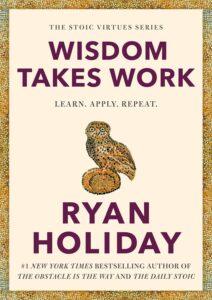
What if the ancient wisdom we’ve spent centuries venerating isn’t actually wisdom at all — just fortune cookie philosophy dressed up in toga and sandals? We live in an age where Stoic quotes flood Instagram feeds and Marcus Aurelius gets more engagement than most living influencers, yet something crucial gets lost in translation. The uncomfortable truth is that wisdom isn’t a commodity you can download, screenshot, or tattoo on your forearm. It’s more like a muscle that atrophies without consistent, often unglamorous work. The Stoics themselves would likely cringe at how we’ve reduced their life’s work to motivational wallpaper. Real philosophical transformation requires what most of us desperately avoid: sitting with discomfort, confronting our own hypocrisy, and doing the tedious daily reps of self-examination that nobody posts about.
Ryan Holiday, bestselling author (The Obstacle Is the Way, Ego Is the Enemy, Stillness Is the Key, Discipline is Destiny, and his latest, Wisdom Takes Work: Learn. Apply. Repeat.), host of The Daily Stoic podcast, founder of The Painted Porch Bookshop, and modern Stoicism’s most prominent translator, joins us for a conversation that cuts through the superficial self-help noise to excavate what ancient philosophy actually demands of us. Ryan reveals how his own journey — from college dropout to bestselling author — was shaped not by passive consumption but by obsessive practice, including his legendary commonplace book system and the physical ritual of writing that keeps ideas alive. He walks us through why the Stoics were essentially the world’s first cognitive behavioral therapists, how Seneca’s letters reveal a man wrestling with his own contradictions rather than preaching from perfection, and why the question “what would the person I want to become do?” beats any productivity hack. Whether you’re a philosophy newcomer curious about why everyone’s suddenly quoting dead Romans, a longtime practitioner looking to deepen your practice, or simply someone trying to navigate modern chaos with a little more equanimity, Ryan makes the case that wisdom isn’t about knowing the right answers — it’s about showing up every single day to ask the right questions. Lisren, learn, and enjoy!
Please Scroll Down for Featured Resources and Transcript!
Please note that some links on this page (books, movies, music, etc.) lead to affiliate programs for which The Jordan Harbinger Show receives compensation. It’s just one of the ways we keep the lights on around here. We appreciate your support!
- Sign up for Six-Minute Networking — our free networking and relationship development mini-course — at jordanharbinger.com/course!
- Subscribe to our once-a-week Wee Bit Wiser newsletter today and start filling your Wednesdays with wisdom!
- Do you even Reddit, bro? Join us at r/JordanHarbinger!
This Episode Is Sponsored By:
- Caldera + Lab: 20% off: calderalab.com/jordan, code JORDAN
- CookUnity: 50% off first week: cookunity.com/jordan or code JORDAN
- Quince: Free shipping & 365-day returns: quince.com/jordan
- Airbnb: Turn your house into a host: airbnb.com/host
- AG1: Welcome kit: drinkag1.com/jordan
Thanks, Ryan Holiday!
Click here to let Jordan know about your number one takeaway from this episode!
And if you want us to answer your questions on one of our upcoming weekly Feedback Friday episodes, drop us a line at friday@jordanharbinger.com.
Resources from This Episode:
- Wisdom Takes Work: Learn. Apply. Repeat. by Ryan Holiday | Amazon
- The Painted Porch Bookshop | Bastrop, TX
- Daily Stoic Podcast
- What is Stoicism? | Daily Stoic
- Every Dad Needs a Little Help | The Daily Dad
- Other Books by Ryan Holiday | Amazon
- Ryan Holiday | Website
- Ryan Holiday | How to Fix Your Life with Stoicism | The Jordan Harbinger Show
- Ryan Holiday | Discipline Is Destiny (Live from Los Angeles) | The Jordan Harbinger Show
- Ryan Holiday | Stillness Is the Key | The Jordan Harbinger Show
- Ryan Holiday | Solving for What You Really Want from Life | The Jordan Harbinger Show
1258: Ryan Holiday | Wisdom Takes Work
This transcript is yet untouched by human hands. Please proceed with caution as we sort through what the robots have given us. We appreciate your patience!
Jordan Harbinger: [00:00:00] Coming up next on The Jordan Harbinger Show.
Ryan Holiday: You read a lot about America. You spend a lot of time in America. You're like, Americans do this. You know, Americans fucked this up. This is the importance of both travel and the study of history is because you read about Rome and Sparta and Athens and you go, oh wait.
Every country does this stuff. Every country is bath. Yeah. Every country has shameful secrets. Every country has weird, hilarious quirks. Every country has practices that make no sense.
Jordan Harbinger: Welcome to the show. I'm Jordan Harbinger. On The Jordan Harbinger Show, We decode the stories, secrets, and skills of the world's most fascinating people and turn their wisdom into practical advice that you can use to impact your own life and those around you. Our mission is to help you become a better informed, more critical thinker through long form conversations with a variety of amazing folks, from spies to CEOs, athletes, authors, thinkers and performers, even the occasional rocket scientist, war correspondent, or real life pirate.
And if you're new to [00:01:00] the show or you wanna tell your friends about the show, and I always appreciate it when you do that, I suggest our episode starter packs. These are collections of our favorite episodes on topics like persuasion and negotiation, psychology, geopolitics, disinformation, China, North Korea, social engineering, crime, and cults and more.
That'll help new listeners get a taste of everything we do here on the show. Just visit Jordan harbinger.com/start or search for us in your Spotify app to get started. Today on the show, we're diving into something that sounds simple, but has ruined lives since people were wearing togas and debating geometry for fun virtue.
The four virtues actually according to our returning guest and resident stoic in Chief Ryan. Holiday virtue isn't something you have, it is something you do, which frankly sounds a little bit like a personal attack. Today we're focusing on wisdom, hard won experience, and know there are no cheat codes.
Today we'll get into why wisdom isn't the same thing as knowledge. It's the act of applying knowledge consistently, not just once when somebody's watching. We'll talk about reading books as a superpower and kind of a scam that I built my entire business around. How the [00:02:00] greats used silence note taking and systems instead of ego and why fools are seldom humble.
We'll talk Monta, Machiavelli's Social Skills, why Ancient Education required both literacy and physical prowess, and why Ryan dropped outta college yet somehow cranked out a small library of bestsellers while his parents waited patiently for him to get a real job. All that and a whole lot more on this episode of The Jordan Harbinger Show here with my good friend Ryan Holiday.
Here we go. How's the book doing? Is it out already?
Ryan Holiday: Yeah, it came out uh, last Tuesday. Yeah. How's it doing? I think good. And I'm trying not to check. Are you able to do that? They told me how it came out on the bestseller list, which was good, but I haven't, like, I can say this honestly, I have not checked Amazon a single time.
I have no idea what the rank is. I have no idea what the reviews are. It's actually weird. Like I've tried to get better at not paying attention to that stuff. Mm-hmm. And it's generally made me happier and I think generally made me better at doing the important part, which is the writing. There is [00:03:00] something a little weird about it.
It's not that, I don't know, it just feels a bit anti-climactic. Like it's, it did come out right, like I'm just, you know. Yeah. I just wanna make sure that like, the copies arrived to people. I'm not, I don't need you to tell me how it, how you liked it, but I, I just wanna make sure that I'm not missing something that went horribly wrong.
And the reason the silence isn't because I'm keeping healthy boundaries, the silence might be because they're all stuck in a factory somewhere.
Jordan Harbinger: For people who just chimed in on this, and we're talking about the book release and the book ranking, I feel like for me, it would just be very hard to work on something for years, release that thing and then be like, I don't wanna look at it.
I, I'm getting deja vu. Maybe we've talked about this before, but this is how I think like Johnny Depp and if some other actors, they never watched a movie that they're in, they just won't do it.
Ryan Holiday: So this is like a little different. Like I definitely don't like to watch videos of myself, like on stage, or I would never watch movies that I was in because I would be mortified.[00:04:00]
I, I don't like that kind of performance. That's not my jam. Right? I have no problem going over something I've written and I, I look at the book proudly. It's just to me when Johnny Depp's or, or, you know, and he's a problematic figure, so, but when you take any sort of performer and they're like, I don't like to listen to what I do, or I don't like to watch what I do, that I understand that's like this weird, uncomfortable thing.
To me though, the more dangerous thing is if you love the sound of the applause, whether you like to watch your work or not, is secondary to, I think a more insidious form of ego narcissism, which is like you're sitting in the audience and you're just like soaking up the adoration. Like, look how great I am.
So for me, it's not that I'm like done with the book because it's out. It's more like I tried to take all my winnings off the table before it came out in that. Like I enjoyed working on it and I think I [00:05:00] did my best work and I think I said what I wanted to say and then I think I did everything that I can do from a marketing and promotion standpoint, which is important too.
I'm not just some like pure creative who's just, well, I hope it comes out.
Jordan Harbinger: Yeah,
Ryan Holiday: I obviously, I'm doing a podcast right now with you like, yeah, I care about telling people about it and I want them to read it. I think I've just learned that it's not healthy to spend. This is the culmination of six years of work for me that I'm gonna spend six years working on this series.
And then somebody who got a free copy from the publisher or Amazon writes some shitty review, missing the entire point of the book. And that's the first thing that pops up the day it comes out. And because I'm frantically refreshing, the whole experience is now tainted in some way. And I've had that experience before, of course.
Sure. Because I was setting myself [00:06:00] up to be exposed to it, and I just decided, hey, like this is not the best use. And then the weird quirk of publishing, I guess this is most art, there is a huge lag between finishing something and it coming out. And so what I try to do is always be in the middle of the next thing.
And then what that does is. It actually means that there's a real cost to getting obsessed with how the thing that just came out is doing, because what it's taking away from is what I should be doing now. I see.
Jordan Harbinger: Yeah. That's interesting. I hadn't thought about that. Someone who's never written a book, I mean.
Podcasts are different, right? Because some people will like an episode and if people are like, I hated that episode. I don't really care. I mean, I care in that I wanna create good things for my audience, but any episode I create, someone will hate it for some reason. Sometimes it's a good reason, like, wow, Jordan was sick and he just wasn't on his game, and this isn't his best work.
Other times it's like, I hated the [00:07:00] fact that this guest's voice sounded this way. And I'm like, who cares? Right? I just, but if it's a book, there's just so much more work that goes into it.
Ryan Holiday: You also have another one coming two days later. Yeah. It's like a train, you know, it's like, this is when it comes in and it comes out.
This is what it does. So there is something that, yeah, about a release or a launch that is different. It's higher stakes. But I do imagine that when you're looking at the Spotify comments on the bottom of the episode. Very rarely are you getting constructive, informative feedback from that. Like feedback is essential.
Yeah. And criticism is important, but like somebody firing off an email or posting a comment, that's not what you let in. If you're trying to get better, that's what you let in. If you either want to fill up your ego or you want to feel like a piece of shit.
Jordan Harbinger: Yeah. That's interesting. I have more questions about critics later, but I, I want to jump into the content of the book.
'cause there, there's so much here. I have to admit. Whenever I [00:08:00] read your books, I'm always like, okay, I'm probably gonna understand like. Two thirds of it, one third of it is gonna go over my head or be like so in the weeds on something historical that I'm not gonna really apply that or have many notes for it.
This book, I really enjoyed it 'cause I was like, oh, wisdom like this sounds deep. I don't know if I'm in the mood for this, but I plowed through it in one sitting, which is a good sign. Oh, thank you. And you didn't invent wisdom, but you wrote a good book about it. So I'll give you that.
Ryan Holiday: Well, I, I will say one thing I, this is feedback.
One thing as obviously I've done a lot of podcasts over the years, you are one of the only shows that you can count on for sure to have actually read the thing. Oh. As opposed to, you know, they're just riffing from the back cover, having been briefed on who the guest is a few minutes before they go on.
Jordan Harbinger: Yeah, I appreciate that. You know, there was a time at which I probably told you this story five times 'cause you've been on the show like seven or eight times by now. But I was doing a show with Robert Green, it was up in a couple weeks and I was like, I really wanna knock this one out of the park. I think maybe you'd even introduced me to him or [00:09:00] something like that.
I don't remember. It's been 15 years since that first episode or something like that. But I decided to read his entire book, which at the time I think was, it was either their 48 Laws of Power or like the one after that. I just, it's gonna be a big book either way. It was like a thousand pages, right? I mean maybe literally 700 pages or 600 pages.
So I read the whole thing on paper, took notes, and he was like, this is really good. And I was like, wow. I got a compliment from a guy who's done like a zillion media hits and you know, it was tired and still enjoyed it on Skype of all media. And so I was really stoked and I told my wife, I go, yeah, I did a good job.
He really liked it. He sent me a note afterwards. It was really nice. And I was like, it's just such a shame that I can't read the book for every guest. And she goes, this is like one of the best pieces of feedback my wife ever gave me. She goes, well, you could. You just have to decide if you wanna spend the requisite amount of time and effort into every episode.
I sat with that for a while. 'cause I was like, my knee jerk reaction [00:10:00] was, of course I can't do that. That takes days. And she's like, you just have to decide what your job really is. Do you wanna make a really great show every time? Or do you just want to have some shows that are okay and some shows that are good, where you spent the amount of time needed to make it great.
And I was like, damn, I can't really go back from this. I can't go. No, I'm satisfied with mediocrity. Thanks anyway, Jen. Yeah, that was kind of what she was telling me.
Ryan Holiday: That's totally right. It's that Nick Saban line is like, how good do you want to be? You know, like, and it, we all make these decisions. It feels like a decision about.
You know, Hey, do I have time or not? Right? When really it's a decision about what are the standards I set for myself or not.
Jordan Harbinger: Yeah. And unfortunately, sometimes people come by and they raise the bar a little bit or they remind you that you've raised the bar and you're just like, well, shit. Like I don't, I don't want to.
And I don't mean like, oh, this book hit number one in the New York Times, so now every book has to hit it. It's not about the accolades, it's about, it wasn't about the note Robert Green [00:11:00] sent me after that. It was, I just felt like I was so prepared for this. 'cause I read the whole book and I had pages and pages of notes.
I don't think I could go back now. I don't, riffing without reading a book at this point is actually terrifying. Like if you were just here and I was like, okay, it's about wisdom. I think it's part of his virtue series. And go like, that actually scares me now being under-prepared. Whereas that was how I rolled 15 years ago.
I was like, read the book. Uh, I don't think so pal. That sounds like a lot of work.
Ryan Holiday: That goes to kind of where we were just talking about though, like. I think it's good to be competitive. It just matters what you are measuring against. So if you're like, Hey, I want to win a lot like this person, or I wanna hit the same spot on the New York Times bestseller list, or I wanna sell as many copies, or I wanna win these prizes, or get this kind of, if what you're looking at is like what the stokes would call the externals, the results, and then you're trying to match that, you're probably thinking about it wrong.
But if you read something good, or watch something good, or you [00:12:00] see someone pull something off and you're like, how did you do that? How did you do the thing? Not how did you get the accolades or the reception or the recognition for the thing. But physically, how did you do it? You're listening to an album and you're like, that guitar tone is something that I'm interested in, or the sound, or you're looking at an athlete and you're like, how are they hitting that shot?
How is Tom Brady releasing the ball that quickly? Those are the kinds of things that you wanna look at and not just be like competitive about, but be curious about what is the technique you are using and can I try to learn that technique and add it to my game? That's kind of what I think about. Like I read all the time and I'm just like, wow, okay.
I really like what this person did. The book could have sold 16 copies. That's not what I'm jealous of. What I'm jealous of is what is on the page, and then jealous isn't the right word. I'm curious slash inspired to see what it feels like to do [00:13:00] something like that, and that's the ingredient I'm trying to identify.
Jordan Harbinger: Yeah. I think once again, the theme that this book comes around to again and again is that. It's a lot of work. I mean this is about the book's about wisdom. It's a part of the virtue series as I mentioned before, and this is gonna be obvious to you, but I think to me it was almost a, a little bit of an awakening, which is the virtues are hard, man.
Courage. Yeah. Wow. Okay. That's tough. Cowardice is a lot easier, especially short term. Like I would just rather cut and run from whatever problem I have in front of me. Right. Ignorance, path of least resistance. Wisdom again sounds like a lot of work, Ryan. Like why? Oh man, and you gotta do this all the time.
You know, the virtues aren't something you, I don't know believe in or whatever. It's like something you do and it's something applied and that was one of the big takeaways from the beginning of the book was like wisdom is not just having the knowledge of everything. It's applying that and doing it when it's hard and doing it consistently and just doing it every day until you die.
And I'm like, man, no cheat codes.
Ryan Holiday: Well, it's not something you are or [00:14:00] something you are given or something you're born with. The definition of wisdom is a little tricky, but I think one thing we can agree on is that no one is born with it. Right? And I don't just mean because ego is something you get when you're older.
'cause no one just turns 80 and magically has it. Either it's the result of, of work, it is a result of a process and a way of living and thinking and operating. And I think that's true for of all of the virtues. And if this does make sense, like if they were easy, if you naturally had them, we probably wouldn't hold them up as admirable things to strive for.
Like if you are born courageous or cowardly, if you are born disciplined or not, if you just have a good heart or not, and that's all that counts. I mean, what good is justice or discipline or wisdom or courage? Like the whole point is that not just. That it's hard. It's that most people are [00:15:00] allowing themselves to get away with not doing it, and no one is making you do it either.
Like the discipline of being in the Marines. As an enlisted marine where they are forcing you to do a bunch of stuff. I mean, obviously that's hard. Yeah. And it's nothing to dismiss, but the whole point of the virtue is self-discipline. It's that you have the choice and you're choosing to do it. That's the virtue.
Not that if you eat this or don't eat that, or you go for the workout or don't go for the workout, you get fired. Mm-hmm. Or you get. Mocked or like, the point is that you don't have to do it and you choose to do it. That's the virtue of discipline,
Jordan Harbinger: and that's an important distinction. Again, there are no cheat codes.
You had this funny anecdote in the book about this guy. I think he had, this is ancient Greece or something, right? He bought a bunch of slaves who were familiar with the Greek classics and he'd go to these dinner parties and I don't know, our slaves, just like his slaves were hanging around and he, since they were educated, they would feed him lines and he would say something smart, which is kind [00:16:00] of a funny thing to think about.
And then some dude tells him, Hey man, you should take up wrestling. And he's like, look at me. I'm a hundred pounds soaking wet or whatever, you know, I'm frail. And the guy goes, no, look at all these healthy slaves you got around. And it's like, that was him getting roasted. I guess that's what passes for a sick burn in ancient Rome or Greece or whatever.
Because it was like, we all see that you don't know anything about these books you're talking about, and whenever your guy leans over your shoulder with a plate of grapes and like says the line, we can hear it happen. You're not fooling anyone.
Ryan Holiday: It's the idea that no one can do wisdom for you there. As you said, there's no cheat code, there's no hacks.
It's something you have to do, you have to possess. And to me, I mean obviously the story's anachronistic in that, you know, he is this guy owning slaves. It's hard to relate and then you go, well, I'll just ask chat. GPT. Yeah. The timelessness of this idea that like, oh, I don't have to know it. I don't have to figure it out.
It doesn't matter anymore because there's this new invention. There's this thing I figured out that allows me to get [00:17:00] something for nothing that allows me to get to skip ahead. That is the human experience in a nutshell. People thinking they can get knowledge, that you can learn something without earning it.
It never works. It never holds up
Jordan Harbinger: over the long term. What are some modern cheat codes you see people using that aren't working for them? Chat. GPT is a really good example.
Ryan Holiday: Well, I think speed reading is a scam. Oh, interesting. I don't think it exists. I'll tell you this. I have never met a very wise or well-read person who has ever talked to me about their speed reading techniques.
Interesting. The people that I know that are wise and the people that I know that read a lot, the one thing they all have in common is that they spend a lot of time reading. Yeah. Right. By the way, they see this as time well spent, and it's not something they're trying to rush through or get done faster.
The only way that you can read more quickly. Is to have read a lot and to have a basis of knowledge that allows you to, not skim, [00:18:00] but to not have to stop and look a bunch of things up. Right? Yeah. Like if you decide to sit down and read a book about the civil War, you're like, wait, who are all these people again?
Where are these places? And then when you're on your 14th book, which I embarrassingly have read, or you know, when you take something you're really interested in, you have a comfort and a an advantage that allows you to go a little faster. So I think speed reading is definitely one.
Jordan Harbinger: That's a really good one because I, I listen to audio books and I listen at three x, but I usually have to start at one and a half or something because I have to get used to the narrator.
And if it's a subject I'm not familiar with, I'll stay there. But if it's like my 100th book on cybersecurity or geopolitical stuff, current events, Iran, whatever, I mean, I am flying through at three x because. I might even go, oh crap. I was changing something in my car at the time that I heard this, but oh, that was just about the revolution in 1980.
Like there's almost certainly nothing in there that I haven't heard a hundred times. If there is, I'll find [00:19:00] out when I ask the guests about this,
Ryan Holiday: listening to audiobooks on various speeds to me is not if you took a speed reading course and they're like, okay, what you do is you download a book on Amazon and then instead of listening to it at the one x speed, you just press this little button and it's three x.
That's not the promise of speed reading. The promise of speed reading is you can read this thousand page book in 30 minutes. Right. We all read at different speeds that that's, I would say I'm a moderate to average person at the speed that I read. I just read a lot. I'm just saying this idea that, that you can whip through.
Long, difficult texts without much effort is a scam. Right. And
Jordan Harbinger: have you tried it? I tried it and I was terrible at this. It's like you, you put your hand down the page and you get the words and I was like, I'm picking up 0% of this. Like none.
Ryan Holiday: It's not only not real, I would say that like when I'm reading, what I'm actively doing is trying to slow down.
I'm working on a project now. They sent me this PDF of [00:20:00] stuff and I'm like, okay, now I have to print out this PDFI have to get a pen and I have to sit here and go through it extremely slowly so I understand every word of it. Most of the time you're trying to do the opposite of get it done quickly. If what you're trying to do is learn and extract value.
If you're reading a novel and you're just trying to be entertained or enter another world, crank up the audio speed however you want.
Jordan Harbinger: Right. That defeats the purpose. So that's like going, Hey, do you wanna watch this movie? Yeah, but I only have 45 minutes. Let's watch it at 2.5.
Ryan Holiday: Yeah. Yeah. Skip the middle.
It's not that
Jordan Harbinger: good. I'm not, yeah, skip the middle and like there's this whole side tangent that's supposed to be really funny, but I don't need to, I don't have time for that right now. Yeah. It's like you're just defeat the whole purpose. There's an Adam Sandler movie, which I'm sure is not on your top list, but it was like he had this remote where he could skip things.
He got a Bed Bath and Beyond in the Beyond section, of course. And he would skip through like his kids' stuff. The kids play sex when he was tired and then they found out later like, wait, that I'm skipping [00:21:00] through my whole life. You know? And the sort of the metaphor there is like all this hard stuff. Or this stuff that seems hard in the moment is actually this is the gift that you have, so you're, you're doing the worst thing that you can do with it.
Ryan Holiday: Yeah. It's not just that it's valuable stuff you're skipping over. I just, this is a very stoke idea, but it's like, what are you fast forwarding towards? Mm-hmm. It's death. Like you know how the movie ends, right? Every movie ends with you dying for all of us. So like what are you rushing towards? That's funny.
I like reading. Why am I trying to get this over faster? So that's definitely one, I mean, look another one. People think mentorship is this like hack now it is right in the sense that there's a bunch of lessons that you don't have to learn necessarily by painful trial and error. And you can have someone teach you and you see this.
People are like, will you be my mentor?
Jordan Harbinger: I don't get as many of those as I used to. I don't know if that's a me thing or if the moment of mentorship is kind of passed,
Ryan Holiday: but I do think people thought it's this like button that you [00:22:00] press. A mentorship is something that you will get value in. 12 years or 30 years or 40 years, right?
Like it's like you are out doing stuff and having experiences and then you're bouncing it off this person and you're also watching them and they're asking you. It's this symbiotic relationship that for the most part evolves over a long period of time. It's not like you're pulling your dead battery up to another car and then the jumper cables get yours going again.
Like it's a much more involved thing.
Jordan Harbinger: Yeah, I think when people do that, when people write in, they're usually like, can you mentor me on this? And it's like, will you give me a download of all of the things that I should do right now so that I can kickstart my business? Or like I started a podcast and I need a mentor.
And it's like, why? Well, I wanna 10 x the size of my show. And it's like, well, I'm not gonna be able to do that for you. Like all of the knowledge in my head is not going to do that for you. And there's the kind of the also like, why would I do that
Ryan Holiday: kind of thing? Yeah. Right. If you have the power to magically 10 x things, you'd [00:23:00] just be 10 xing your own stuff all the time.
Yeah.
Jordan Harbinger: Or like I'd start another show and I would 10 x that one and I have 10 of those. And I, we'd be having this conversation on my yacht about why I don't have time to do this for you. Right Person who's a stranger in my email inbox. Back to the concept of wisdom here, you wrote, and I'm paraphrasing here, wisdom is the byproduct of doing the right thing in the right way at the right time.
Not once, but consistently over the course of a life. And that kind of consistency I think is what, I don't know if it's always been hard for people. I guess it has. 'cause this is something that's the even the ancients wrote about, but. It just seems like that's the obvious key to being successful. Like everybody I know who's successful with things has just been incredibly ridiculously consistent over kind of an insane period of time.
Like the kid who played the guitar and practiced the guitar from age seven up to age 27 where they are now, or yes, the guy who decided to write a book and wrote one in third grade and then in fourth grade, and they, you know, they were kid books and then suddenly in college he's like really doing it.
It's pretty incredible to watch. Just the really simple [00:24:00] compound returns on a drop of water dripping on a stone over a thousand years or whatever, right? The proverbial stone,
Ryan Holiday: this is where the virtues are related, right? So if wisdom is this idea of like wanting to learn as much as possible and be exposed to as many things as possible, and to get as much experience as possible and to reflect as much as possible and to read as much as possible.
Wisdom has to be fused with discipline because it's not a button you press. There is no shortcut, there is no magic. It's this thing that you do. And the longer you do it, the more you get or the more profound and holistic it becomes. And so, you know, it's not like, Hey, I read a lot when I was in college.
It's that I read a lot. It's not, oh, I had this formative mentor. It's that I am always looking for mentors and teachers. And I'm not saying I, I mean generally a person, right? It's the day-to dayness of it. And, and you're right, it doesn't have to actually be that much. Seneca's famous book, [00:25:00] which we call his letters, is him writing to his friend Lucilius, who's a politician in the Roman Empire.
And in one of the interesting essays, he, he says, basically, wisdom is this idea of like getting one thing a day. Their exchange is, he is like Seneca's giving him a quote or a thing to chew on or something. They're just trading one thing back and forth each day. And he is like, this is the path to wisdom.
If you do this every day, at some point in the future, you'll have a lot of these days stacked on top of each other. And the cumulative result of that will be a lot. It's actually not the cumulative result, it's the compounding result of that. Right. So it's like you are reading something and then you're experiencing something, and then you're reading more, and then you're experiencing, and all of that is building on itself.
And if you're just making a small contribution each day, it might not seem like much. But not only are you, you compare this with people who are doing none of this. Yeah. Right. And then you [00:26:00] also compare it to who you were then before you did all this work. And you realize it does, it adds up very quickly.
Jordan Harbinger: Speaking of people looking for shortcuts, virtue has no cheat codes, but you can cheat your way into some amazing deals on the fine products and services that support this show. We'll be right back. This episode is sponsored in part by Caldera Lab. Caldera Lab is my actual go-to skincare. I know that sounds goofy, but whatever guys have dry skin too.
My absolute favorite is the base layer. This moisturizer is packed with plant stem cells, snow mushroom extract, basically dehydration without the shine. It absorbs fast. It feels clean, lightly scented. Every time I put it on my skin looks a lot better. Can't be ashy anymore these days. Y'all smoother. I'm more awake.
Jen said My face looks less tired. That's high praise. They've also got something called the good, this award-winning serum with 27 active botanicals and something. Like 3.4 million antioxidant units per drop. I don't know what that means. I dunno how you measure that. It's a lot. It protects your [00:27:00] skin from all the environmental nonsense.
We pretend is not aging us. They have eye serum. That's your definitely. I did not get eight hours of sleep insurance. It helps with dark circles, puffiness erases the evidence of last night's bad choices. What I love about Caldera lab is that everything is developed by legit cosmetic chemist. It takes years of r and d.
It's non-cosmetic genic. It won't clog pores, is cruelty free and plastic neutral, high quality, simple, lux premium, and makes a great gift.
Jen Harbinger: Whether you're starting fresh or upgrading your routine, caldera Lab makes skincare simple and effective. Don't settle for drugstore junk or steal your partner's products.
Elevate your routine with skincare made for you. Head to caldera lab.com/jordan and use Jordan at checkout for 20% off your first order.
Jordan Harbinger: This episode is also sponsored by Cook Unity. The holidays are here, which means amazing food as long as I am not the one making it. My whole life philosophy is let experts do the thing that they're good at.
I don't fix my own car. I don't cut my own hair. I definitely don't cook holiday meals. That's why Cook Unity is perfect. They've got actual award-winning chefs doing the cooking. I can stick to [00:28:00] what I am good at, which is eating, and their holiday dishes sound. Next level, old fashioned glazed holiday ham, ultimate holiday, Turkey dinner, maple whipped sweet potatoes, candied yam cake.
The last meal I had was this Citrus herb Salmon from Chef Esther Choi. You've seen her on Food Network. If you watch Food Network, fresh ingredients, bold flavors, perfectly cooked every Cook Unity, chef handpicks their ingredients, so you're getting seasonal restaurant quality meals. The chefs are James Beard Award winners, food network alums, legit restaurateurs, all creating small batch meals, delivered fresh, not frozen.
Ready in about five minutes with 300 plus rotating meals, new menus every week, and subscriptions starting at 11 bucks a meal. Cook Unity makes it insanely easy.
Jen Harbinger: Tastes comfort and craftsmanship, and every bite from the award-winning chefs behind Cook Unity. Go to cook unity.com/jordan or enter code Jordan before checkout to get 50% off your first order.
That's 50% off your first order by using Code Jordan or going to cook unity.com/jordan.
Jordan Harbinger: If you're wondering how I manage to book all these great authors and thinkers every single week, it is because of my network, the circle of people I know, like and [00:29:00] trust. I'm teaching you how to build your network, your stable of greats for free over at Six Minute Networking dot com.
This is a free course. I'm never charging for it. At least I have no plans to do so. It is non cringey, down to earth, not awkward. It'll make you a better colleague, connector, peer and friend in just a few minutes a day, and many of the guests on our show subscribe and contribute to the course. Come on and join us.
You'll be in smart company where you belong. You can find the course again all free and no shenanigans over at Six Minute Networking dot com. I know that some people will either think this sounds really obvious or they need to hear this, but it's, it's interesting in the book you said something like, can you think of anyone wise who doesn't read, anyone who reads and doesn't wish they read even more?
For me, I always wanted to read, but I didn't want it enough to actually do it. And I kind of needed a, does that make sense? Like I needed a forcing function to read. So I basically designed my life in this business, this podcast, around reading. And then I built the show. This is so funny to think about now.
I built the show as kind of a gimmick [00:30:00] to get access to authors. 'cause I was like, I want books but I'm poor 'cause I'm in college and there's libraries, but they don't have the new stuff, right? They have like old stuff and I want new books on things or books that libraries don't buy. So I wanted to get the books for free and then I wanted to fill in the gaps in my knowledge by talking to the authors.
And most authors are not interested in talking to one random reader for two hours. Like I, it's not scalable. And so I'm basically, this podcast is like an elaborate scam to get free books and then be able to ask questions of the people who wrote them. So thank you for participating. In this elaborate scam,
Ryan Holiday: what you basically just described is graduate school, right?
Yeah. You get assigned a text and then you have discussion sections and you have to write papers or produce a distillation of what you read. Right? And you, you do that for a long enough time. You build up a pretty big base of knowledge very quickly. Like same with me. I mean, I dropped outta college at the end of my sophomore year, but my education really began then when I started [00:31:00] reading.
Not because I was assigned reading, but because I was genuinely curious about things. And then I was reading about things that pertained to what I was being paid to work on. And that's really where the, when you can combine study and research with the ability to put things into practice and get real world feedback, and that can be a tight reinforcing loop.
That is a really, really powerful process.
Jordan Harbinger: Yeah, that's a good point. For me, I needed a forcing function to read the ability to fill in the gaps, and also a reason to do something with it afterwards. Because if I read and I don't have to do anything with it, it's pleasurable. But I mean, I probably retain like 1% sure.
Right? But if I'm reading your book and I'm like, I find myself looking out the window or something, it's like, no, no, no, you gotta, you are gonna have to talk to this person in front of. Hundreds of thousands of people and you're gonna look like a real idiot if you don't remember the core idea that you're snoozing [00:32:00] through right now or whatever.
Ryan Holiday: But also add into the fact that you might have somebody who has one point of view one day, and then three weeks later have a different expert who feels very differently. And now you are taking these two ideas and you're pitting them against each other, or you're asking them questions. And so it's not just this process of I'm learning about stuff, but that it's actually a, a somewhat rigorous or challenging environment I think is really important too.
Like if you're just reading about stuff that you like or you're just reading about stuff that you're comfortable with, or watching videos or listening to podcasts that, I mean, obviously again, this is better than nothing, but it's in the wrestling with and the having to think over and weigh and contrast these related, but also unrelated, potentially contradictory ideas.
I think you really get some real insights.
Jordan Harbinger: You know, I didn't realize you dropped outta college. I guess I didn't either forgot about that or didn't know that. Are your parents still waiting for you to make something of yourself after dropping out of college? You know, they,
Ryan Holiday: they [00:33:00] took it very hard when it happened and they, I bet it hasn't come up since I gave a talk at the college that I dropped out of earlier this year, and I was like, at some point, does 15 books qualify me for any way of wrapping up these additional units?
Yeah. And they were like, we'll look into it. In some ways I'm like, I'm jealous of people who just get to go in a classroom all day. Like it's funny, I was so excited and desperate to get out and now I'm like, that seems like the life
Jordan Harbinger: law school was like that. I remember one of the professors, we were talking with him and like, I just wanna get a job.
We have so much debt. And he goes, calm down man. You got three years. All you have to do is hang out and talk to smart people for three years. He's like, you should enjoy this while you can, because once you get to Wall Street. It's gonna be a different game, man.
Ryan Holiday: Yes, that's exactly right.
Jordan Harbinger: You'd think they would give you like an honorary degree that you could hold up for your parents at this point.
I mean, what do you have? Like 15 bestsellers and after I drop this podcast, 16 bestsellers, I mean, do you think they could give you one of those?
Ryan Holiday: I would take an honorary degree, of course, but I'm [00:34:00] just like, what would I be doing in a classroom? That's not what I'm doing out here. Like, you know, you used to be able to become a lawyer.
You could study on your own as long as you could pass the bar, you got the degree. I think
Jordan Harbinger: you can still do that in California, or if there's a few states where they'll let you do that.
Ryan Holiday: But I feel like I should be able to do that for a college degree. Like just gimme the test. Tell me to write the papers.
Let's see if I can do it. I'm pretty sure I could, or I would figure out how to do it.
Jordan Harbinger: I want that. Do academic departments that talk about stoicism, are they like this Ryan Holiday guy is re popularizing our field? Or are they like he's wrong about everything and I hate him because he's making money in this field where I should be the one who's like stoicism guy?
Ryan Holiday: Well, this is how it usually goes if they're being interviewed for an article because like it's an article about the rise or the resurgence of stoicism. They're usually kind of snarky and negative and you know, say something about it. And then when they put out a book, they email me to ask for a blurb.
Yes. You know, or if they can come on my pocket. So Cool. That's [00:35:00] how it tends to work, which is that in the abstract they talk shit about you. Then when they want something, they are shameless in asking for. And this is not just academics, but yeah, you find this anywhere, right? It's like the college student will talk a lot of shit about insert industry, but then when they have to get a job and they're being interviewed at said company, they're all very nice.
Oh yeah, no.
Jordan Harbinger: Many of the guys I worked with on Wall Street were the guys in law school who were like, yes, screw the man. Dude, don't work for the man. I'm like, this is the man. Yes, this is the man on top of the man. Like you think the government's, the man Wall Street is the one pulling the strings. So how's that spreadsheet coming there, Andrew?
And it's like, yeah, I'll be done with it in six hours. You sell out real fast when you see that you have $300,000 in student loans. Of course. Not much of a choice. This is a complete tangent, but I'm curious if you know this guy, Monte, you write about, you say that he asked Rome if he could be made an honorary [00:36:00] citizen after he retired and was traveling.
What does that mean? Because it's probably not the same thing as like, Hey, I'm traveling. Can I be Canadian? Now, there's gotta be something more to it. Like what benefits are involved in this?
Ryan Holiday: Obviously in the 16th century, the 15th and 16th century citizenship was a little bit different and borders were a little bit different.
I think what he was saying is that, you know, he's French, but when he grew up Montana, this fascinatingly unique education, his father wanted him to learn Latin. So no one was allowed to speak anything but Latin at home. Right. So like he grew up as if he lived in ancient Rome where they still spoke Latin.
Wow. And so I think he just had this lifelong fascination with Rome and I think he asked the Pope, or you know, whoever the mayor of Rome was, if he, I think he just wanted some sort of honorary certification that he was. Adopted by the tribe that she's so identified with.
Jordan Harbinger: This is like your honorary college degree that you don't have.
This exactly. Is the same thing.
Ryan Holiday: Exactly. [00:37:00]
Jordan Harbinger: I just wanna identify as a graduate of a reputable academic institution, uh, well we'll look into it. You could offer your next keynote. You could waive your fee in exchange for that piece of paper. I don't know what you're charging them, but it's probably cheaper for them to print out a diploma.
I dunno.
Ryan Holiday: That's actually
Jordan Harbinger: a good
Ryan Holiday: point.
Jordan Harbinger: Almost certainly cheaper for them actually to print out one of those things.
Ryan Holiday: Yeah. It's like, Hey, I will teach a class if at the end of it you allow me to graduate from Saided University.
Jordan Harbinger: That's funny. That's a good idea, man. Put that seed in there and see how that shakes out.
I shall you also write about Machiavelli, which I read that in high school and I remember being like, damn, this guy's ice cold. But you focus more on his hours of focus and how you build this into your life, and I'd love to hear how you do that because I think. The hours of focus thing. I mean, it's challenge.
This is like the cliche is like we have all this technology and it rips us away from focusing and it, you know, it's harder than it ever was. But I don't know, man, history's rife with people that if they'd focus more, they would've been able to build something better.
Ryan Holiday: Well, Machiavelli is [00:38:00] fascinating 'cause obviously Yeah.
He has the reputation for being what we would now call Machiavellian. You know, he writes the Prince, so obviously he's about tyranny and power and control. I mean, he was a literal Republican in that he wanted Florence to be a republic. So much so that he was taken prisoner by the Medici family and tortured for being a radical.
And that's why he dedicates the prince to them as a way to restore himself to their graces. But it's actually a very subversive work. That's sort of in some ways criticizing what a prince is. None of that has to do with what I talk about him in the book. So after his torture, he's basically exiled, he's thrown out of politics and so he lives in the country and he writes beautifully of what his life was when he was not in the sort of hustle and bustle of things.
He would work on his farm and then he would change into his nicest clothes and he would spend literally hours three to four hours a day conversing with the ancients. When Cal [00:39:00] Newport talks about deep work, he's talking about like extended periods of deep work, which is a beautiful, I think even kind of sacred thing.
My schedule's been pretty busy 'cause of the book launch. So you know, I was on the west coast for a week and then I was on the east coast for a week, and then I had a bunch of stuff, and then the latter half of this week is the first week I've gotten to go back into my routine. Basically from eight 15 to 1130.
I was like just in with my ideas and my writing and the book that I'm working on now. That's like, that's my life. That's what I love. That's the thing that keeps me going is like that period. I mean, it's hard work and it's exhausting and tiring and my brain hurts sometimes, but it's also deeply restorative and peaceful and stimulating.
People think this is something you can do while you're doing 20 other things, right? They're multi, yeah, and like what is the job of a leader or a creative, or basically [00:40:00] insert profession that's not. Built around periods of that, and you look at people's calendars and it's like, so you just have meetings all day?
Yeah. When are you thinking about the things that you would say in the meeting, in the shower at night, when you're supposed to be sleeping? When are you doing the work that makes having those meetings worthwhile? The actual decision making and forecasting and understanding and reflect all the things you have to do, that's the job.
And then like the meeting is talking about it, but like people's lives are, are built around the managing side of things and not the making thinking. Big picture side of things.
Jordan Harbinger: Yeah, that's funny. My friend who was in the C-suite at Amazon showed me his calendar once and I was like, when, at what point in the day do you work?
And he is like, I either come in on weekends or I stay late because nine to five was meeting, meeting, [00:41:00] meeting, meeting, call, meeting. And I remember my friend who used to work at Twitter, this is like 10 years ago, maybe even more, he had a meeting pop up and I was like, oh, do you have to go? 'cause your phone notified you have a meeting.
I don't mean to be all. And he goes, no, every meeting for us is optional because we're in sales. And I thought that was so interesting and so telling, right? So yes, corporate meeting all day. Meeting all day. But the salespeople who actually earn all of the money to keep the company afloat, if they have a meeting, it's completely optional.
And he was like hanging out with me in his office and we were gonna go eat something. He was not busy per se. And he's just like, I'd never go to these. I'm like, but you don't miss anything. He's like, Nope, nothing. If it's important, it comes in a company wide email and I'll read it eventually, or somebody will tell me, he's like, no, I'm supposed to be selling ads on Twitter, and I just thought that was so damn telling.
Right? Like when the rubber meets the road and you really need those people to do something, that's not a meeting. Suddenly the meeting's not important, but meanwhile, you're paying this other guy $3 million a year to be the head of whatever. I don't want to out my boy, but like the head of whatever at Amazon in the C-suite, and it's [00:42:00] like, Nope.
Meetings for eight hours a day, minus your lunch hour. It's just absolute insanity.
Ryan Holiday: Well, at some point in Amazon, the meeting culture got outta control and they sort of switched things. I talk about this in the book. There's a famous shareholder letter where Jeff Bezos talks about this policy where basically like if you wanted to call a meeting, you had to spend.
The preceding couple of days, writing a two to three page memo about what the meeting was about. Yeah, yeah. And what we were supposed to be thinking about. And the idea was like you start the meeting, everyone sits down, reads the memo, and then the meeting's pretty short because all the arguments have been laid out on the page.
And now we're just deciding. Right? Yeah. Mark, that's wisdom, right? The wisdom is sitting down, learning about the problem or the issue, laying out all the options, and then making a cogent argument about what should or shouldn't be done. But that's not what most meetings are [00:43:00] or what most people do. Like what people wanna do is sit down extemporaneously and bullshit about it, and then act like.
What is happening is in any way educational or informative. I, I've been riffing about this a little bit. I, you might appreciate this. I think this is a fundamental problem with podcasting as a medium. Like you were just talking about how you do, you read the thing, you do prep, you know what you're trying to get.
It's not that you, you have a script, but you're like, these are the things I wanna talk about. These are the directions we can go. These are things I wanna learn. So that is very different than, you know, when you're pulling up these two comedians or this comedian who's interviewing this public health expert or whatever, who knows nothing about the thing.
And then the two people are just pulling out of their ass. They're knee-jerk opinions. Mm-hmm. And then that feels to you because they're smart, they're good at talking. That feels to you like you're learning. Really you're just watching a meeting. [00:44:00] You know, like you're,
Jordan Harbinger: you're, that's funny. That's so funny.
I had not thought of that. But you're absolutely right. You're absolutely right. I don't want to hear a comedian talk to a virologist who knows a lot about a subject and the virologist gets 1% into the meat of the book because the comedian has not read that book at all. And you're right. That's just, I'm wasting my audience's time if I don't come with like receipts, prep eight pages of notes about stuff that I think they wanna learn.
So it's not even just stuff I wanna learn. Like there's stuff in here that I'm like, I probably know the answer to this already 'cause I've read about it a million times, but I don't think I've talked about it on the show. I'll still put it in there because I know that like a non-trivial percentage of my audience is gonna find that interesting or educational.
Sure, you have to do that. Otherwise you're wasting, like, think about it, you waste your an hour of your time. You read a book you don't like for an hour and you're like, ah. And you put it down. Imagine wasting hundreds of thousands of other people's hours in one week. If you add that up over the course of a podcasting career, that is a Nobel Prize cure for cancer amount of time that you have [00:45:00] wasted listening to yourself talk and make jokes about a book about vaccines or something like that, that nobody needed to hear.
Ryan Holiday: No, no, I think that's exactly right and to me, and a bit of evidence of wisdom is knowing the value of time your own and other people's. I just think sometimes we just get distracted by things that look or feel like thinking or look and feel like they have some kind of intellectual rigor to them, and actually they're bullshit.
Like one of the things I talk a lot about in the book is just how easy it is to fall prey to cognitive biases, how easy it is to get led down the garden path, as they say, or just to sort of mistake something because it appeals to you emotionally with. Fact or information. And obviously in a world of AI and slop and unending amounts of opinion tied to algorithmic valence, it's just really easy to go like, well, I'm reading, but you're reading [00:46:00] something you shouldn't be reading.
'cause it's nonsense. So people think that they're thinking or think that they're becoming informed and actually they're going in the wrong direction. Yeah,
Jordan Harbinger: that's interesting. There's a part of your book where you talk about how smart people value silence and learn from others, and how the ego often wants us to talk and contribute.
And it's really, you have to resist that to really learn from other people and to absorb the right kinds of things. The greats write things down and use the system to remember and access it. And I'm wondering what sort of systems you have for remembering important concepts and accessing them later. I know when you write your books, you have those cards, you know, you and Robert Green, you got the cards.
But how do you access things like in your brain? Or do you just reread books that you find really compelling?
Ryan Holiday: I do reread books and I think that is important. It's not just like, oh, I'd like to read more, but there are definitely books that you need to read more than one time to wrap your head around.
But I'm always reading, I'm always taking notes, and then I'm trying to write that stuff down and organize it in some way. I do that obviously [00:47:00] professionally as a writer, but I do it personally too. I write down, I read books about parenting and I try to write those things down, or I read books about money and I try to write those things down.
I, as I'm reading and learning, it's not just enough to be like, oh yeah, I think I get it. One of the things, mark SREIs, thanks, his philosophy teacher for at the beginning of meditations is he thanks him for teaching him never to be satisfied with just getting the gist of things, which I think is kind of where a lot of people live, right?
People are not like. Actively ignorant or disinterested in knowing it's that they think they know. They're like, yeah, yeah, yeah, I got it. Right. And to me it's like I hear something interesting or I learn something or I read something. To me, that has to be the start of a process, not the end of a process.
So I want to go read and learn and watch. One of the things I do where I do think AI can be interesting in is like you can go like, Hey, I heard about this. Tell me everything about this. Or point me to [00:48:00] five articles that I can read about this. Or are there good documentaries to watch? You can use it to help you go down the rabbit hole, which I think is really important.
But then when you're doing that, how are you capturing and synthesizing this information? 'cause I think a lot of times it just kind of goes in one ear and out the other for people.
Jordan Harbinger: That's my problem. Even when I look, I read a book and I'll take notes and put them into Google Docs, which I use for the podcast.
But man, even then it's like. People will write in and go, how do you apply all the things you learn on your show? And I just honestly have to say that I don't. Of course I don't. Are you kidding me? I'm reading two books a week. I can't apply everything from all of those. I, that's a super human feat to be able to even apply half of that stuff, I think.
Ryan Holiday: Well, all is an interesting word. How do you apply all that you read? Well, part of wisdom is reading a book and knowing that 80% of this doesn't pertain to you at all. Right? Yeah. Or is not worth, is not worth retaining. Right. That is no small feat either. When I read a really, really amazing book, [00:49:00] I might mark 10% of it.
10% would be a lot. Right. That would be like the greatest book I've ever read. I marked up 10% up. So a lot of it is kind of filtration. And then another part of it is putting things to go like, I never knew this word before. I need to look it up. I've never heard of that. I want to know more about this. So I think.
It's not like I read this book and then today I'm gonna change everything. That's the other part is like a lot of what you're learning and the reason you wanna capture the information or put it somewhere is you read something and then 20 years later Yeah. You're like, isn't there something in that book about this?
Yeah. You read books about parenting when you first have kids, and then it's like, okay, well this will be relevant when I have a 16-year-old, but I currently have a 16 day old, so. I gotta squirrel this away somewhere.
Jordan Harbinger: Abraham Lincoln used to defend his friends after they were caught having sex with livestock.
That's not actually relevant right now, but it sure is icky [00:50:00] and I wanted to highlight it once again. We'll be right back. This episode is sponsored in part by Quince Cold Mornings and holiday plans always sneak up on me, and this is when I need my wardrobe to just work. No fuss, no thinking. That's why we are all about quince.
They make it easy to look sharp, feel good, grab gifts that actually last from Mongolian cashmere sweaters to Italian wool coats. Everything is premium quality without the luxury markup. Quince makes all the essentials. Every guy needs cashmere sweaters for 50 bucks. Italian wool coats that look designer denim and chinos that actually fit and their outerwear lineup is legit.
They've got down jackets, wool, top coats, leather jackets, all built to last. The down jacket I picked up from Quince is getting me through this cold winter here, cold in air quotes, 'cause I live in California. I recently picked up a quince suitcase to use on an international trip. Everything is made from top tier materials in trusted factories with high standards for craftsmanship and ethical production.
And because Quince cuts out the middleman, you're getting the same quality as luxury brands at a fraction of the price. Plus their home bath and travel items make holiday gifting really easy. I grabbed a few for gifts and definitely kept a few things for [00:51:00] myself.
Jen Harbinger: Get your wardrobe sorted and your gift list handled with quince.
Go to quince.com/jordan for free shipping on your order and 365 day returns. That's Q-U-I-N-C e.com/jordan. Free shipping and 365 day returns. quince.com/jordan.
Jordan Harbinger: This episode is sponsored in part by Airbnb. As much as I love what I do and putting out content for you all, I've definitely been feeling a little bit of burnout creeping in.
The only thing that truly resets me is not another productivity hack. It's travel getting outta my routine, landing somewhere totally new that does more from my brain than anything else. By the time you're hearing this, I'll be somewhere in Patagonia, meeting new people, eating food I can't pronounce, taken in landscapes I've only seen in documentaries.
Those are the moments that actually stay with you, and that's the magic of travel. The connections you make, the conversations, the random experiences you couldn't plan if you tried. Those end up being worth way more than whatever you spent on the trip. But it also made me realize when you're out collecting those moments, your home is just sitting there empty.
So instead of letting it gather dust, you could be hosting it on Airbnb and actually making your time away pay for [00:52:00] itself. And if you're thinking, hosting sounds great, but I don't have time to deal with everything. That's where Airbnb's co-host network comes into play. You can hire a local co-host to handle all the moving parts, creating your listing messaging, guests onsite support.
So hosting stays stress free and manageable. So while you're away recharging, wherever that is, your home can be earning you some extra income with a local expert there to ensure everything is running smoothly. If you've been curious about hosting, but want a little help, find a co-host at airbnb.com/host.
This episode is also sponsored in part by Ag. One Mornings can be chaotic with two kids needing to get ready for school. I am grateful to AG One for making it one of the simplest things I can do for myself every day. Ag One is a daily health drink that combines your multivitamin pre and probiotic superfoods, antioxidants in a one very green scoop.
It keeps us consistent even when the rest of our day is a whirlwind. You drink at first thing in the morning, usually, you know when you're negotiating with your kids about why pants are necessary. The original is the favorite. There's now citrus Berry tropical. What I like is that a G one NextGen has more vitamins and minerals than before, clinically shown to help fill common nutrient [00:53:00] gaps.
The pre and probiotics also give you solid digestive support, which is extremely helpful when your diet becomes aspirational. During the holidays, travel days, long days, family stuff, AG one will keep you steady and their new sleep supplement. A GZ has been great for winding down at night. Try it out as well.
Jen Harbinger: Ag one has their best offer ever. Head to drink ag one.com/jordan and you'll get the welcome kit. A morning person hat, a bottle of vitamin D three K two, an AG one flavor sampler, and you'll get to try AZ for free. That's drink ag one.com/jordan for $126, and free gifts for new subscribers.
Jordan Harbinger: If you like this episode of the show, I invite you to do what other smart and considerate listeners do, which is take a moment, support the sponsors who make the show possible.
All of the deals, discount codes, and ways to support the show are searchable and clickable over at Jordan harbinger.com/deals. If you can't remember the name of a sponsor and you can't find the code, email me. I am happy to surface codes for you. It is that important that you support those who support the show.
Now for the rest of my conversation with Ryan Holiday, [00:54:00] another concept I love from the book is you say, never confuse gathering information with doing something with that information and in another life. I used to teach guys how to meet women and stuff like that, teach the dating stuff, the social stuff.
It's almost embarrassing to talk about it, but you know, let's not hide the ball. But one of the problems that I had that many people in that industry had is they would spend hours, guys would come into our programs and they would, they'd be like, I've read all these books, I've read everything. I'm on the forums, and I'm like, oh, this guy must be.
Really good at this 'cause he's spent hundreds of hours learning and then you realize, oh man, they have confused reading books about being social, talking with other dudes about what to do and how to make things work and how good date ideas, whatever. They've confused that with actual social experience.
They're actually so far behind the curve now because they've got all this information in their head. They've never applied. It's actually just complete confusion.
Ryan Holiday: Well, and sometimes the gathering of information is actually a form of [00:55:00] procrastination. Yes,
Jordan Harbinger: exactly. They were scared to go out and talk to people because they were shy.
So they're like, ah, I'll stay in every weekend for the next year and read the forum posts going back to 2007. Not the same thing.
Ryan Holiday: You know, you need both. If you're like, oh, no, no. Experience is the best teacher, sure. But it's also a very inefficient teacher. It takes hundreds, thousands of hours to learn every lesson by trial and error.
And the idea then is like you wanna read about the best practices and the best insights and the things that other people, not just one person, but people plural, have learned in their experiences. You wanna start there and then you wanna apply it. The real world, getting reps in whatever the thing you're doing is, and then from these reps, you're able to layer on top of the academic knowledge that you have and understanding of what's still true and what isn't true anymore.
What makes the most sense for you? What you are [00:56:00] best at. You know what makes sense in the environment you're in? Again, it's the fusing of these two that's really important. Like to just learn how to write. By writing, I mean, you can do that. You're just gonna have to write a lot of shitty things for a long time.
But when you read the greats and then you read what the greats wrote about writing, you're able to not skip all of that, but you're able to skip some of it, and that's the fusing of. Study and application.
Jordan Harbinger: I thought it was interesting. You must have written something about this. I don't have the quote from the book, but I thought it was interesting back then that people thought you were uneducated.
Not only if you didn't know the classics, but you also couldn't swim or you were out of shape. They were like, oh, he's uneducated. And it's kind of like, wow. PE class was not just recess with softball skills thrown into it. People were maybe more well-rounded back then. Like you had to, if you couldn't swim, it was like, J you know, that guy can't swim.
And it's the equivalent of almost like not being able to read crazy.
Ryan Holiday: Yeah, the [00:57:00] physical component. There's a, a Latin saying, but basically just like you need a strong mind in a strong body. And certainly for the Greeks and the Romans. The school included, not just pe, but wrestling and fighting and hunting, and it was an active thing as opposed to a passive thing.
I do think that's important, and I also think there are multiple forms of intelligence, knowing what the body can do, specifically what your body can do and what it's capable of is a kind of self-awareness and self-discovery. It strikes me as strange that you wouldn't want to explore.
Jordan Harbinger: Fools are seldom humble wise.
People often are. It's not that you're always wrong, it's that you realize you could be.
Ryan Holiday: It's funny, right? Socrates is wise 'cause he knows what he doesn't know. Some people don't know anything. Like they just don't know anything. And I guess knowing that, you know, literally nothing means, you know, one thing that's a, a little bit [00:58:00] of a, some self-awareness and that's great.
Just because you're humble doesn't mean you're wise. But I certainly think you are not wise. If you are not
Jordan Harbinger: humble. Wisdom is going through life, being willing to change your mind. What's something that you have? Really changed your mind about in the last five years?
Ryan Holiday: Dude, I have never had a good answer to that question.
Do you have a good answer to that question? I mean, I change my mind all the time. I don't feel like, Hey, I had this opinion and I was extremely vocal about that opinion, and now I admit I was a huge idiot and I'm totally wrong about it. I've definitely evolved on things, but, so I guess my point is I do see it more as an evolution.
My beliefs are changing and evolving and I'm layering new understanding on them. I haven't had those same conversion moments that some people have had, which I do talk about in the book.
Jordan Harbinger: Yeah, I haven't had like epiphany level, oh my gosh, everything I knew about this was wrong. But I I, before when I was, this is a fraught example and not the best one.
I remember being like, oh, COVID is obviously from a bat at a [00:59:00] wet market, and now I'm like, eh. Yes. Very possible from a lab that we're just not talking about it. I don't know if that's like a life changing thing. It's just a current events related thing. The other one is immigration. I used to really think that people who were against immigration were like just purely racist.
Ryan Holiday: Yes.
Jordan Harbinger: After talking with a lot of people about it, I'm like, oh, actually, that's not really the perspective of most of the people I talked to. They were much more worried about a whole lot of other things and they weren't as black and white on the issue as I thought that was actually like a nice realization.
'cause I was like, wow, so many people in this country. Or just purely racist, and it was like, no, actually I really am worried about being able to keep a job because of the economic concerns. And
Ryan Holiday: I would say my opinion on both those things have evolved as well. To me, the problem is the certainty, right?
You're like, this is true because X or I think this is true, and therefore the people who disagree are X. I tend to find that those opinions don't hold up well. Mm-hmm. Especially if you decide to keep learning. I'll give you one. I grew up [01:00:00] religious. Oh, you did? I think I knew that. I confirmed Catholic. We went to church every weekend, so I didn't necessarily believe, like I just came out of the womb thing in this way, but I remember.
Going to church often enough that I felt compelled to do the work, to figure out how to believe in this thing everyone was telling me to believe in. Right? I see. And then when I got to college, I read Sam Harris and Richard Dawkins. I read all those. This was right in this sort of boom of those atheist books.
I was like, okay, obviously God does not exist, right? Mm-hmm. I read those books and I was quite certain. I went from not so much certain, but I was like, I was of one view and then I had another view, and now people ask me what I am. I say very confidently that I'm agnostic, which people think means atheist, but what it means is I don't know because how would you Yeah know, right?
I definitely found myself evolving on a number of issues where I don't know exactly what the answer is, or I don't know exactly what the right thing is. I just know that this is wrong [01:01:00] and this is wrong, and it's probably some complicated combination. In the middle, and again, this sort of intellectual humility, I've had the distinct pleasure, and by pleasure, I mean torture experience of updating a couple of books that I did a long time ago, like I've done a 10 year anniversary edition of one book.
I'm about to do a 15 year anniversary of one book. I will tell you that the most difficult part of that is when you read a sentence that you wrote at 23 or whatever, 25 or whatever your age was. Oh man. And you're just like, where the fuck did this person get off? You know? How dare I? The certainty does not
Jordan Harbinger: age
Ryan Holiday: well.
Jordan Harbinger: Yeah, that's interesting. How do you teach that sort of mental flexibility to your kids? Your kids might even be too young for this. I don't know.
Ryan Holiday: We do tend to come down really hard on people who change their minds as if that's not the whole point. I feel like we need to do the opposite.
Jordan Harbinger: I'll say that thing that I said earlier about immigration.
I will get notes that are like, [01:02:00] aha, I always knew you were a fraud. And it's like. You're mad at me for agreeing with you now?
Yes.
Yes sir. Where were you before when I disagreed with you? It's like be mad at the person who has all the evidence in front of their face and is like, well, I'm not gonna admit that I'm wrong.
So you know you're still wrong. And be mad at that person with a totally unwavering, ridiculously inaccurate perspective. Why are you mad at me for being flexible and changing my mind with new evidence is presented? Come
Ryan Holiday: on. And this is something that Socrates talks about. He says, you know, it's important, and the Socratic method is built around this, obviously.
But he says, remember that nobody's wrong on purpose. You think back to all the things that you now admit you were wrong about. You did not. No, you were wrong at the time, right? Like you thought you were right. Of course it took time and it took patience and it took little things here or there to eventually get you to understand or moderate or change your position.
That's obviously also how you're gonna change other people's minds.
Jordan Harbinger: Once again, a small, [01:03:00] non-related tangent, but it's wild hearing travel stories from back in ancient Rome. Surely you've read a lot of detail about this. Do you have any idea or concept of what that was like? Because I'm like, oh man, when I traveled in the nineties, we didn't have the internet.
You could maybe email and people would check it occasionally or, and then I think like Cold War travel must have been wild. You had this iron curtain, you really couldn't get past it. Maybe you were adventurous and you figured out like you could go to East Berlin with a little temporary thing and then maybe you try to drive to Poland or something, or you had family there.
I can hardly imagine traveling without banks or mail service or like roads everywhere that you want to go that are paved,
Ryan Holiday: obviously. Yeah. I mean you could just die of the plague or be attacked by pirates or road bandits or Exactly. You know, you get dysentery or whatever it was. It was rough.
Jordan Harbinger: Have you ever read Harus?
No, I have not. I read your books. That's as close as I get to that kind of stuff. I think
Ryan Holiday: Harid is both the first historian and [01:04:00] the first travel writer because like you think about it, like to write the first history book. He couldn't go read other history books because they didn't exist. He had to go to the place and go like, so you were here when it happened?
Tell me what happened or what, what is your country believe? Where did you come from? This book, the Histories by Tis, is this fascinating history book and, and actually many of the stories that we have come to us from like, he's one of the first ones to tell us the story of the 300 Spartans. For instance, you traveled all over the world and thousands of miles, as you said, over dusty roads and via ship into foreign countries.
The fascinating thing he picks up is that every society refers to the other society
Jordan Harbinger: as barbarians. Yeah. I've noticed that. I have noticed that even in, I've learned languages so often, and the word in basically every Slavic or Yugoslav language for Germans is the enemy. Yes, yes. It's just like any dramatic [01:05:00] people and, and it's like, oh, it didn't refer to just modern day Germany.
It was like any German people were the enemy. That's just the word
Ryan Holiday: for it. This is the importance of both travel and the study of history. You read a lot about America. You spend a lot of time in America. You're like, Americans do this. Americans fucked this up. American. And then you, you read about Rome and Sparta and Athens.
As you said, ger and you go, oh wait, every country does this stuff. Mm-hmm. Every country is bath. Yeah. Every country has shameful secrets. Every country has weird, hilarious quirks. Every country has practices that make no sense. One of S's famous stories is he talks about these two different, it's like the meeting of these people from India versus these people from Greece.
I forget what it was exactly, but he's basically like, one of them is describing how they treat their dead, and the other is like disgusted and appalled. And then they go, well, what do you do? And they say, and then they're disgusted and impeded. Like one of them burns their dead. Yeah. Which [01:06:00] if you think the body is sacred is like the worst thing you could do.
And then the other one, you know, like ate a piece of the dead. And then if you think the body is putrid and disgusting, right? That's the worst thing you could possibly do. And his point is. Everyone thinks what other people do is crazy because they think going into it that there's only one way to do things, and that wisdom is again, part of the reason for the humility that comes along with wisdom is that you learn there's a lot of ways to do things.
There's something I read
Jordan Harbinger: about recently, I think it might be Raan, I could be wrong about this. They take their dead up this mountain, I think in India, and they leave them there, and there's just this huge gaggle of birds that eat the dead bodies. It's called a sky burial. And that to me is just like creepy and crazy to me.
Imagine you go up there with your dead relative and there's just thousands of bodies and bones and they're just being devoured by these birds. For some reason, that reminded me because I feel like you tell that to anybody but someone from that culture and they're like, wait, [01:07:00] back up. What are you talking about?
Ryan Holiday: Well, this is the fascinating thing about Monta, and I talk about this in the book, like while Monte Montana is living in reformation and encounter reformation, France. The new world is discovered. So there's these reports coming back of these cannibalistic tribes and these primitive savages on, on the other side of the ocean.
And he writes this famous essay called On cannibals, which you'd think is gonna be sort of racist and close-minded. Mm-hmm. And he's like, do they draw and quarter their enemies? Do they burn people at the stake? That's what we're doing right now in this religious, we're we're arguing over whether God wants you to do this or that.
And if you don't agree, we burn you at the stake as a heretic. Or we tie ropes to your arms and legs and pull you in different directions by horse until you come apart while you're still alive. Ugh. I'm not sure they're the barbarians. Yeah. And so part of what study and being open-minded and then of course travel, what [01:08:00] it does is it allows you to see your own practices from.
A new perspective, uh, or through the reflection of somebody else's practices, and then it should ideally. Open you up and get you to question, well, why are we doing it this way? And is this the best way to do things? And that's the exchange of cultures. Some of the
Jordan Harbinger: stuff you include in your books, I'm always like, why did he include this?
There was one here where you're talking about Abraham Lincoln and his thirst for learning and his character, and you're like Abraham Lincoln, the man who freed the slaves. And then you explain that he represented many of his clients and friends against charges of bestiality, which if people don't know what that is, that is having sexual intercourse with an animal.
And I had to reread that 'cause I was like, wait a minute, hang on. That's not what he
Ryan Holiday: said. He represents multiple cases of people like pigs and cows and stuff and, and I think it's like he tries 5,000 cases as a lawyer. Like we tend to think of Abraham again. We think of these people as like coming out [01:09:00] fully formed or like Right.
Abraham Lincoln read a lot of books as a kid and that's how he became wise. We spent 25 years as a lawyer in on the circuit. Back then, like there wasn't enough people and resources in each town to have like a functioning legal system, so that Oh, I didn't know that. Oh wow. Okay. The judges and the lawyers would travel to The Little town, to little town, and then for like three weeks handle all the cases they have.
Oh gosh. Until they would come back. In the old days, even the Supreme Court justices traveled, it's called Riding the Circuit, and you would have to sit on lower courts. There wasn't just, Hey, you work in this courthouse and enough cases come to you, and so. His understanding of human nature and how to resolve conflicts came from Yeah.
Representing cases that involved some weird, twisted shit. Right. My favorite Lincoln story in the book, just to let you know that he is not this saintly figure. He loved practical jokes. Right. And he was funny. And he tells this story about he's riding the circuit [01:10:00] with another lawyer and they're having to camp outside, you know, they're sleeping up on this rock or something.
He waits for his friend to go to sleep in the prank. He's gonna climb down from where they're camping. He is gonna shit in his friend's hat. That's gonna be the, the friend's gonna wake up and find that someone took a dump in their hat. And uh, and uh, so Lincoln does this and they wake up in the morning and the friend anticipating the prank has switched their hats.
Hats. And so he shits in his own hat. And again, you think of him as this black and white photograph, right? The man whose face is wrinkled and worn by this horrible civil war, which it was, and the loss of his children, and the pain and the heartbreak. And he is also a guy with a sense of humor, right? He's a human being and he learns, by the way, that humor is how you deal with what must have been a dark, disturbing look into humanity as he traveled to these towns and he had to represent slaves and slave owners and wife beaters and people who stole [01:11:00] the savings of little old ladies.
And he was a funny dude. And uh, I love that story.
Jordan Harbinger: That's a great story. I mean, you like future president of the United States, like, you just think, oh, the country's falling apart. You did a trial where someone went to prison for having sex with a pig. This other person killed his neighbor. What's your plan for the evening?
Well, first of all, I'm gonna get some food and then I'm gonna shit in my friend's hat. Go to bed and wake up and watch him put it on. And you're like, okay. Everyone deals with stress in their own way. I suppose. I'm gonna go for a swim.
Ryan Holiday: I tell this story, it's like Christmas day or New Year's Day in the depths of the Civil War.
And Lincoln calls his cabinet in for like this emergency meeting. They have to discuss something, and they come in and he is reading this book and he is laughing and they're like, what are you doing? And he's like, let me read you this. And he sits down and he reads them. There's this humorous named Artemis Ward, and he reads them a chapter from this thing, which he finds hilarious.
Mm-hmm. And they clearly had a sense of humor that not everyone appreciated most of his cabinets. Like, dude, it's Christmas. What are we doing here? [01:12:00] Yeah, look, he said, if I don't laugh. I think I would die. All of us are greatly strained and we need to have something to lighten the mood. And they're like, okay, yeah, yeah, yeah.
And he is like, okay. Anyways, the reason I called you here is let's talk about the Emancipation Proclamation. So like one of the greatest, most elevated moments in American history is proceeded by this humorous, silly, distracted moment of, of American history, but they're inseparable from each other. And I do think very often the wisest people.
I would say as a general rule, every wise person I have met has a pretty good sense of humor. Certainly being stupid makes it hard for you to find things like people think humor is low in base. I actually find that real humor is based in your ability to perceive and understand the absurdity of the human experience, plus shitting in people's hats.
Jordan Harbinger: I was gonna say, and also shitting in people's hats. Exactly. Yes. Doesn't have to be elevated to be funny. What's funny about that is the juxtaposition of the person who did [01:13:00] it, right? I mean, if some degenerate shit's in a hat, especially his own, you're just like serves you, right? It's less funny than when it's the president of the United States.
One of the most important, the guy on the $5 bill got a story about this guy. Oh, is it gonna be a historical lecture? Not exactly.
Ryan Holiday: Not exactly. It's so good. It's so good.
Jordan Harbinger: The book has some wisdom on critics. You touched on that at the top of the show. Listening to your critics is important and you need thick skin, but if it's too thick, you never get the information that you need to improve.
And I'm wondering how you balance this. I mean, you kind of talked about it when you hinted at it in the beginning when you're like, look, don't read the Amazon review. The first one from a pre, what do they call it? Galley, that some guy got for free, didn't wanna read it, had to do it as part of his job.
That's not the guy's feedback that you want. I'm wondering how you balance this and if you have any wisdom from historical figures, that's fine too, but not mandatory.
Ryan Holiday: No. I was actually thinking about this with someone I know recently, uh, who's kind of struggling at what they do. What they need to do is very clear.
The changes they have to make are very clear, [01:14:00] but they just cannot hear it. I'm sure you've had people that have worked for you that are like this, where it's like, I'm not trying to hurt your feelings, but if this feedback or information, this thing I'm trying to teach you does not get through, you cannot work here anymore.
That person's ego or their sense of self or whatever it is, they would rather get fired than change. Yeah, interesting. Right? Or they would rather not improve and get fired than go through the discomfort of having to try to do things a different way. And so the ability to hear information that you don't want to hear is really important.
Again, this is very different than like random people hurling things that you on the internet. It is when I send in a draft, I'm gonna get a lot of notes back. Some of those notes are gonna be wrong and I have to ignore them and a lot of those notes are gonna be good. And then a lot of those notes are gonna be somewhere in between.
And the ability to filter and sift through this criticism and, and know what to [01:15:00] take and what to ignore. Like that is the art of taking and receiving feedback.
Jordan Harbinger: Like you said, it's an art. It's not something that would come naturally to me. I think even now I probably take, unfortunately I pay attention to the peanut gallery far more maybe than I pay attention to the person.
I'll get a three paragraph email about somebody who does something, is. It's really nice you, this changed my life. This set me on this path. I got a job because of this. And then I'm like, but look, this guy left me a one star review because he doesn't like my haircut. Sure. You know? And my producer's like, you read the thing I put in the slack, right?
The three paragraph letter. Did you read that? And I'm like, yeah, but this guy, he said something mean about the shirt I was wearing. And it's just like, I'm exaggerating a little bit, but it's sadly not that much.
Ryan Holiday: Unfortunately, the unsolicited feedback is one thing, but it's more like, what's the team you're building around you?
Whether it's the president has the cabinet and then the kitchen cabinet, like their formal and their informal advisors. You have your producer, you have your peers, you [01:16:00] have your advertisers, you have your friends, and then you have your spouse. These are all the people you wanna be. What can I do better?
What are you liking? What are you not liking? What do you think I should do differently? That's where you get the criticism and feedback. I think that actually matters
Jordan Harbinger: at the end of the book. You have this interesting aside about how the virtues are something we aspire to, but you also can't signal them.
You can only do them. You can only be them. This might even be a silly question, but tell me the difference between virtue signaling and actually exhibiting virtuous behavior. Because while it seems obvious on its face, most people are actually just virtue signaling instead,
Ryan Holiday: and obviously, look, there's this backlash today against virtue signaling, which some political junkies have and super online people have started to take as well.
Actually saying anything nice or caring about anyone is actually something. To be mocked and like it's actually better to be an asshole, which now we do this sort of vice signaling. It's like are you [01:17:00] paying lip service to the idea that wisdom is important or are you like actively learning? A great example would be like in the virtue of justice, right?
Which is probably when people are talking about virtue signaling, it's like, so someone might go like, Hey, you know, I think a minimum wage should be X, right? But when I have the opportunity to set the salary of someone who works for me, I choose to pay them as little as possible, right? Like what you think or how you would like the world to be is one thing.
I do think there is something in obviously saying nice and believing nice things, but what really matters is like what are the decisions you are making when it pertains to things that are in your control?
Jordan Harbinger: Another quote, I loved learn as if you're gonna live forever. Live as though you're gonna die tomorrow.
Is that going on your next coin? Is that going on a coin anytime soon? That should, it's a good one. That's a famous Latin expression. Yeah. Oh, okay.
Ryan Holiday: Live as if life is short, [01:18:00] but learn as if life is gonna be very long, and which is to say, always be learning, always be curious, always be asking questions, always be trying to get better.
And I think when you fuse those two things together, you're set up. Ideally for a good life, I don't regret anything I've learned. Do you know what I mean? Like there's nothing, I'm like, yeah, it was so dumb that I studied that thing. Even if I don't use it, even if some of it turned out to be wrong, I'm glad that I took the time to do it.
Jordan Harbinger: Ryan Holiday, thanks for coming back on the show. You might actually have the record for the most appearances on this podcast. I have to go count. Actually, not sure. Well, that's a record. I'd be very proud of you. Keep writing them. I'll keep reading them, my friend Deal. What is the next book? Are You Outta Virtues now?
Do you have to switch gears?
Ryan Holiday: The, the Virtues was a four book series. 'cause the The Virtues are Courage, discipline, justice, and Wisdom. I'm working on the, on the next book now. Can you say what it is or it's a secret still? No, no, it's not a secret. I'm doing a biography of Admiral Stockdale, so I'm trying to write a very different book than I've done [01:19:00] before.
Jordan Harbinger: Yeah, that is different.
Ryan Holiday: That is different.
Jordan Harbinger: Who is that? I don't even know. I guess I'll find out when I read it, but I'm curious. No, no. I'll tell. I'll tell you all about it sometime. Ryan Holiday. Thank you very much, man. I really appreciate you. What if the biggest threat to your career isn't your workload?
It's the jerk sitting two desks over. Tessa West breaks down the seven types of toxic coworkers and how to handle them without losing your cool or your credibility.
JHS Trailer: So jerk I think, is really just kind of a loose word to describe. You're doing something to piss somebody off. And you might not even mean to be doing that.
You might actually be hurting someone while helping another person. Even people who are actually motivated to do good can turn into jerks to other people if they're not paying attention. I think we underestimate how awful day-to-day stress is. Even little small things like hearing someone's footsteps walking down the hall or, or knowing that if you're gonna go heat up your coffee, there's a 30% chance you're gonna run into that.
You know that jerky work, we'll just make you drink your coffee cold. Those little things really add up, and they really affect us in ways [01:20:00] that we often underestimate. It's not that you are a jerk, it's that someone sees you as a jerk. So for solving these problems, for coming up with strategies, learning conflict management, that's essential.
And 90% of these problems, you cannot go alone. And social connections are really critical to kind of getting those new positions. We learn technical skills. We don't learn people management. We get promoted because we're good at old jobs, not because we know how to actually talk to people or give feedback or do any of these things.
Yeah, I think a lot of us think of ourselves as unique snowflakes that have special contributions, but at the end of the day, most of us are replaceable and I think we just have to get more comfortable with having relationships with people who aren't our best friends and seeing them as such. And I think that's okay.
You're gonna need those social connections. So I hope people feel like after reading the they can handle these difficult people and in a kind of more manageable way
Jordan Harbinger: to hear more with Tessa West on what makes these office saboteurs, tick, and how to make sure you are not accidentally becoming one of them.
Check out episode 7 0 [01:21:00] 6 of The Jordan Harbinger Show. Thanks so much to Ryan Holiday for joining us once again. At this point, he may actually hold the record for most repeat appearances on this show, and honestly, I'm not mad at that. Ryan, you keep writing them. I'll keep reading them and yes, I will happily continue this elaborate years long con where I built a podcast empire just to get free books and force brilliant people to answer my questions.
In fact, doing so has been one of the greatest joys of my entire life sharing this stuff with you guys. So I hope you enjoy it as well. And remember. Virtue can't be signaled. Only practiced. Learn like you'll live forever. Live like you'll die tomorrow. Love that. All things. Ryan Holiday in the show notes on the website, advertisers deals, discount Codes, ways to support the show, all at Jordan harbinger.com/deals.
Please consider supporting those who support this show. Also, our newsletter wee bit wiser. Speaking of writing, I love writing this. Y'all love reading this. You can hit reply and reach me anytime. The idea is to give you something specific and practical that will have an immediate impact on your decisions, psychology, relationships.
It is a two minute read or less [01:22:00] every Wednesday. If you haven't signed up yet, I invite you to come check it out. It really is a good companion to the show. Jordan harbinger.com/news is where you can find it. Don't forget about Six Minute Networking as well over at Six Minute Networking dot com. I'm at Jordan Harbinger on Twitter and Instagram.
You can also connect with me on LinkedIn. In this show, it's created an association with PodcastOne. My team is Jen Harbinger, Jase Sanderson, Robert Fogarty, Tadas Sidlauskas, Ian Baird, and Gabriel Mizrahi. Remember, we rise by lifting others. The fee for the show is you share it with friends when you find something useful or interesting.
In fact, the greatest compliment you can give us is to share the show with those you care about. If you know somebody who's interested in philosophy, stoicism virtue, or just a big Ryan Holiday fan, definitely share this episode with them. In the meantime, I hope you apply what you hear on the show so you can live what you learn, and we'll see you next time.
Sign up to receive email updates
Enter your name and email address below and I'll send you periodic updates about the podcast.


 Tiktok
 Spotify
 Apple Podcasts
 Overcast
 Podurama