




Clean energy has a dirty secret buried deep in the Congo. The Elements of Power author Nicolas Niarchos is here to pull the supply chain apart link by link.
What We Discuss with Nicolas Niarchos:
- “Clean” energy isn’t clean — the cobalt in your phone or EV may have been hand-dug in dangerous DRC mine pits by workers living under near-slavery conditions, earning barely enough to scrape by.
- China processes 70–90% of critical battery metals and owns major mines across the DRC and Indonesia, giving it a stranglehold on the global supply chain that dwarfs OPEC’s peak leverage over oil.
- Supply chain audits are largely theater — documents have flagged child labor and dangerous conditions at specific mines, yet production never stopped, and conditions often worsened in the years that followed.
- Communities surrounding DRC mines face heavy metal contamination, mine collapses, and the world’s highest rates of congenital birth defects — a catastrophic human toll that’s invisible at the point of sale.
- You’re not powerless: using your devices longer, raising concerns at shareholder meetings, and pushing elected officials to prioritize ethical sourcing are concrete steps that create real, compounding pressure for change.
- And much more…
Like this show? Please leave us a review here — even one sentence helps! Consider including your Twitter handle so we can thank you personally!
 Every time you plug in your phone, you’re completing a transaction you never agreed to — and the real cost isn’t on your electricity bill. We’ve sold ourselves a beautiful story about clean energy: wind turbines spinning against azure skies, silent electric cars gliding past gas stations, a future where powering our lives no longer means poisoning the planet. But the uncomfortable truth is that the “clean” in clean energy describes what happens at your end of the wire. Somewhere between the mine and your morning charge, an entirely different reality exists — one involving hand-dug pits in the Democratic Republic of the Congo, children missing school to pay for school, and communities being quietly sacrificed so the rest of the world can feel good about its carbon footprint.
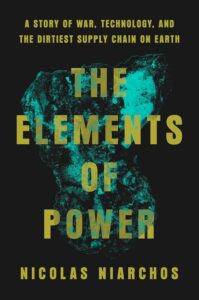
Investigative journalist and The Elements of Power: A Story of War, Technology, and the Dirtiest Supply Chain on Earth author Nicolas Niarchos spent years — and six days in secret police detention — reporting from inside that reality, and he joins us to walk us through what he found. Nicolas traces the full arc of the battery supply chain, from the artisanal miners scraping cobalt out of collapsing pits with bare hands to the Chinese processing facilities that refine 70 to 90 percent of the world’s critical battery metals, giving Beijing a grip on the clean energy economy that makes OPEC’s old oil leverage look almost quaint. He explains why corporate supply chain audits, even the glossy ones from household-name tech companies, have a habit of noting problems and then doing absolutely nothing about them. He unpacks the geopolitical stakes of a single country — the DRC — sitting on 70 percent of the world’s cobalt, and why that geological jackpot has, so far, mostly been a curse for the people living above it. But Nicolas doesn’t leave us without a path forward: he argues that ethical mining is scalable, that informed citizens have more leverage than they think, and that the most powerful thing most of us can do starts with simply using our devices a little longer. Whether you’re a climate optimist, a geopolitics junkie, a human rights advocate, or just someone who charges their phone every night, this one will quietly change the way you see that little lightning bolt on your screen. Listen, learn, and enjoy!
Please Scroll Down for Featured Resources and Transcript!
Please note that some links on this page (books, movies, music, etc.) lead to affiliate programs for which The Jordan Harbinger Show receives compensation. It’s just one of the ways we keep the lights on around here. We appreciate your support!
- Sign up for Six-Minute Networking — our free networking and relationship development mini-course — at jordanharbinger.com/course!
- Subscribe to our once-a-week Wee Bit Wiser newsletter today and start filling your Wednesdays with wisdom!
- Do you even Reddit, bro? Join us at r/JordanHarbinger!
This Episode Is Sponsored By:
- BetterHelp: 10% off first month: betterhelp.com/jordan
- ButcherBox: Free protein for a year + $20 off first box: butcherbox.com/jordan
- DeleteMe: 20% off: joindeleteme.com/jordan, code JORDAN
- Booking.com: Book your getaway now with booking.com
- SimpliSafe: 50% off + 1st month free: simplisafe.com/jordan
Thanks, Nicolas Niarchos!
Click here to let Jordan know about your number one takeaway from this episode!
And if you want us to answer your questions on one of our upcoming weekly Feedback Friday episodes, drop us a line at friday@jordanharbinger.com.
Resources from This Episode:
- The Elements of Power: A Story of War, Technology, and the Dirtiest Supply Chain on Earth by Nicolas Niarchos | Amazon
- Nicolas Niarchos | The New Yorker
- Nicolas Niarchos | Instagram
- Nicolas Niarchos | LinkedIn
- Siddharth Kara | How the Blood of the Congo Powers Our Lives | The Jordan Harbinger Show
- Cobalt Red: How the Blood of the Congo Powers Our Lives by Siddharth Kara | Amazon
- With New Export Controls on Critical Minerals, Supply Concentration Risks Become Reality | IEA
- The Dark Side of Congo’s Cobalt Rush | The New Yorker
- China’s New Restrictions on Rare Earth Exports Send a Stark Warning to the West | Chatham House
- ‘We Miners Die a Lot’: Appalling Conditions and Poverty Wages — the Lives of Cobalt Miners in the DRC | The Conversation
- China’s New Rare Earth and Magnet Restrictions Threaten U.S. Defense Supply Chains | CSIS
- Mining in the Democratic Republic of the Congo | Wikipedia
- Metal Mining and Birth Defects: A Case-Control Study in Lubumbashi, Democratic Republic of the Congo | The Lancet Planetary Health
- Protecting Miners’ Health in the Democratic Republic of Congo | Think Global Health
- Illicit Mineral Supply Chains Fuel the DRC’s M23 Insurgency | Atlantic Council
- The M23 Offensive: Elusive Peace in the Great Lakes | International Crisis Group
- Erik Prince | Wikipedia
- Special Report: Conflict Minerals in the DR Congo | Genocide Watch
- New Investigation Suggests EU Trader Traxys Buys Conflict Minerals from DRC | Global Witness
- Why Conflict Mineral Narratives Don’t Explain the M23 Rebellion in DR Congo | The New Humanitarian
- Dan Gertler | Wikipedia
- EU Battery Passport Regulation Requirements | Circularise
- The Strategic Game of Rare Earths: Why China May Only Be in Favor of Temporary Export Restrictions | Resources for the Future
- BYD Company | Wikipedia
- Fairphone | Wikipedia
- 2025 Democratic Republic of the Congo–Rwanda Peace Agreement | Wikipedia
- General Robert Spalding | How China Took Over America | The Jordan Harbinger Show
- General Robert Spalding | China’s Playbook for Global Domination | The Jordan Harbinger Show
1315: Nicolas Niarchos | The Dirty Supply Chain Behind "Clean" Energy
This transcript is yet untouched by human hands. Please proceed with caution as we sort through what the robots have given us. We appreciate your patience!
Jordan Harbinger: [00:00:00] Coming up next on The Jordan Harbinger Show.
Nicolas Niarchos: The mines are super, super unsafe. They collapse, especially during the rainy season, which runs from May to October in the Southern Democratic Republic of the Congo. Here, there are really situations in which these people are being essentially treated not just as very low paid workers, but essentially it's conditions of modern day slavery.
Mm-hmm. Uh, people earn so little and are able to, uh. Basically scrape by essentially.
Jordan Harbinger: Welcome to the show. I'm Jordan Harbinger. On The Jordan Harbinger Show, we decode the stories, secrets, and skills of the world's most fascinating people and turn their wisdom into practical advice that you can use to impact your own life and those around you. Our mission is to help you become a better informed, more critical thinker through long form conversations with a variety of amazing folks, from spies to CEOs, athletes, authors, thinkers, performers, even the occasional scientist, drug trafficker, gold smuggler, or tech luminary.
If you're new to [00:01:00] the show or you want to tell your friends about the show, and I always appreciate it when you do that, I suggest our episode starter packs. Now. These are collections of our favorite episodes on topics like persuasion and negotiation, psychology and geopolitics, disinformation China, North Korea, crime, and cults and more.
It'll help new listeners get a taste of everything we do here on the show. Just visit Jordan harbinger.com/start or search for us in your Spotify app to get started. Today on the show, your phone dies. You plug it in, end of story, right? Not quite.
The charge you're about to get it started in a hole in the ground halfway across the world, dug by somebody who probably doesn't even own a phone, definitely isn't getting rich, and might not even make it out of the hole alive. And somehow we've just convinced ourselves that the whole system is clean. Today, we're tearing apart the fantasy of clean energy, following the battery supply chain from dirt to device, and asking a question that gets real uncomfortable real fast.
Are we actually solving anything? Are we just upgrading the packaging and outsourcing the damage someplace else? But this isn't just about saving the planet anymore. This is about who controls the
Nicolas Niarchos: [00:02:00] future. Where is this technology going? It really is the same game with new resources. Here we go with Nicolas Niarchos.
Jordan Harbinger: I'm holding my phone right now, and somewhere in the world, a guy dug at least a part of this out of the ground with his bare hands for, I don't know, a couple of bucks a day. And I thought electricity was supposed to be the clean energy. When people hear clean energy, what are we completely wrong about?
Nicolas Niarchos: I mean, the phone in your hand could have cobalt that comes from a clean source.
Cobalt is in the battery, but there's a chance that it has something that a child dug out of the ground. Depends how old your phone is and which company it's from and so on. But your phone has at least a 20% chance of having cobalt that was dug out by an artisanal mine. Some companies have pledged to clean up their supply chain, apple among them, but that's actually been quite recent.
Jordan Harbinger: But you said artisanal miner. Look, I lived in New York. [00:03:00] When I hear artisanal, usually the next word is cheese or some kind of milk that comes from a thing that doesn't have nipples. It's not usually a part of a battery. So what is an artisanal miner? This is just like an entrepreneur, and I use that word tongue in cheek.
It's just the kid who goes out and digs in a muddy pit to try and get some of this element.
Nicolas Niarchos: That's essentially what it is. An artisanal miner is somebody going using a metal bar. Sometimes they bare hands, sometimes they have bare feet. People climb down into these pits and have very, very little, essentially doing the work.
Maybe you remember those kind of Sebastian Salgado shots from the 1980s of gold miners in Brazil?
Jordan Harbinger: I've seen that with my own eyes back in the Amazon. These people who just, they're digging holes and they go down in a nightmare. Scenario like a Vietnam tunnel and they're just coming up with muck and hoping that there's golden there.
Nicolas Niarchos: That's exactly what it is. But this is a kind of much more almost industrialized thing, and the mines are super, super unsafe. They collapse, [00:04:00] especially during the rainy season, which runs from May to October. We're talking about the Southern Democratic Republic of the Congo here, and there are really situations in which these people are being essentially treated not just as very low paid workers, but essentially it's conditions of modern day slavery.
People earn so little and are able to basically. Scrape by essentially.
Jordan Harbinger: Okay. But who controls the mind? Because if something has a billion dollars worth a valuable element under it, they're not just letting random villagers dig in there. And you said slave labor, you can't enslave yourself really. So who's going, Hey, you dig a hole in here and if you don't do it, somebody else is going to do it and I'll give you a dollar a day.
Somebody's buying cobalt from them. They're not mailing it to Cupertino to sell to Apple, right?
Nicolas Niarchos: No, exactly. I mean, that's really important. There are layers and layers of different people buying them, but obviously if you go there, you realize that the biggest buyers are the [00:05:00] Chinese. There are these Chinese companies, Congo Dong, Fang Mining, which is a subsidiary of Huo, which is an approved, or was until very recently an approved supplier of Apple.
So there is a direct connection between these companies and some of the tech in our pockets, Samsung as well. It's not immune to these problems. You basically understand that this seems very far away, but actually it's right there in your pocket, in your laptop, in your cell, in your electric car.
Jordan Harbinger: Did you go to Congo?
Were you able to go to Congo and look at this stuff? The book is, it's enormous. I didn't look at the sources, I just read the book, but it seems like you would've seen this.
Nicolas Niarchos: Yeah, my first trip was 2019 and uh, I made five or six trips.
Jordan Harbinger: That's a lot of trips to the Congo. That's a place that doesn't strike me as a safe destination to roll into as a Western guy and just go, I'm just here to take some pictures and write about what you're doing.
Nicolas Niarchos: I found myself arrested, detained. I spent six days in secret police [00:06:00] detention with no food and being interrogated on a regular basis. So definitely not a friendly country.
Jordan Harbinger: Surely you thought they were going to kill you if you were there for a week with no food.
Nicolas Niarchos: I thought that they were very, very inefficient.
I didn't think they were going to kill me. I was worried that I was going to be beaten up or something like that. And luckily everybody was actually ended up being quite kind and I'll just make lots of jokes so they don't want to beat me up, but there you go.
Jordan Harbinger: Did that work?
Nicolas Niarchos: It kind of did. Yeah. Because the head of the prison took me to the airport at the end and he gave this big hug and he said, we're together.
Come back and work with me anytime here in Congo. I said, what do you mean? He said, the people that we normally have in this prison, they're very boring and I really liked our chats about New York and one day if I ever come to New York, I'd love to come up and visit you. I said, okay, fine.
Jordan Harbinger: That just shows you how differently things are over there.
Like, oh, you're not taking it personally that we held you without food for six days and interrogated you and made you think you were going to die. You're not upset about that. Are you pal? Anyway, I'll call you when I'm in Brooklyn. [00:07:00]
Nicolas Niarchos: Exactly. That's exactly what it was. It was hilarious. He said, you, well, you know I'm very interested to go to New York.
Jordan Harbinger: That's crazy to me, man. That's nuts. Wow. Uh, okay, I have more questions about that, but I want to go back a little bit. We should probably define the basics. I think everybody knows what this is, but what is a lithium ion battery in plain English? Explain like I'm five what's inside the battery? And why did this specific technology win over everything else that was available?
Nicolas Niarchos: A lithium-ion battery is a type of very powerful battery that was first created in the 1970s. Now this battery is the foundation for modern devices. Basically it, it stores power for cell phones, IPOs, when they were around for laptops for these little aura rings that people use to measure their sleep and things like that.
But these batteries are like amazing pieces of technology and the book is not about that. These batteries are inherently evil, whatever it is actually, like as I delved into it, I was just amazed [00:08:00] at the scientists who could produce such powerful things and it's, they're central to the electric vehicle revolution.
They're central to the cell phone revolution. I mean, they basically have allowed modern life to be possible. Now we have a situation in which they're going to be powering more and more of the vehicles that we get around with. These are batteries that contain lots and lots of rare metals. Things like cobalt, lithium, they contain nickel in some cases and various other minerals like phosphates in some other cases and all these metals.
The point of the book is to make you think about where things come from, and the point of the book is to say that, look, there is this rush for critical metals, and it's not just batteries. Actually, when you think about Kabul has a lot of military applications. It's used in armaments. I give a talk last night in Washington DC and somebody came up to me and said, I'm really worried about the cobalt supply chain because I'm a doctor and it's used in stents for, uh, brain surgery, the [00:09:00] applications and the uses of this metal that they are legion.
Jordan Harbinger: Okay, now we zoom out a little bit. If I take my phone, how many countries have touched just the battery before it got to me?
Nicolas Niarchos: Chances are that your battery has probably been touched by five to 10 countries. Yeah.
Jordan Harbinger: Really? So it's not just like, uh, Congo, China, USA?
Nicolas Niarchos: Oh no, because the lithium in it probably came from Chile.
The copper might have come from another part of South America or maybe from Congo itself. And there are various other different parts of it that might be Congolese Coltan that's coming through Rwanda. What I'm saying here is actually that, that Congo has most of the things that can make your battery, but the fact is that supply chains are such that things come from lots of different parts of the world.
Jordan Harbinger: Yeah. A guy I know, he makes cars, that's a pretty vague, but he makes cars and he threw a plastic container in the garbage and I said, Hey, why don't you recycle that? And he goes, look man. And I don't want to [00:10:00] discourage people from recycling. I recycle what I can. But he goes, I send parts over to, I forget where it was, Mexico from the US And he goes, they're covered in plastic wrap.
We unwrap 'em, we put 'em together and then we wrap that in plastic and we bring it back to the US And then they put that on this other thing and then they wrap that in plastic and they send it back to Mexico and this other thing is done there. And then they wrap that in plastic. And then they're like, we're throwing away literally tons of plastic for like a, a few automobiles here.
I'm not worried about this bottle. Because there was no recycling bin in sight. So he, it's not like he chose the garbage. He's just like, I'm not going to carry this around. And I gave him shit for it. You're fighting an uphill, but because of the supply chain thing, right? You just, yes. You could probably all make these things in one place if you decided to do that.
But instead let's do it in 15 different countries because it's just a little bit cheaper.
Nicolas Niarchos: Exactly. This is really a question of just being a little bit cheaper. And I just want to add to that, there was a very good tweet the other day with a picture of the Iranian oil fields on fire and they said. I have to bring my paper shopping bag to the [00:11:00] supermarket and this is what's happening on the other side of the world.
Jordan Harbinger: Exactly.
Nicolas Niarchos: So yeah, but I think environmentalists have woken up to the fact that making people feel ashamed about throwing away a plastic bottle every now and then is a, not going to do anything, and B is counterproductive because people feel like they are oppressed by environmental reg regulations and it doesn't get the message across.
Jordan Harbinger: And that it's up to us to just recycle our way out of climate change when it's like, no, maybe we need a power plant that doesn't belch hundreds of thousands of tons of CO2 into the air every year or whatever. You know, we should maybe have a different system for that instead, um, because that's 8 trillion plastic bottles or something like that.
I don't know. I'm making these numbers up, obviously, but we're not going to recycle our way out of this one.
Nicolas Niarchos: Full disclosure, I do recycle.
Jordan Harbinger: Yeah. Everyone hated you for a minute. Good thing you clarified that.
Nicolas Niarchos: I'm of that generation.
Jordan Harbinger: Yeah. That's ingrained in us eighties kids. Man. If you don't recycle, you're just a bad person.
Uh, and and my kids will be like, Hey dad, there's no point to this. And I'll just, I'll die on that hill, even though I know it's nonsense. All right. What is the most important step in the battery change? [00:12:00] Is that even a fair question? because you're mining these different minerals in different places and then what?
They're melted together or they're assembled together someplace and made into a battery. Is that China?
Nicolas Niarchos: Yeah. They're dissolved with sulfuric acid. They're treated, they're treated with chemicals over and over again. They're cooked and so on. 70 to 90% depending on which metal you're talking about, happens in China itself.
And there are a few places in Finland. There's one place in the US that might or might not be able to do it, and for lithium, but very limited. This is a stage of processing. And processing has to happen before you get battery precursor metals. Now the argument has been, oh, should that not happen in Congo?
But the fact is you need to have incredible amount of investment, so bricks and mortar, and you need to have stable power supply because it's very power intensive. This, and Congo just doesn't have a stable power supply because of years and years of underinvestment in its grid. So you have a situation in [00:13:00] which the country is unable to sort of move up the supply chain and that keeps it very poor.
But moving up the supply chain would be very difficult.
Jordan Harbinger: It also seems like this is one of those chicken egg questions, but there's so much political instability over there. Do you want to build the $10 billion refinery in the place where it can get seized by the next guy who decides to. Take control of the military or the next general that pops up or that kills the guy ahead of him and takes over the whole country.
I mean, I heard some noise about Rwanda invading part of Congo, and then a journalist friend of mine was like, they only invaded this little part because there's mines there. And so they wanted to control these mineral resources or they invaded and then they're moving dirty coltan, whatever it is through to Rwanda.
And Rwanda says, this is from Rwanda, and it's, I think he was doing some math and said, there's no chance Rwanda has enough of this for all of this supply.
Nicolas Niarchos: He's not the only reason that Rwanda is invading the east of the DRC. It's obviously [00:14:00] completely unconscionable that they've done so and that they've resorted to violence and so on.
But actually they do have a legitimate security concern when the Congolese government is arming anti-war militias. So it's both sides. I'm afraid that there has been a very specific narrative that has been pushed, but both by the current administration and by the left in the us. It's this kind of strange situation in which everybody's blaming everybody else and they're just saying, oh, well it's all about the minerals.
Now. The minerals are very, very important in continuing the conflict, but I don't think they're the goal of the conflict specifically. I think if Kagame wanted to, he could withdraw the president of Rwanda. He could withdraw from Congo and build up a business climate in his own country without the critical minerals.
But he couldn't continue an insurgency for this long without some sort of funding. And the funding is provided by selling this gold, this Callan and Tin tantalum and tungsten.
Jordan Harbinger: I see. So he's actually funding some of his [00:15:00] security operations with the mineral revenue. We've just sort of done this to Africa right over the last several centuries.
It's just keeps on rolling. So it sounds like the choke point for lithium ion batteries, which are in everything is China, because if they. Decided to not allow us to get batteries. You said one place may be in the US that could do it and one place in Finland maybe that could do it. And I don't know if that was an incomplete list, but I'm assuming China has a lot of places that can do it because that's where we get all our batteries from.
I used to disassemble a lot of stuff and I still do build things here and there with my kids and RC cars. I've never seen a battery that says made in Finland.
Nicolas Niarchos: Yeah, it was very funny because last week this thing called the donut battery got written up in the Wall Street Journal and everybody said, look, this battery doesn't have so many rare metals and it doesn't have cobalt in it.
And doesn't this invalidate the thesis of your book? And I said, how many donut batteries do you see in your iPhones? How [00:16:00] many donut batteries do you see in your Teslas? It's just not viable at the moment. And of course it would be great if people could scale it up, but the second part of innovation that everybody forgets about, everybody loves the eureka moment and the scientists discovering that the things that just as important is the scaling industrial scale is the second leg of innovation.
And if you created the most amazing battery in the world, but couldn't build it at scale, it will always be confined to be a curio of history. Like some of the electric cars that were developed in the 1970s that I go into in the book, the US had an electric car, a very small electric car industry that it never figured out how to scale.
The Chinese figured out the scaling problem and the scaling problem. They figured out because they had people coming in from the countryside into the city who were willing to work for peanuts and basically assembled batteries by hand.
Jordan Harbinger: It's amazing what we can ignore when it's far enough away. Like if suffering had a tracking number, we just hit, [00:17:00] mark is delivered and move on.
Speaking of shopping online, we'll be right back. This episode is also sponsored in part by BetterHelp. Financial stress isn't always just about not having enough. Sometimes it's about feeling like no amount is enough. It's comparison pressure, and that voice in your head telling you that you should be further along by now, that stuff can wear on you.
Even when from the outside, everything looks fine. Even I fall victim to that. I look what I built instead of thinking like, this is great. My brain goes to, yeah, well, why didn't you build something even bigger? Jordan, why isn't the show 10 times larger? That's the trap And therapy can help you sort through that, not because it's going to tell you how to make more money, but because it'll help you deal with the stress and anxiety that come from tying your value to achievement.
BetterHelp matches you with a licensed therapist based on a short questionnaire, and if the fit is not right, you can switch any time. I've done it myself a couple of times. They have over 30,000 therapists. They've helped more than six million people worldwide and live sessions have an average of 4.9 out of five based on over 1.7 million client reviews when life feels overwhelming.
[00:18:00] Therapy can definitely help. Sign up and get 10% off at betterhelp.com/jordan. That's betterhelp.com/jordan.
This episode is also sponsored by ButcherBox. ButcherBox is one of those modern conveniences that genuinely makes our lives easier, and I'm very grateful for it. When things get busy, having high quality protein ready to go is a big part of keeping dinner on track.
That's one of the reasons we like ButcherBox. They deliver over a hundred premium protein options straight to your door, including a hundred percent grass fed beef free range organic chicken crate, free pork, wild caught seafood. Everything is responsibly raised, no antibiotics, no added hormones, no unnecessary additives, so you know exactly what you're getting.
We always keep ButcherBox stocked in the freezer. Every morning, Jen pulls out something to defrost in the fridge, and that usually becomes dinner that night. Maybe it's roasted chicken thighs, ground beef with sweet potatoes, ribeye steaks for the family. It just takes a lot of the guesswork out of dinner and having delicious high quality protein on hand every month makes eating well a whole lot easier.
Jen Harbinger: As an exclusive offer, new listeners can get their choice between chicken breast or top Sir Loin for a year, or Ground Beef for Life plus $20 off when you [00:19:00] go to butcherbox.com/jordan. That's right. Your choice between chicken breast or top sirloin for a year, or ground beef for life, plus $20 off your first box and free shipping always.
That's butcherbox.com/jordan. Don't forget to use our link so they know we sent you.
Jordan Harbinger: Don't forget about our newsletter, Wee Bit Wiser. It is a bite-sized gem from us to you with a principle from the show. Usually that's a past episode of the show. It's always about a two minute read or less, just about every Wednesday.
Jordan harbinger.com/news is where you can find it. Now. Back to Nicolas Niarchos. It's funny, I had a Chinese lesson this morning and we're talking about this, about how. There's all these people that live in villages in China and on farms, and their life is not that good. And during the opening up revolution, they said, Hey, let's improve all the cities.
And so everyone went, wait, I want to live there. I'm 15, 20 years old. I don't want to live here on the farm digging holes with sticks and having an ox plowed my field. So they go to the city and the city goes, okay, we're going to give you a job. You're going to make five bucks a [00:20:00] day. And it's a little bit hazardous, but you don't have to live on this farm.
And it's still like that in some places. So you're assembling batteries by hand and you have millions of people doing it. We're not going to be able to do that here in the states. It's not a thing that we would be willing to do.
Nicolas Niarchos: I would say that assembling batteries by hand basically been obviated by just the success of Chinese battery companies, which have in the last decade or so, invested heavily into robotics, invested into factories.
And so they had these state-of-the-art facilities. I spoke to a top scientist at Argon National Lab in Illinois, and she said to me, I went to China for the first time in 10 years, 15 years, whatever it was, and I was shocked at just how advanced, how many PhDs. I think BYD has 180,000 researchers, which is more than the entire country of Germany working on batteries or working on many things, of which a big portion of that is batteries.
So the r and d investment, the research and development investment is [00:21:00] key to this. And the US has underinvested over the years. They have underinvested in mining, in processing, in the science, and so now China is out ahead on this front.
Jordan Harbinger: Yeah, this is crazy. Look, people are worried about an armed conflict, but really right now, they don't even need to do that.
They could just say, no more batteries for you. Is that something China could do? It seems like they could, right? They could just say, you can't buy batteries.
Nicolas Niarchos: And they did some uh, rare Earth's export controls last year, which sent the market into a bit of a tizzy fit. The price of cobalt has jumped. That's to do also with export controls from Congo.
But it is really a risk. And the fact is, when you start buying the end product, when you start buying the end battery, that makes it impossible ever to move back to producing the precursors and so on. That's just the logic of industry.
Jordan Harbinger: I see. So it almost seems like batteries are another pole. I won't say they're replacing oil is the center of power, but it certainly seems like they are another strong pillar [00:22:00] of power.
I guess back in the day it was whoever controlled the oil right? And if there was an oil shock, it affected everything. And it's still like that, but it seems like there could just as easily be a battery shock.
Nicolas Niarchos: There could easily be a battery shock as well. I mean, you could have. A situation in which your phone could go up in price quite considerably because of Chinese controller battery cells.
The fact is that at the moment that hasn't happened and it's a weapon that they have kept in their arsenal, but it certainly could happen. Now they don't want to do that because they're still worried about losing primacy. But the fact on the other side is that the US is very aware of this. I spent the morning speaking with people at the State Department.
They are very aware of this.
Jordan Harbinger: Okay. That's a relief because it sure to a lot of us seems like we slept on this for 20, 30 years. Now it's, Hey, this is going to be a problem and everyone goes, ah, whatever. That's a problem for the next administration. I don't know. So at least people in Washington are paying attention and care about [00:23:00] this.
Nicolas Niarchos: Absolutely. People have been paying attention since the first Trump administration and really actually Biden pushed this into top gear. Some of the solutions that they proposed were not particularly effective. The current administration is working very closely with and trusting the Congolese government.
I have a question as to whether that is really a solution, because the Congolese government is ridden with corruption. It relies on falsified elections and yet at least they're doing something. I mean, the lack of knowledge on this subject was palpable. When I started in 2018, I spoke to people who just didn't know anything about this.
Now there is a significant team of people working on this. There's a brain bank that's starting to be developed, so at least that now, I don't know if I trust that they have all the solutions, so we shouldn't feel in any way we're out of the weeds. It was funny because two days ago, the Wall Street Journal [00:24:00] reported that Vertus, which is a new US company, founded by sort of ex CIA guys or something like that, has secured the lease for a big Congo cobalt processor called Shema.
And it's a major win for the Trump administration in the Wall Street Journal headline. And somebody who was a sort of Republican person said, talk about a good play in the first inning, basically.
Jordan Harbinger: I see, Hey, look, I'll take any sort of win where we can, I suppose, because it really sounds like we don't have the minerals, okay?
We don't have the capacity to refine the minerals. Not good. We don't have the capacity to turn the minerals into batteries. Not good. We don't have the capacity to manufacture the things that need the batteries and then ship them. That is not good, especially if we end up in a drone warfare situation where you need to make lots of small gadgets that have microprocessors and batteries in them because you need millions of them to fight a conflict.
Nicolas Niarchos: Or especially if you are in a war with a run where you're quickly depleting your stocks of to hawk [00:25:00] missiles, which are full of copper. Or you need to build a Virginia class submarine, which I can't, I forget how many rare rats it has in it. The dependence on China has increased thanks to this administration's wars.
So it is a problem that is becoming worse and worse by the day with every day that the war in Iran continues. We are becoming more and more dependent, and I say we, I mean the US and Europe is becoming more and more dependent on China.
Jordan Harbinger: You use the phrase Mephis. Ilian bargain. Did I get that right?
Nicolas Niarchos: Got it.
Perfectly last time.
Jordan Harbinger: Wow. Okay. That's heavy. I don't know what that means, and I'm probably not alone, so I'm going to have to have you explain that.
Nicolas Niarchos: Uh, measles was the demon with whom Dr. Faustus sold his soul away for riches and power and wealth and so on. So Mephisto, it's a packed with the devil.
Jordan Harbinger: I see. So is the same thing as Faustian Bargain.
Nicolas Niarchos: Faustian Bar Pact. Exactly.
Jordan Harbinger: I've never heard this version of it. Maybe that's more common in the uk. That's funny. You learn something new every day.
Nicolas Niarchos: I studied [00:26:00] FST in, in college and that was in the States. So me was always, I I like it as a word.
Jordan Harbinger: Yeah. That's funny. You've been waiting years to use this. Like finally I get to use Mephis Ilian Bargain and something non-academic.
That's great. Okay, so what is the Faustian because that's easier for me to say, bargain that we have made here. What are we trading?
Nicolas Niarchos: The bargain is about packing more and more power and having these magical, almost batteries in our pockets and exporting the suffering and the pain and the environmental impacts to Africa, to Asia, to other places.
And the other part of the Ian Bargain is that we have also handed the keys to China. China has all the cards on this one. It's not to say that we can't get it back, so we're not as screwed as Dr. Faus, but we could certainly find ourselves in very difficult straits in not too long.
Jordan Harbinger: Yeah. I did a show that was [00:27:00] more in the weeds on.
The mining, it was with Siddharth Kara, that was episode 807. It was basically how the blood of Congo powers all of our devices. So rather than getting into the human cost of this and the environmental cost, which is horrifying, I'll let people go to that episode. I'll talk with you more about this system itself and the power that China has and the how this could escalate into something quite serious geopolitically.
So if our whole system runs on batteries, how fragile is the system? I know that's kind of a strange word with supply chains, but it seems like China's got a pretty robust setup. It's just that there's a choke point in that they can say No more batteries for you.
Nicolas Niarchos: Exactly. I think the system is fragile in that things are being shipped all around the world and when global shipping is limited or when fuel prices go up and so on.
Again, sorry to come back to the war, but it, it will push up prices and we will see probably prices for these minerals rise.
Jordan Harbinger: [00:28:00] What breaks first? If supply chains get disrupted, I buy an iPhone once a year. If it costs $50, a hundred dollars more, I think some people will notice, most people won't. They'll just assume apple's getting greedy at the end.
But what sort of problem does the every man see on a daily basis if these supply chains get disrupted because there's batteries and things you don't even think about. It's not just your fancy once every two years purchase.
Nicolas Niarchos: I think you are completely right, the batteries and everything. So you'll see the price of many things go up.
And I think what's very interesting about this as well is that going to Shar Kara's book, which is sort of expose of some of the artisanal mining, which again, reminding people, it means exploitative hand binding. The large tech companies could. Invest in mining and invest in clean mining and invest in companies that do things the right way.
It would be a bit more expensive and maybe they would pass some of those costs onto the consumer. But we're [00:29:00] not talking about $500 more for an iPhone. We're not even really talking about a hundred dollars more. We're talking about $30 more or $20 more in some cases.
Jordan Harbinger: That's depressing. That is, it's so cheap to just not have child slaves dying in horrific conditions, and yet it's not.
We're not doing that.
Nicolas Niarchos: We're not doing that, and it's to do with inertia and laziness and greed. At the end of the day. Again, apple is using recycled metals. Now, where did those metals come from in the first place? That's one question. What are the people left with? Who originally took out those metals? It's another question, but at the same time, I guess it is better than directly buying things, feeding the supply chain.
The fact is that the cat is out of the bag. There are so many other companies buying this stuff that don't really care about where it's coming from. And also the other thing is that Apple has continued to put companies like Huo Cobalt that we spoke about at the beginning of this show into their supply chain.
So they've taken them out when it's politically [00:30:00] unpalatable and then they slowly crept back in and then they've been taken out, come back in. So it's, it's this sort of whack-a-mole. You have to keep pointing it out.
Jordan Harbinger: Not to mention maybe people, maybe Apple has a big spotlight on them because it's Apple and everybody has an iPhone in their pocket.
But I don't know. I've got this thing here that vibrates. It's like a exercise thing. It's not a major brand. No one's going to know if that company uses sustainable batteries that were mined fairly fair trade mining. Even the company that makes this vibrating device doesn't know where that battery comes from.
They don't care. They just probably bought the cheapest ones that don't explode spontaneously so they can legally sell them in the United States.
Nicolas Niarchos: It's amazing that you say that because by the way. I had a conversation with a European electric bike manufacturer, and that is exactly what he told me. He said We were looking for the cheapest batteries possible.
I said, but did you even think about whether the cobalt was going, oh, no, no, we don't think about that.
Jordan Harbinger: Yeah, of course. The Euros are supposed to be the ones that actually care about this stuff, right? It's uh, it's us over here in the States is supposed to be the [00:31:00] heartless bastards. Wow. And you're going to be able to compete on price.
Look, if you're just looking for the cheapest batteries and you need a million of them and something costs you 10,000 or $15,000 more, but it's fair trade and sustainable, but no one is ever going to give you a pat on the back for that. You're just going to buy the cheaper one. You're just going to do it.
Nicolas Niarchos: The Europeans have started this thing called the battery passport, which is supposed to come in, I think, later this year or early next year.
So you're going to be able to see where your battery came from and it'll be like a QR code on the back of your phone or something like that.
Jordan Harbinger: That's amazing.
Nicolas Niarchos: Let's see how that works out. Again, there are questions around how things are traceable and. Can you rely on the data, but obviously it's a step forward.
Jordan Harbinger: Agree. Yeah. That is a step forward. People will try to counterfeit that stuff, but that's always been that way. This is probably a really tough one to answer because there might not be an answer, but are we more dependent now on batteries than we were in the oil era?
Nicolas Niarchos: No. I would say we're still very dependent on oil.
Jordan Harbinger: Yeah. [00:32:00] Of, of course. I just wonder if we have a higher dependence on battery tech.
Nicolas Niarchos: No. Battery tech changed the peak of the oil era whenever that was In the 1980s. Say battery tech completely changed. Those batteries were made. They were lead acid batteries. They didn't have the supply chain to use. Nickel cadmium as well, didn't have the same supply chain.
S two. And also, let's not forget, until the 1970s, there was a lot of mining in the us. There was a lot of mining in Europe, and that mining has for very good reasons because it was also being done in unsafe ways, in many cases was regulated. And the mining industry went through this period of contraction in the nineties and two thousands because people understood that this was a very polluting industry and it had to go through this.
And I actually think that has been good for the mining industry in the end of the day. But now there needs to be a period of investment. There are very few people on the left or the right who are saying mining in [00:33:00] Congo is better than doing mining at home. The US has a small cobalt belt, actually a fairly large cobalt belt.
It's never going to be able to replace Congo, but it will go some way towards making the US less dependent on China. The problem is that that cobalt is very difficult to refine. It has a lot of arsenic in it. There's a big issue around the environmental effects of processing, and that's something that has to be resolved.
Jordan Harbinger: At this point, the most honest phone ad would just say, now with 12% more battery life and a hundred percent plausible deniability. Cool. Love that for us. Quick break. We'll be right back. This episode is sponsored in part by DeleteMe. DeleteMe makes it easy, quick, and safe to remove your personal data online.
At a time when surveillance and data breaches are common enough to make everyone vulnerable. It's pretty unsettling how easy it is to find your address, phone number, even relatives names on data broker sites, which can have real world consequences. Try searching for yourself online. I did, and I was surprised by how much personal [00:34:00] information was out there.
Sure, you could try to remove it yourself, but who has the time to chase down hundreds of sites and keep doing it over and over again? It's basically a game of whack-a-mole. That's why DeleteMe is so useful. They do the work for you, removing your personal data from hundreds of data broker sites and keeping it off.
One of my favorite parts is the report they send showing exactly where your info was found and how many sites they removed it from. It's incredibly satisfying to see the New York Times wire cutter named DeleteMe. It's Top Pick for data removal services, so you know it's legit.
Jen Harbinger: Take control of your data and keep your private life private by signing up for DeleteMe now at a special discount for our listeners.
Get 20% off your DeleteMe Plan when you go to joindelete me.com/jordan and use promo code Jordan at checkout. The only way to get 20% off is to go to joindelete me.com/jordan and enter code Jordan at checkout. That's joindelete me.com/jordan, code Jordan.
Jordan Harbinger: This episode of The Jordan Harbinger Show is brought to you by Booking.com.
Look, if you've got a vacation rental and you want to grow that business, you gotta make sure people can actually find you. That's where Booking.com comes in. It's one of the most downloaded travel apps in the world, and since [00:35:00] 2010, they've helped more than 1.8 billion vacation rental guests find places to stay.
That's an enormous number of people looking for places like yours. But here's the thing. Most vacation rental hosts don't even realize they can list their properties on Booking.com. And if you're not on the platform, your rental is basically invisible to millions of Booking.com travelers worldwide.
After all, they can't book what they can't see. Right? Once you list your property gets in front of a huge global audience of travelers, which means more visibility, more bookings, and more chances to build real momentum with your rental business. And the barrier to entry is low Here, you can register your property in as little as 15 minutes and nearly half of hosts get their first booking within a week.
So if your vacation rental isn't listed on Booking.com, it could be invisible to millions of travelers searching the platform. Don't miss out on consistent bookings and global reach.
Head over to Booking.com and start your listing today. Get seen, get booked on Booking.com.
This episode is also sponsored by SimpliSafe.
Ever be lying in bed, here's some random thud in the house or outside the house, and instantly go from half asleep to fully convinced something is very wrong. That still happens to me occasionally, but a lot [00:36:00] less. Now that we have SimpliSafe, it just takes away that low level background anxiety. I can check everything right from my phone, look at the cameras, make sure the system is armed, know the house is covered.
And what I like is it's not just built on that old home security model where you get stuck in some weird long-term contract with a bunch of unnecessary hassle. SimpliSafe feels like it's designed for how people actually live. Now, you can customize the system online. It shows up at your door in just a few days, and the setup takes less than an hour.
No technician, no drilling, no waiting around, no headache. The app walks you through the whole thing, and it just works. And it's a real system, not just one camera. You got sensors on doors and windows, cameras inside, and now 24 7, professional monitoring. So if something actually happens, there are real people ready to respond.
Plus no contracts. They're not trying to trap you, they're just providing a good service that makes you want to stay.
Jen Harbinger: We want you to experience the same peace of mind we do, which is why we've partnered with SimpliSafe to offer an exclusive discount to our listeners. Right now, you can get 50% off your new system by visiting simplisafe.com/jordan.
That's half off at simplisafe.com/jordan. There's no safe like SimpliSafe.
Jordan Harbinger: If you like [00:37:00] this episode of the show, I invite you to do what other smart and considerate listeners do. Take a moment and support the amazing sponsors who make the show possible. All of the deals, discount codes, and ways to support the show are searchable and clickable on the website at Jordan harbinger.com/deals.
If you can't remember the name of a sponsor, you can't find the code, please do email us: Jordan@jordanharbinger.com. Happy to surface codes for you. It really is that important that you support those who support the show. Now, back to Nicolas Niarchos.
Back in the, let's say the seventies, you had OPEC and they could just say, no, we're not giving you oil, or we're raising our prices, and it's just tough luck.
That made us completely dependent on these oil producing countries. Now we've got the shale revolution. We can refine at least some of our own oil. We get oil from Canada more. Now we produce domestic oil, but we can't do that with batteries. So I think instead of dependent, I'm asking more along the lines of, are there more dramatic choke points and levers that other countries have now with batteries than they did when we were dealing with oil?
Nicolas Niarchos: Completely. [00:38:00] The Democratic Republic of the Congo has 70% of the world's cobalt, which is a critical mineral. And at its height, OPEC had, I don't know, 40%, 45% of global oil supplies. And this was when they were able to form cartels and so on. And we've seen this. We know the Congo has imposed export restrictions, and that has already made the price of copper and cobalt shoot up.
There's a lot of control that country has by itself. Now, when you factor in Chinese processing and the fact that many of the mines are owned by China, not just in Congo, but also in Indonesia, the world's second largest producer of cobalt, you get to a point where you realize that there is one country that has enormous leverage over this industry.
Enormous leverage over critical minerals, enormous leverage over rare earths, rare earth magnets, which are important for everything from cars, to weapons, to plane, whatever it is. And that country is China.
Jordan Harbinger: Yeah. Wow. And [00:39:00] if you're scared of China or the rise of China, then that's bad news and I think a lot of us are probably in that boat or at least nervous about it.
I want to talk more about that in a little bit. I would like to touch a little bit on the human element here. You mentioned that these guys are waking up. Maybe they don't even get anything to eat during the day. I don't know. They walk to the mine, they climb in a hole. You said they're using a metal bar, Tory, some of the rocks and soil out.
You've seen this with your own eyes, in fact, got arrested. Looking at it or trying to write about it. What's the air like? Does it smell or they're burning things? Is it toxic? What do you notice immediately when you get there? Paint this for us.
Nicolas Niarchos: So you might have just heard me clear my throat. I have an issue with my sinuses that I'd never had before I started this reporting.
I always wonder whether it's um, I had to have a surgery the other day.
Jordan Harbinger: Really? Oh, so you got a little cobalt dust back there? Maybe.
Nicolas Niarchos: I have no idea, but people complain about it all the time. They say they get sick during the dry season, which is when the cobalt dust is being blown off the roads, and it's not just cobalt, it's just dust from the [00:40:00] mines.
Some of it is mildly radioactive. Some of the studies of pregnant mothers and expectant fathers show the highest levels of heavy metal concentrations found anywhere in the world in their blood. It's pretty stark.
Jordan Harbinger: Are they using mercury in the mining process or is it just that, is it the cobalt itself a heavy metal?
I actually don't know what cobalt is. Is it a metal?
Nicolas Niarchos: It's not just cobalt, it's copper, it's other contaminants. Plenty of other metals. One of the big contaminants is uranium, so it's. It doesn't necessarily come from the refining. The refining basically leaks into water supplies like rivers and sulfuric Acid is used in the refining, so you imagine what happens to your drinking water supply when a mine next to your house and the water that you both bathe in, drink and also wash your clothes and stuff in is suddenly flooded with sulfuric acid and sulfuric acid into which copper and cobalt and whatever has been leached and has been disposed of incorrectly.
You see what is [00:41:00] known as sacrifice zones, and these are places that are being sacrificed for clean energy at home. It's depressing, it's shocking, and you look around and you look at places that are not next to mines and it's actually incredibly beautiful country and you think, God, what are we doing in our scramble for clean energy?
Jordan Harbinger: Have you seen these mining accidents and things like that? Have you been around the danger as well?
Nicolas Niarchos: I've been to the pits many times. I've been to people's houses where they have children who've fallen down the pits at night and things like that. I've seen people with injuries, the hospitals, but no, I've never been in a mine when it collapses because it's sort of deadly moment.
Jordan Harbinger: Surely if you've been around a collapse, people start yelling and panicking and I don't know, digging to try to get people out.
Nicolas Niarchos: You do not want to be there. But one of the anecdotes that I tell, I think toward the end of the book is Cains is the English world in French. They're called Bul Mo, and everybody starts saying, BU mo, there's big Bu, bu mo.
And [00:42:00] we walk into the Deputy Mining Minister's office in this region and we have an interview, Chad with him. He said, oh, two minutes. Two minutes. And then he's sitting there, he's speaking in French with the governor and he's saying, oh yes, you know, excellency, we don't have enough to pay the families.
They've all died. And there had just been a cave in and bu. And so he looks up and he said, oh, let's have this interview. And I speak back to him in French and he realizes what he's done and he's sort of a bit sheepish about it. So you have a situation again in which these people are trying to cover up what's happening because it is just so brutal and so dangerous.
Jordan Harbinger: It's not just a risky job Any given day, you just might not come home from doing something like this. What does the dust do to your body? What kinds of illnesses are common?
Nicolas Niarchos: Look for men. I think it's very bad for your sperm. I think for women, it's very bad if you're pregnant. There are lots of cases of congenital malformation children with these kind of swollen heads and these [00:43:00] horrible illnesses that many doctors there will say, comes directly from exposure to dust and is most concentrated in places where are mine sites next door.
And that dust gets blown into the homes. However, it's not just the doctors there who are saying it. There have been studies in the Lancet and other respectable scientific journals that have confirmed this issue,
Jordan Harbinger: and these are obviously long-term damage. Do people who are working in this area, do they know any of this or is it just something they realize later?
because surely if you work in this area, maybe you just know a lot of sick people, but they don't have a choice.
Nicolas Niarchos: There's just a kind of fatalism, I guess, to living there and working there. And for most of these people, the only life that they know, yeah, they don't have a choice.
Jordan Harbinger: This is almost a silly question after all that, but do they have any sort of protective equipment or is it really just bare hands, bare feet using a stick, dig it out with your hands and throw it in a bucket.
Nicolas Niarchos: So the Congolese state, insofar as exists, [00:44:00] is supposed to formalize mining and inaugurate formalization projects. Since I've been away, they've made more and more noise about doing that with the varying levels of success. So formalization includes getting protective equipment, getting helmets, getting pickaxes, and what have you, for the artisanal miners, for the people who are mining by hand.
However, in many, many places, and or even in the audits of places which have undergone formalization, people regularly found people without shoes and washing minerals in, in streams, and doing all kinds of things that were just not safe at all. So yes, there is formalization, but it just hasn't gone very far,
Jordan Harbinger: and there's kids there because it's the only income opportunity for the family.
I mean, it's absolutely crazy to me.
Nicolas Niarchos: It's the only way they're going to go to school. They miss school in order to pay for their school. There's supposed to be free schooling in Congo, but the state has crumbled to such an extent that there is no free schooling, or at least teachers don't get paid. [00:45:00] So it's up to the families that send their kids to the school to pay teachers, and that is basically the situation that people are in.
Jordan Harbinger: Can the West catch up at all or are we just too late? I mean, you mentioned they have a bunch of refineries. We have maybe one, they've invested a ton. We've underinvested, is it too late now or is it like, no, we could have a rough 10 or 15 years, or is it just not possible?
Nicolas Niarchos: It's never too late. And remember that it's not an all or nothing thing.
In the end of the day, the US can build up a refining capacity. Europe can build up refining capacity. Congo could perhaps even build up refining capacity, and the burden could be shared. And in an ideal world, there would be a supply chain that was distinct for all different places. Now, of course, the people who are benefiting from the supply chain at the moment, the Chinese.
We'll not want that to happen and have been able to manipulate in the past prices because they stockpile the metal. Basically what will happen is that there's an investor who comes and they say, okay, we want to build this [00:46:00] mine, assuming that prices for cobalt will remain steadier X over the next five years or whatever it is, and then suddenly they see the price of cobalt crash because Chinese have flooded the market with their stockpile or whatever it is, and say, ah, well actually you couldn't be profitable, and they can't get the funding or the loans, or whatever it is.
So there has been a lot of manipulation behind the scenes.
Jordan Harbinger: I see. Okay. Walk me through a modern mineral deal. So who's at the table? Congo, China. Anyone else who's at the table for this?
Nicolas Niarchos: Big multinational mining corporations or Chinese state owned enterprises or smaller enterprises that are trying to basically find greenfield sites and develop them into mines.
These are known as junior miners, and Mark Twain has a funny phrase for these people. It says, A minor is defined as a liar standing next to a hole in the ground or something like that. That's basically the junior miners in this case. So these people will be cut in and sometimes it's a combination of these people.
So [00:47:00] the big Chinese Congolese mining deals that was struck in the late two thousands, what was known as the deal of the century. Those deals were basically attended by Huo, which at that time was a very small company. Basically the huge Chinese mining company, state owned mining company, and the Democratic Republic of the Congo government and the Chinese government.
So it's a lot of different actors, but the Chinese are very good at working in lockstep. And then also like weird Chinese businessmen who got in on the action, including this guy, Simon Kong, who's known as Mr. Briefcase,
Jordan Harbinger: Mr. They always have weird nicknames like that. Isn't that a thing? I've got a lot of friends that do business in weird places like Sierra Leone or whatever, or they're in mineral mining, gold mining.
They've always got stories of these Chinese businessmen and I'm like, oh, does he work for a big company? So there's the big companies and they have their reps that come in from Beijing or Shanghai or whatever, Shenzhen. But then you have these sort of hangers on that. Maybe they even grew up in Africa, they're [00:48:00] diaspora, or they're from China.
Depends, and they don't work for the company, they don't work for the state. They're not spies, but they got their like fixers. They got their hands in things. They always have nicknames like Mr. Briefcase or Polo, because they only wear that. Their nickname will be something really sort of unoriginal, like Lao Bon or basically loafers or something, and they, it's like always based on what they look like or how they're dressed or something like that, or the brand of cigarettes that they smoke and it's, what does this guy do?
Nobody in the whole deal actually understands what this person's job is other than showing up to every meeting and somehow having an idea or an input. It's something out of a movie.
Nicolas Niarchos: Yeah, he's called Mr. Briefcase for a very specific reason because when he comes along to a deal, there is a briefcase full of cash that comes along with him.
But the book has numerous characters like this. One of my favorite is this kind of Lebanese entrepreneur, businessman character who. Goes beyond the realm of that. But his dad came over during the Leese civil War during the 1970s to Congo to work as a judo instructor in the [00:49:00] South. And then he lost his job at the university, or he left the university and became a cloth trader in the interior of Congo.
And his sons were like geniuses. And they came, and this was just about the time that people were starting to put cobots into cell phones. And they realized that they can make a lot of money off this. And they built these mines basically from scratch. And finally that he fell out with the president. He fled to Malta.
And it was interesting following that guy, and I couldn't get in touch with him in the end. Then there's another character called Dan Gertler, who's an Israeli guy who came to Congo when he was like in his mid twenties. He just finished military service, maybe even early twenties. He would say it was like 23, 24.
And Gertler arrives in the DRC, the Civil War. In which the dictator, Mobutu Esko has been unseated and suddenly this very rich country is basically open for the plunder has just ended. There is smoke rising over Kinshasa. And this guy goes, I just fell in love with the country. I just, I love the people.
He also got very rich [00:50:00] because he basically became the go-to guy for the government to flip these mines and essentially he would sell the mines and then money would go back to the government and they would be able to fund their political campaigns or their palaces in Dubai or whatever it is. This is a very interesting history of that in Conga.
Jordan Harbinger: Geez. Well, how directly are these minerals tied to say violence? Are people literally fighting over specific minds or how kind of directly can we draw this line?
Nicolas Niarchos: It's sometimes been drawn too directly by advocates because they want people to really care about this and I understand why they do it. With cobalt, it's slightly indirect.
There are some data points to suggest that third hand, some money can get into the hands of some violent militias and whatever. It's, I think that's quite difficult to really draw that straight of a line. The connection with child abuse and child labor and human [00:51:00] rights abuse is much clearer. Is much clearer.
Now. When you get to a mineral like Coltan, that's a whole different story because those mines, as we said earlier, have been used to fund a war. Now they may not be the reason for the war, um, as some people will say, but the rent extracted from those mines has been used to fund the war.
Jordan Harbinger: Yeah. I've got a buddy who was a Coltan miner in Sierra Leone.
I asked him how he got that job. He said, oh, I'm friends with the president first red flag. Well, actually the first red flag was we were at a bar and he was limping. And I said, did you injure yourself? And he said, no, I have. $30,000 worth of gold strapped to my leg with an elastic band. And I said, why? And he goes, oh, I just flew in.
And I always carry this with me at all times when I'm in Sierra Leone. And I asked why? And he is like, you never know when you're going to have to leave and you definitely can't use paper money in a revolution. And I was like, this is crazy to me. So I made him show [00:52:00] me the gold. It was definitely real and attached to his body.
And then he showed me photos later. Because I was like, I gotta know more about this. And it's just like him in a little grass hut looking thing on a hammock and a bunch of dudes with machine guns hanging out in a truck nearby. And then there's a bunch of people in the background in like waist high water.
And he said the rest of the guys were in the mine. And so he was really doing this exact thing and. To this day. I mean, other than talking with people like you, I've never really heard it. I wouldn't believe him if I hadn't seen these photos of this exact thing. And of course, the gold strap to him was kind of a credibility builder, I guess you could say.
The image he painted for me was that anything could pop off at any time, and he would need men with machine guns to drive him somewhere in that truck, pay them, and whatever border guards were keeping him in and not letting him out in actual gold and then be able to get home with the rest of it.
Nicolas Niarchos: I guess that's a strategy, isn't it?
But you've always gotta look for [00:53:00] the gold for proof, don't you?
Jordan Harbinger: That's right. Yeah. Are you limping? No. I have 30 grand worth of gold strapped in my leg and different coins. And there were like, some of it was just nuggets, like unprocessed nuggets, and I thought, okay, this is something you got from the ground.
This is not something you bought anywhere. Dirty nugget of gold.
Nicolas Niarchos: You have to be very careful doing that because they look for minerals on you when you're leaving these places.
Jordan Harbinger: I guess if you are friends with the president, it doesn't matter and you probably don't go through whatever Sierra Leone and TSA on your way out of the place.
Yeah.
Nicolas Niarchos: Yeah. I don't know about Sierra Leone, but I was always told don't take anything that looks like a rock because they're going to say this is a mineral and like you are stealing the national patrimony and I don't know what.
Jordan Harbinger: Yeah, anything to get a bribe. Companies will tell you their supply chain is fully audited, which usually means they checked everything except the parts they didn't want to find.
We'll be right back.
Don't forget, you can join us on the Jordan Harbinger subreddit if you want to complain [00:54:00] to me about me, about the show, or ideally get into discussions about show topics and guests. Gabriel and I are both in there over on the Jordan Harbinger subreddit. How organized is the violence? In these areas, I've heard whispers that Wagner, the Russian paramilitary group is operating in the area.
Is that true or is that sort of like
Nicolas Niarchos: No. So look, the Wagner connection is this, basically what happened is that about four or five years ago, Wagner thought the Congo was a place that they could do business. They sent some emissaries basically to figure out situations on the ground. They were staying with Maronite, Lebanese, and I think to their credit, they both figured out that Congo was the type of place where their bills would not be paid.
And also the US Embassy got wind of this. And because nothing in Congo stays secret for very long. And they went to the Congolese government and they were like, you can absolutely [00:55:00] not have Wagner in this country and you're going to have a big problem. And the Congolese government listened to them at that point.
But what they wanted in return was a mercenary company that would be of use to them. The solution was what was essentially a French company called Aira that used Romanian mercenaries under a guy called Hor Patra who was the friends with, I don't know if you remember the Romanian election last year. This kind of strange Kremlin supportive figure.
Yeah. I don't
Jordan Harbinger: remember his name, but I know who you're talking about.
Nicolas Niarchos: Yeah. Pore was kind of the strange character. Mira were fairly effective in keeping the M 23 rebels away from the main towns, places like Gomer and sa. And then the government was like, okay, well we're just going to do what we do to everybody else.
We're going to screw them. And they were like, okay, we're not going to pay you for this month. And then they didn't pay for the next month and they didn't pay for the next month. And then at that point, the Romanian mercies withdrew. And that's when you saw the big moments of the M 23 advances happening.
Culminating in January of [00:56:00] 2024, in which the Romanian mercenaries were basically completely betrayed by the Congolese army. They were shot at by troops that they were supporting, and this has not been reported widely. Actually, the troops that they were supporting wanted to prove to the Rwandan backed rebels that they were also on their side.
So they shot their own allies in the back, and at that point, a Jamir said, fuck this, we are not doing this anymore. And there was a prisoner released and they were sent across the border to Rwanda. They were given a stern lecture and put on the plane and they left. Now the replacement for that has been a combination of Israeli military trainers, Eric Prince has.
Sorry. No, no longer brack water, Eric, who knows what
Jordan Harbinger: it's called?
Nicolas Niarchos: Eric Prince's guys.
Jordan Harbinger: Yeah, Zay Academy, Blackwater, whatever the name is now.
Nicolas Niarchos: Yeah. They were keen on getting involved and actually for the moment they've been involved more in, in like guarding the strategic assets in the south, [00:57:00] things like cobalt mining.
Again, I just want to emphasize that these cobalt mines are very far away from where the fighting with the M 23 is happening. There is a separate low boil rebellion that is happening in the south. You might have seen recently there were some park rangers who were killed in a national park called a Pemba.
But these are people who are quite old fashioned, most of them own, are armed with bows and arrows and not even proper guns. But it is a very strong tendency into the south to think we are the richest part of Congo and we should secede because we don't get any of the prophets.
Jordan Harbinger: Okay. Understandable. So they had French Romanian mercenaries.
Helping out to guard things. The government of Congo screwed them over. The government of Congo troops started shooting at them. They left American mercenaries and Israeli trainers moved in to guard the assets and I can't imagine that this is that much more stable than what they had before. It just sounds like a giant mess, and I'm sure there's a million [00:58:00] details we just don't even have time to get into, but it's just a total cluster.
Are we heading toward actual resource wars? Because what happens if demand doubles or more for batteries? Because it's not like we're going to use less of these things.
Nicolas Niarchos: We could be the one big factor is that China has not shown any willingness to fight for these resources. They have always been a mercantile power in that sense.
They have always wanted to do deals. That's their great credit. In many ways since the 1960s, they have not been arming nasty groups and horrid dictators and things like that. And the fact is that Europe and the West has been, the Russians have been as well, but look at Sudan to some extent. It's a war over resources.
It's a war over food. It's a war over gold. These things do exist, and I do think that if prices increase to such an extent, there is an incentive to attack and to take. And that is an incentive that is as old as time [00:59:00] and has been very much the story of Katanga since precolonial days. Katanga being the southern part of the Democratic Republic of the Congo.
If you look at the Luba kingdoms and the fights with the, who were these people who came from Tanzania in the 19th century? Those wars were over resources. They were over copper, they were over slaves, they were over ivory and gold and so on. So there were definitely already wars happening even before the arrival of Colonial power.
Jordan Harbinger: want to talk about the Western companies that claim their supply chains are clean. Actually, what do these companies like Apple and Tesla, what do they actually claim and how much of it is true?
Nicolas Niarchos: How much of it is true is a really difficult thing to judge.
Jordan Harbinger: Okay, you have a guess.
Nicolas Niarchos: Let's just take them their word and say that what they're saying is true.
Jordan Harbinger: Okay.
Nicolas Niarchos: They are claiming only recently that they're only using recycled materials, they being Apple. In this case, again, this does not account for all the materials that have gone into iPhones for the last 20 years. Um, how long have [01:00:00] iPhones been out?
Jordan Harbinger: Since 2006 or something like that? 2000? Yeah. So, I don't know, 20 years
Nicolas Niarchos: it doesn't account.
In Tesla's case, Tesla has a bit of a better argument. Tesla says we only buy from industrial mines, and they did this because they wanted long-term contracts. It does not account for the corruption around that. There are all kinds of questions around corruption now. Does that mean that Tesla is responsible for the fact that the taxes paid on that mine stolen by a government minister?
Absolutely not. And I think that would be absurd to argue that. But at the same time, you have a situation in which these resources are being plundered and the companies that buy them are saying, well, that's happening far away and very much down the supply chain, and it's not really our responsibility.
So it's a kind of out of sight, out of mind type thing. And I wonder whether they even know. That's, to me, what's really interesting, it's, I've spoken to [01:01:00] people at different companies, lots of people want to speak to me off the record, so I'm not going to say which companies. Some of them are literally believe that they're clean and then you ask them a couple of questions.
For example, the European battery bicycle manufacturer, and they just say, yeah, we buy off China and it's their problem. And you're like, that's the problem.
Jordan Harbinger: We audit our supply chain at least until it gets to Shenzhen. Before that, I don't know what are we going to do? We don't know where our suppliers get their supplies.
Nicolas Niarchos: The other crazy thing they say they audit. Apple has a great deal of look through it. They probably have the best supply chain audits. They're very accessible and so on. But I looked at the audits and on the audits were the companies where I had just seen child miners extracting these minerals. That's not a clean supply chain.
That's just you noting down the companies and hoping that nobody looks into it more, I guess.
Jordan Harbinger: Exactly. So how do these audits actually work? What does it mean to audit your supply chain? Because look, people listening to this right now, [01:02:00] myself included, they think it's like sending a Nicolas Niarchos out there and going, Hey man, I want you to go to the mine.
I want you to see who's digging this out. I want you to take photos. I want you to see if they're old, if they have PPE, if they're too young, if they've got shoes on and hard hats. And then follow those minerals and get in a pickup truck and follow that other truck and go to the place where they ship it out.
Then fly to China, go to the refinery, watch the minerals, come off the boat and go into the refinery and see who's working in there. That's what we think an audit is, but the more you're talking, the more I'm thinking. They just get a spreadsheet as an email attachment and they go, ah, this seems legit. All right, what's for lunch?
That's kind of what the audit is now starting to sound like to me.
Nicolas Niarchos: I think there are some audits where they do that. The rationale for these audits is often, and the way in which the process of these audits is not often made public. I managed to get some of these audit documents for a mine that I was looking at, and I realized very quickly that they had done an in-depth job and that they had said, [01:03:00] look, guys, this is not a clean mine.
There are children and there are people without shoes and whatever. There are people without helmets and the mines are too deep and so on. And there was no stop in production. There was no point at which that mine was made safer, and I had gone to it. I think a year after that audit had come through a year or two after that audit had come through and conditions were even worse than what they were talking about.
It's also ignoring the audits. That's another big factor of this. So yes, I think there are plenty of different audits that pass the sniff test, but I do also think that there's a culture of, okay, what's next for lunch? What's for lunch? Yeah.
Jordan Harbinger: Yeah. The question is, what are they in incentivized to ignore?
And I suppose the answer is anything inconvenient that might interrupt production. There was a moment where Elon said something like, Hey, why don't we just install cameras to make sure that kids aren't working in the mines? And I'd love to hear why you think that. First of all, that's one of the most out of touch things I think [01:04:00] anybody's said about any of this.
But first of all, why can't we do that? And what does this reveal about how detached leadership is when it comes to these minerals?
Nicolas Niarchos: Well, if he'd been there, he'd understand that there are thousands upon thousands, if not tens of thousands, hundreds of thousands of holes, and a lot of webcams, and people are very good about getting around things that I find very difficult to understand how that would work.
And what's more, he didn't seem to understand Tesla's own supply chain, which comes from an industrial mind, so they don't have the issue of child labor directly in their later vehicles because they bought this long-term supply. Now, the system that keeps the industrial minds alive, and this is an argument they make in the book, is sustained by the fact that there are artisanal miners.
This is a political decision by the government. They have said you. Do not have access to the wealth of these like 70 to 80% of [01:05:00] industrial mines. These are the big mines in DRC. So you can have the scraps, which is the 20% of artisanal mines, and this basically creates employment for that part of the citizenry because industrial mines that comparatively employ very few people.
There are millions of people who depend on artisan mining and banning it straight off the bat is definitely not a good idea because if you did that, if you stopped it, you would have mass poverty, hunger, and so on.
Jordan Harbinger: I wish I'd started with this particular question, but why is Congo so resource rich? Did they just win the geological lottery Because it seems like they have everything there.
Nicolas Niarchos: Yeah. So I, uh, Julie Cornier, who was a Belgian geologist in 1891, who led a series of expeditions wrote back to the king and said, this is a geological scandal on Sconda geologic. Yeah, they did win the lottery. I was having a conversation with another journalist who covers this the other day, and she turned around to me and said, even if [01:06:00] we managed to innovate away from cobalt and batteries, which we have done to some extent, chances are Congo will have that thing that we're looking for.
It is just so rich in resources, and it's to do with this ancient sea that was dried and these salts that were dried on this ancient sea and the way that the sea was compressed by different African plates banging into each other. So, yes, they have an incredible amount of metals and resources, including perhaps the world's largest deposit of lithium.
That's still not properly working at this point.
Jordan Harbinger: Where does that leave us? If we buy phones, are we complicit? Is there any ethical option or is this just a systemic thing that we have to figure out?
Nicolas Niarchos: You could buy a fair phone, which buys from accredited minds and things like that. That's an interesting project, but that's not available to everybody.
I would say that this is not an argument to stop buying cell phones entirely or so on. I would say it's probably an argument to not buy a Tesla [01:07:00] and then every three years replace it, which is the average for an American family. It is an argument to use your device as long as you can and to slow down your life.
I know that my life is impossible to slow down, so I understand how hard that is for people, but it is an argument more to be politically engaged, to be involved, to write to a congressman if you have the wherewithal to go and lobby the companies to, if you're a shareholder in Apple. Which many people are through their 4 0 1 Ks or whatever to make them understand that this is something that they care about.
You can do this at shareholder meetings. You can raise questions and to shine the spotlight on this because I think that's the thing that engaged citizens can do in the US and in Europe and in countries where the batteries are being used.
Jordan Harbinger: What would a real solution look like here? Is ethical mining, scalable, you think?
Nicolas Niarchos: Absolutely. It. The real solution would look like us paying a little bit more for our devices and cars and [01:08:00] ethical and clean mining being implemented. And when you talk to mining people, they want to do it as well. That's the interesting thing about it. Even when they're totally off the record and they've had a couple of drinks or whatever it is, they will tell you, they're like, we.
Obviously there are the people who are just like them. I don't care. Like I'm going to make my money. And unfortunately those people can be very effective at some points. But most mining people don't want to be the bad guys. Most mining people see it as a way of providing to humanity in maybe not a noble way, but in definitely useful way.
Jordan Harbinger: Yeah. I kind of put miners up there, like farmers, right? You've got many that grow food. They love the animals, they take care of, at least they love providing a service to humanity. And then you have people that I don't know run essentially a human trafficking operation where they have slave laborers that are from Venezuela or something like that, that are here illegally and they work them to the bone and uh, they pinch every penny that they can.
And there's a lot of in-between, right? But most farmers are [01:09:00] not out there being sociopaths, just like most miners probably aren't. I'm surprised. Because it sounds like after everything you've seen, you sound a little bit optimistic. Am I misreading you here?
Nicolas Niarchos: I think I'm optimistic because this issue has gotten traction, not just through Shar Car's book, although that was very important, but through social media, through UA Lipa, asking Tim Cook questions and button holding him on the SU, sorry, I laugh about that, but that it was an important moment actually in this stuff.
Jordan Harbinger: Dua Lipa doing hardcore journalism for the rest of us.
Nicolas Niarchos: Exactly. She got that access and good on her. I think that the awareness of this issue in the halls of power, as I was saying, I was. Chatting with State Department people today, and it is front and center now, obviously that is from a, an America first perspective, which is very different from a sort of purely altruistic humanitarian angle.
[01:10:00] But one thing that does come along with it, including in in the agreements that were signed by Trump and the president of Congo, the president of Rwanda, was they want to implement formalization and safety policies and so on. So help these countries. So at least the language is there, at least there is some sort of push toward that.
I just hope that we have a situation in which this is taken seriously because if it's just window dressing, we are condemning yet another generation of people to incredibly crushing situation.
Jordan Harbinger: Yeah. And handing China just much that much more leverage, I would assume.
Nicolas Niarchos: Absolutely.
Jordan Harbinger: I don't know. Why are you scared to go back to Congo?
I mean, you did get arrested by the secret police last time you went and were held in the prison.
Nicolas Niarchos: Oh, I'm not allowed to go back.
Jordan Harbinger: So this guy, let me get this straight. This guy thinks he's going to come hang out with you in New York, but you can't go back and visit him after that little prison term.
Nicolas Niarchos: Yeah, that's basically how it goes.
Jordan Harbinger: How did they tell you you can't come back? Was he like, [01:11:00] Hey man, never come back here. I'll call you when I'm in America. Or was it, do you get a letter? How do they notify you?
Nicolas Niarchos: No, no, no, no. I was interrogated by the head of the secret police, so imagine the head of the CIA twice just shouting at me in front of the US console or like raising his voice at me and then getting me to copy out this statement saying, I, Nicolas Niarchos will never approach the borders of the Democratic Republic of the Congo, nor will I write about the Democratic Republic of the Congo and so on.
Jordan Harbinger: That did not work out for them.
Nicolas Niarchos: Obviously that was completely unenforceable and insane as well. And I would just say that I don't think I'll be able to go back in this administration. Hopefully when the next administration comes in, it will be more liberal and it will be interested in not just stealing as much resource as possible.
Which is, I was looking into that. Basically that was one of the reasons that I was arrested and I hope that they will be able to [01:12:00] say, look, this guy wants to like look at the supply chain and look at ways of making it better, not, oh, this guy's going to cut into a bottom line for like our family and I'm not going to do my kind of corrupt business or whatever.
It's
Jordan Harbinger: Nicolas Niarchos, thank you for coming on the show, man. Fascinating subject. Hope your lungs and sinuses end up being okay and stay safe out there. And thank you once again for coming on the show and. Telling us all about this. Absolutely crazy.
Nicolas Niarchos: Thank you so much for having me on, Jordan, it is a real pleasure.
Jordan Harbinger: You're about to hear a preview of a story that sounds unbelievable, but Eva LaRue and her daughter Kaya lived it for 12 years.
JHS Trailer: Dear Mr. Capuccio, that's how they were addressed. Please pass this letter on to your wife, who I would like to rape and kill and dismember. Love, Freddie Kruger. I mean, I knew at a certain age that it was bad that it was, you know, rape, mutilation, killing, dismembering
I knew that in a general sense, at that point you feel safe nowhere because it's this [01:13:00] amorphous threat doesn't have a face or a name or it's just feels like it's coming from everywhere. So my hair started falling out. I broke out in hives like for a month and a half, almost two months. I was like a shell.
I didn't know how to protect my kid. I didn't know how to protect myself. It doesn't matter how much security you have at your house. For a while there, when CSI ended, I thought, oh, thank God. Like maybe he'll just. Be off of it. And for about six months we were enjoying no letters at all. And then all of a sudden they started again, like fast and furious because after 12 years I just, I had stopped hoping that he'd ever be caught.
Of all the women that were murdered in the United States last year, 86% of them were stalked first. We will never not be hypervigilant. And he's out. So how do we just go, oh, he's fine now. I'm sure he's totally sane because people go from insane to sane. I'm sure it fades with time and I don't know, for us, as long as this guy is alive, I don't know that it'll really be able to fade for us.
There is [01:14:00] no before. There's only going to be an after and I don't know what that looks like.
Jordan Harbinger: To learn how they survived it and how the case was finally solved. Check out episode 1283 of The Jordan Harbinger Show. So the next time your phone lights up, you're probably not going to think about where that energy came from.
That's kind of the point. The system works because you don't have to see it, but now you've seen a little more of it, and once you see it, it's a lot harder to pretend that it's simple. We like to believe progress is inevitable. We like to believe it's good. But progress isn't free. It just sends the bill somewhere else.
All things Nicolas Niarchos will be on the show notes at jordanharbinger.com. Advertisers deals, discount codes, ways to support the show, all at Jordan harbinger.com/deals. Please consider supporting those who support the show. Don't forget about Six Minute Networking as well over at sixminutenetworking.com.
It's our free course, no shenanigans. I'm at Jordan Harbinger on Twitter and Instagram. You can also connect with me on LinkedIn. And hey, the show has created an association with PodcastOne. My team is Jen Harbinger, Jase [01:15:00] Sanderson, Robert Fogarty, Tadas Sidlauskas, Ian Baird, and Gabriel Mizrahi. Remember, we rise by lifting others.
The fee for the show is you share it with friends when you find something useful or interesting. In fact, the greatest compliment you can give us is to share the show with those you care about. If you know somebody who's interested in clean energy, battery technology, global trade, geopolitics are just a little bit of human rights in the supply chain, definitely share this episode with 'em.
In the meantime, I hope you apply what you hear on the show so you can live what you learn, and we'll see you next time.
Sign up to receive email updates
Enter your name and email address below and I'll send you periodic updates about the podcast.


 Tiktok
 Spotify
 Apple Podcasts
 Overcast