





Money, fame, and abs buy admiration, not intimacy. How to Feel Loved author Sonja Lyubomirsky reveals the five mindsets that make you feel loved.
What We Discuss with Sonja Lyubomirsky:
- Being loved and feeling loved are two different things. Surveys found 70 percent of people can name a close relationship where the love just isn’t landing. Someone can adore you completely, but if it never clears your firewall, you can feel utterly alone in a room full of people who care.
- The fix isn’t becoming more lovable or overhauling your partner — it’s changing the next conversation. A relationship is really just a series of conversations, which means feeling more loved is far more under your control than the entire self-help aisle wants you to believe.
- Money, status, and six-pack abs buy admiration, not intimacy — and admiration never makes anyone feel known. Optimizing your dating life like you’re shopping for a used Porsche, chasing the mythical ‘four sixes,’ only builds a more elaborate CAPTCHA for loneliness.
- The five love languages are closer to pop theology than science. Researchers debunked the idea that partners must ‘match’ or the relationship is doomed. There are far more than five ways to connect, and the two everyone actually craves are simply quality time and words of affirmation.
- If you don’t feel loved, go first. Get curious, listen to learn instead of to reply, share, and lead with warmth. Text that old friend, ask your parents real questions, break out the conversation cards. Connection is a skill, and every small drop counts.
- And much more…
Like this show? Please leave us a review here — even one sentence helps! Consider including your Twitter handle so we can thank you personally!
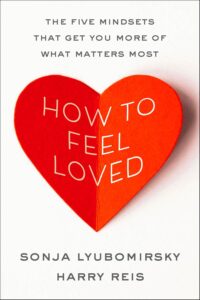 How can you be surrounded by people who genuinely love you — a spouse, your kids, a whole group chat of friends who would drop everything for you — and still feel completely alone? It sounds like a contradiction, yet it happens all the time. Being loved and feeling loved, it turns out, are two entirely different things, and the gap between them can be enormous. In one survey, roughly seventy percent of people could point to a close relationship in which they didn’t feel as loved as they wanted to be. The love was there; it just wasn’t landing. You can be adored the same way you can be beautiful and not believe it, or brilliant and never feel smart. Which raises a genuinely unsettling question: if love can pour into your life and still leak right back out, what actually makes it register?
This is the puzzle Sonja Lyubomirsky has spent nearly four decades chasing. A happiness researcher and the author of How to Feel Loved: The Five Mindsets That Get You More of What Matters Most, co-written with relationship scientist Harry Reis, as well as the earlier bestsellers The How of Happiness and The Myths of Happiness, Sonja has been running happiness experiments since the Clinton era, and they kept surfacing the same pattern: almost every intervention that reliably lifts our mood works because it makes us feel more connected to and loved by others. Her most liberating insight is that feeling loved is far more within your control than the self-help aisle lets on. You don’t have to become more lovable or remodel your partner; you just have to change the next conversation.
Here, Sonja lays out the five mindsets at the core of her book: radical curiosity, listening to learn rather than to reply, sharing, an open heart, and treating people as gloriously complicated instead of reducing them to a single flaw. She explains why admiration, status, and the mythical ‘four sixes’ buy attention but never intimacy, why the celebrated five love languages are shakier science than Instagram would have you believe, and why ‘going first’ is the surest way out of loneliness, whether that means texting an old friend, breaking out a deck of conversation cards, or finally asking your parents the questions you never have. Whether you’re one half of a long married couple who quietly stopped being curious about each other, a guy who freezes before saying ‘I love you’ out loud, or someone optimizing their dating life like a used car purchase, this conversation lands on a hopeful note: connection is a skill, and your very next conversation is a chance to practice it. Listen, learn, and enjoy!
Please Scroll Down for Featured Resources and Transcript!
Please note that some links on this page (books, movies, music, etc.) lead to affiliate programs for which The Jordan Harbinger Show receives compensation. It’s just one of the ways we keep the lights on around here. We appreciate your support!
- Sign up for Six-Minute Networking — our free networking and relationship development mini-course — at jordanharbinger.com/course!
- Subscribe to our once-a-week Wee Bit Wiser newsletter today and start filling your Wednesdays with wisdom!
- Do you even Reddit, bro? Join us at r/JordanHarbinger!
This Episode Is Sponsored By:
- BetterHelp: 10% off first month: betterhelp.com/jordan
- Factor: 50% off first box: factormeals.com/jordan50off, code JORDAN50OFF
- Paka: Paka hoodie & crew socks: go.pakaapparel.com/jordan
- Progressive Insurance: Free online quote: progressive.com
Thanks, Sonja Lyubomirsky!
Click here to let Jordan know about your number one takeaway from this episode!
And if you want us to answer your questions on one of our upcoming weekly Feedback Friday episodes, drop us a line at friday@jordanharbinger.com.
Resources from This Episode:
- How to Feel Loved: The Five Mindsets That Get You More of What Matters Most by Sonja Lyubomirsky and Harry Reis | Amazon
- The Feeling Loved Five Mindsets Quiz | Howtofeelloved.com
- Sonja Lyubomirsky | Website
- The How of Happiness: A New Approach to Getting the Life You Want by Sonja Lyubomirsky | Amazon
- The Myths of Happiness: What Should Make You Happy, but Doesn’t, What Shouldn’t Make You Happy, but Does by Sonja Lyubomirsky | Amazon
- Ed Diener: The Pioneer of Happiness Research | Pursuit of Happiness
- The Secret to Happiness? Feeling Loved | University of Rochester
- Social Comparison Theory | Psychology Today
- Becoming Happier Takes Both a Will and a Proper Way: An Experimental Longitudinal Intervention to Boost Well-Being | Sonja Lyubomirsky
- Friends Enjoy Being Reached Out to More Than We Think | American Psychological Association
- A Little More Social: How Small Choices Create Unexpected Happiness, Health, and Connection by Nicholas Epley | Amazon
- Mom Was Wrong: You Should Talk to Strangers | Chicago Booth
- {THE AND} Conversation Card Games | Amazon
- Lending a Hand: Social Regulation of the Neural Response to Threat | Psychological Science
- Love 2.0: Finding Happiness and Health in Moments of Connection by Barbara L. Fredrickson | Amazon
- Popular Psychology Through a Scientific Lens: Evaluating Love Languages from a Relationship Science Perspective | Current Directions in Psychological Science
- The 5 Love Languages: The Secret to Love That Lasts by Gary Chapman | Amazon
- Acupuncture for Chronic Pain: Update of an Individual Patient Data Meta-Analysis | The Journal of Pain
- The Science of Resilience | Harvard Graduate School of Education
- Build the Life You Want: The Art and Science of Getting Happier by Arthur C. Brooks and Oprah Winfrey | Amazon
- Arthur Brooks | The Art and Science of Getting Happier | The Jordan Harbinger Show
- Never Split the Difference: Negotiating as If Your Life Depended on It by Chris Voss | Amazon
- Chris Voss | Hostage Negotiation Tactics for Everyday Life | The Jordan Harbinger Show
- Chris Voss | Negotiate as If Your Life Depended on It | The Jordan Harbinger Show
- The Way of the Strangers: Encounters with the Islamic State by Graeme Wood | Amazon
- Dove Real Beauty Sketches | Wikipedia
- Toward a New Science of Psychedelic Social Psychology: The Effects of MDMA (Ecstasy) on Social Connection | Perspectives on Psychological Science
- Drug-Induced Social Connection: Both MDMA and Methamphetamine Increase Feelings of Connectedness During Controlled Dyadic Conversations | Scientific Reports
- MAPS’ Phase 3 Trial of MDMA-Assisted Therapy for PTSD Achieves Successful Results | Multidisciplinary Association for Psychedelic Studies
- The Gripping Story Behind Netflix’s In Waves and War | Time
- The Bay of Pigs: Lessons Learned | John F. Kennedy Presidential Library and Museum
- Dr. Max Butterfield | Challenging Viral Dating Myths with Science | The Jordan Harbinger Show
- Robert Waldinger | Unlocking the Science of Happiness | The Jordan Harbinger Show
- Adam Grant | Why Helping Others Drives Our Success | The Jordan Harbinger Show
- Six-Minute Networking (Free Course) | The Jordan Harbinger Show
1373: Sonja Lyubomirsky | Five Mindsets to Get You More of What Matters
This transcript is yet untouched by human hands. Please proceed with caution as we sort through what the robots have given us. We appreciate your patience!
Jordan Harbinger: [00:00:00] Coming up next on The Jordan Harbinger Show.
Sonja Lyubomirsky: We talk about wealth, people who have it all, success or wealth, that wealth or success or fame amplifies what you already have, right? So if you're a generous person before you got rich, you become even more generous. If you are a greedy person, you become even more greedy.
If you are social, you become more social. If you're antisocial, you become more antisocial. But the problem with meritocracies is that if you don't succeed and if you're not happy, the only person you can blame is yourself, right? So there's actually more suicidality, more depression, anxiety in more meritocratic cultures, I believe.
The difference is that happy people feel loved.
Jordan Harbinger: Welcome to the show. I'm Jordan Harbinger. On The Jordan Harbinger Show, we decode the stories, secrets, and skills of the world's most fascinating people. Our mission is to help you become a better informed, more critical thinker through long-form conversations with a variety of amazing folks, from spies to CEOs, athletes, authors, thinkers, and performers, even the occasional extreme athlete, music mogul, or real-life pirate.
If you're new to the show or you want to tell your friends about the show, I [00:01:00] suggest our episode starter packs. These are collections of some of our favorite episodes on topics like persuasion and negotiation, psychology, geopolitics, disinformation, China, North Korea, crime and cults, and more, that'll help new listeners get a taste of everything we do here on the show.
Just visit jordanharbinger.com/start or search for us in your Spotify app to get started. Today on the show, how can you be surrounded by people who genuinely love you, spouse, kids, friends, coworkers, and still feel completely alone? Today, we're talking with happiness researcher Sonja Lyubomirsky, author of How to Feel Loved, about the surprisingly massive gap between being loved and actually having that love register psychologically.
We'll get into why money, status, attractiveness, achievement, and optimizing your dating life like you're buying a used Porsche can get you attention without getting you intimacy, and why the whole love language thing might be a lot shakier than Instagram therapists would have you believe, and why vulnerability does not mean turning dinner into an unsolicited director's cut of your childhood trauma.
We'll also get into [00:02:00] listening, radical curiosity, AI girlfriends and boyfriends, MDMA and chemically assisted connection, and the uncomfortable possibility that these tools won't actually fix your relationship. They'll merely reveal that you picked the wrong person. So.
yeah, nice light episode about happiness today.
Here we go with Sonja Lyubomirsky.
So this is an interesting subject, how to feel loved. I think a lot of people might think it's too squishy. You're studying love from a science perspective. I mean, isn't that the realm of poets and, I don't know, scribes?
Sonja Lyubomirsky: Almost everything in psychology sounds like that, right?
That's true. Sounds squishy or, like, fuzzy. So I started studying happiness actually 37 years ago, if you can im- imagine that, 1989.
Jordan Harbinger: Nobody was happy in the '80s.
Sonja Lyubomirsky: But no one was really studying it except for one person, Ed Diener, and it was considered this very fuzzy, unscientific topic, and I felt really insecure, like, what am I doing studying happiness?
And love, I guess, seems even more or equally fuzzy and unscientific, and yet of course we can study all these things. Psychology wouldn't exist if we couldn't [00:03:00] measure- That's true ... and intervene and investigate these topics.
Jordan Harbinger: This is, has nothing to do with your book, but how do you measure happiness in science?
Because you have to have a sci- you have to define it.
Sonja Lyubomirsky: We let people, in a way, define it for themselves, but we measure happiness. I define happiness as really having two components. This is the way researchers define happiness, that the first component is experiencing positive emotions, right? So happy people experience fairly frequent positive emotions.
What positive emotions? It could be anything, right? For some people, it might be tranquility. If you live in Taiwan, serenity, calm, tranquility.
Jordan Harbinger: Maybe you haven't been to Taipei,
Sonja Lyubomirsky: but yeah. Well, yeah, but I mean, in Asian cultures, it's more valued.
Jordan Harbinger: Yeah.
Sonja Lyubomirsky: In American culture, it's more like enthusiasm, excitement, joy is, is more highly valued.
Jordan Harbinger: That's funny it's cultural. I had not thought about that. That's what I would define it as. If something's tranquil, I don't think I'm happy. I'm probably borderline bored.
Sonja Lyubomirsky: And that's fine. And then pride, curiosity, affection, you know, those are also positive states, emotions. So anyway, so people who are happy experience fairly frequent positive emotions.
Not all the time, of course.
Jordan Harbinger: Yeah.
Sonja Lyubomirsky: [00:04:00] But that's not enough. That's the first component. The second component of happiness is feeling like your life is good, like you're satisfied with your life, you're fairly satisfied with how progress you're making towards your life goals. So those are really the two components of happiness, life satisfaction and positive emotions.
Jordan Harbinger: That makes sense, I suppose. It's tough, right? Because there's a lot of people who say like, "Oh, are you happy with where you are now?" Yeah, of course, but then I see people who have way more than me, and they're miserable, and it seems like such an arbitrary line. You,
Sonja Lyubomirsky: you really need both those components. My example I use is when I had my first two kids, I was so satisfied with my life.
I had this great marriage and job, and I had a boy and a girl, exactly what I wanted. And yet every day, like I actually was really unhappy. I had a lot of negative emotions, right? I wasn't sleeping and-
Jordan Harbinger: Yeah ...
Sonja Lyubomirsky: and the two-year-old was d- having tantrums all the time. Anyway, and so I wasn't a truly happy person because I only had one component of happiness and not the other component.
Jordan Harbinger: That tracks. My kids are four and six, almost seven, and I'm very happy with the fact that they exist and that they're growing well. But yeah, there are some days where I go, "Well, I slept two [00:05:00] hours because he barfed all over me at 4:00 in the morning or 1:00 in the morning." And that wasn't positive emotion, but it didn't really affect my overall happiness.
It was like a momentary lapse. Just like people who seem like they have everything, they can afford to eat really great desserts every time they go out to eat, but they're terrible, miserable, and they have road rage because they're r- on the red line all the time- Exactly ... with their emotions.
Jen Harbinger: Yeah.
Jordan Harbinger: Yeah. So when you see these unhappy people that seem to have it all, what is often the problem?
Is it that there's things we can't see that are making them miserable, like their greater life is very unhappy? Or are there just some people that, for whatever reason, live in negative emotions all the time, and they can't help it?
Sonja Lyubomirsky: There are definitely individual differences. There's a huge genetic component to happiness.
Jordan Harbinger: Oof. That's bad.
Sonja Lyubomirsky: It's bad news in some ways, but it doesn't mean you can't change it. It just means it's harder, right? You have to put more work into it if you're sort of unlucky to have a base, a set range, like a range of happiness that's a little bit lower. And so some people are just unlucky. I actually heard something really wise the other day where, which is that we [00:06:00] talk about wealth, right?
People who have it all, or success or wealth, that wealth or success or fame amplifies what you already have, right? So if you're a generous person before you got rich, you become even more generous, right? If you're a greedy person, you become even more greedy. If you are social, you become more social. If you're antisocial, you become more antisocial.
So that happens. But also, social comparison is so powerful and compelling. We compare ourselves to others. You can argue that's adaptive, right? Like, it's useful for us to see where we are.
Jordan Harbinger: Maybe not in the age of the internet, but yeah.
Sonja Lyubomirsky: But it was adaptive in their ancestral past, and we tended to compare to people who are, like, a little bit better off than us.
And we're like, "Oh, maybe we should work a little harder. Maybe we should blah, blah, blah. Do this more." And yet now, starting the age of television, we started to... It was like, remember Lifestyles of the Rich and Famous was like- Yeah ... the first show that everyone was like, "Oh my God, I didn't know that there was s- this lifestyle."
I need an island now. Exactly.
Jordan Harbinger: Yeah.
Sonja Lyubomirsky: And of course, with social media, now we're exposed to it every second of every day. So no matter how rich you are, I remember listening to a radio show. They were talking about these two mansions on a hill, beautiful mansions, really rich [00:07:00] people. And you know what? The person in the one mansion is thinking the other mansion is, like, a little bit better.
View is a little bit better, right? Or they have a better deck or whatever. And so there's always someone better to compare yourself to.
Jordan Harbinger: Yeah.
Sonja Lyubomirsky: That's the problem. So you have to really kind of let that go, and it's really hard to let it go.
Jordan Harbinger: Do we know why we compare ourselves to people that are just slightly above us?
Because you're right. I don't look at the house on the hill that has a wraparound 360 view of LA and go, "Man, almost. I just need to work a little harder," right? And you find out it's, I don't know, John Grisham's house or something, or, uh, Michael Bay, some director, right? And I don't think about that, and I don't look at my friends who sold, I don't know, 10 million books or something.
I don't look at buddies like James Clear or Mark Manson and go like, "Oh, I need a book that has outsold every other book this decade. I don't do that, but I don't even look at other podcasters and care. But I probably, my neighbors maybe? I don't know. It's- Yeah ... the line is, again, totally arbitrary who I compare myself to and who I ignore.
Sonja Lyubomirsky: And people differ, because some people do compare themselves to the super successful and they're like, "Oh, I, I-
Jordan Harbinger: Oh, that's terrible ...
Sonja Lyubomirsky: it's terrible." But so there's a, a researcher in my [00:08:00] field called, his name is Leon Festinger, and he had this theory of social comparison, the first big theory. And he said it's basically evolutionarily adaptive to compare a little bit higher, right?
Because that's inspires us to work a little harder- Sure ... do a little bit more. But for example, if I'm studying the violin and I'm looking at, like, Yo-Yo Ma- ... that'll inspire me hopefully. I'm not going to feel- Maybe ... bad I'm not him. Or maybe if you want to be a film director, you look at someone that's really successful, and that might, hopefully that's inspiring to you.
Jordan Harbinger: Yeah.
Sonja Lyubomirsky: But someone who's a little better off, so someone in your film school class or your writing class, and they just published their first short story in The New Yorker- Yeah, I
Jordan Harbinger: want them to get hit by a- Ex- Yeah. Not really, but-
Sonja Lyubomirsky: Yeah, yeah. I mean, in college we used to have these jokes about it, right?
Someone would be like, "Hey, I just won five national scholarships," and
JHS Trailer: I didn't,
Sonja Lyubomirsky: so I feel a little bit bad about
JHS Trailer: that.
Jordan Harbinger: Yeah.
JHS Trailer: Yeah.
Jordan Harbinger: No kidding. Are you Russian?
Sonja Lyubomirsky: Yes, I am. Yeah.
Jordan Harbinger: I know a few Russians. Whenever I ask them questions like, "Oh, are you generally happy with your..." These are simultaneously the most stoic but also the most miserable, and I can't decide which it is.
What's going on with that? Like, if [00:09:00] you ask a Russian guy if he's happy, he'll look at you like you just asked him if he planned to grow another foot and a half by the weekend.
Sonja Lyubomirsky: Okay. So I do have some insight into this. I am Russian, but I came to the US when I was about 10 years old- Okay ... so I'm very Americanized, so I'm actually more American than Russian.
We actually have a paper that Russians don't appear happy in public, but they do appear happy in private. So if you go inside the Russian home, they'll be drinking and singing. They actually will look a lot happier than the average American home. When I first immigrated here- I would be invited sometimes to my friends' dinners, and I thought they were just ridiculously serious.
They'd be like, "Will you please pass the salt?" And they would have this very quiet conversation, whereas in a Russian home, sometimes they're yelling, like-
Jordan Harbinger: The, I think vodka might have something to
Sonja Lyubomirsky: do with it. Exactly. Of course, of course. They're, like, reciting poetry. Anyway, so there's a little bit of a notion of the evil eye, that if you appear successful or happy in public, that something bad will happen to you.
When, when I had, had my first baby in LA, my mom were like, "Sonya, you cannot take the baby outside. Do not take her baby." I've
Jordan Harbinger: heard this. "
Sonja Lyubomirsky: They'll be envious that you have this beautiful baby." I'm like, "This is ridiculous. I'm not going to [00:10:00] stay at home all day with the baby and not show my face."
Jordan Harbinger: Yeah. That's a Russian thing.
I stayed in Ukraine for several months 25 years ago with Russians, and they were quite happy at home. The drinking definitely had something to do with it, but there was almost this, don't get too happy about something because it's probably just going to disappoint you later, and I thought that was the weirdest way to look at anything.
I remember being like, "Oh, this is so great. Aren't you excited for this?" And they were like, "A little." Everything was cautious.
Sonja Lyubomirsky: That's because life in the Soviet Union or Russia really was like that. Like, you really can't ever depend on anything. We're lucky in America, right? It's a meritocracy. I mean, whatever, you could argue about what's happening right now, it's less so.
But the problem with meritocracies is that if you don't succeed and if you're not happy, the only person you can blame is yourself. It's your
Jordan Harbinger: fault,
Sonja Lyubomirsky: yeah. So there's actually more suicidality, more depression, anxiety in sort of more meritocratic cultures, I believe.
Jordan Harbinger: Really? That's interesting. So the government is against me and there's no upward mobility.
Oh, well, everybody else is in the same boat except for the Politburo, so it's not my fault. But here it's like, hey, your business didn't succeed, and [00:11:00] maybe it's because your crop got wiped out by a tornado, but somehow everyone still blames you because it's America, and you could have done something to avoid that.
Yeah, that's an interesting insight. Okay. So onto the topic of love, your, the topic of your current book. How can somebody be surrounded by people who genuinely love them and still feel completely unloved?
Sonja Lyubomirsky: Yeah. Isn't that interesting? I mean, it's often not such a, so black and white. My co-author Harry Reis and I did a survey expressly for our book, and we asked people, "Do you feel loved in your relationships?"
And 70% Could name at least one relationship in their life that's significant where they don't feel as loved as they want to be. And I think that number is actually an understatement. I bet there's more than that. And so, yeah, so maybe you want to be loved a little bit more or a little bit more frequently.
Why that is, I'm not really an expert on the why. I think there's lots of reasons. It could be somehow you're not seeing, you're not aware of it. It's not getting in. You're not taking it seriously. You don't think it's authentic. Imagine this is a cup of love, and you're pouring love into my cup of love, and maybe there's a leak in the bottom, and it's somehow leaking out, or maybe the top has only a very small opening.
It's not quite [00:12:00] getting in.
Jordan Harbinger: Okay.
Sonja Lyubomirsky: Some people think this is a metaphor for anxious attachment and avoidant attachment, so people who are insecurely attached maybe are not... The love is not getting in somehow. But the point being is that it's a common, that it happens, that we can be loved but not feel loved.
And by the way, you can be smart and not feel smart. We all know people who are beautiful and don't think they're beautiful, right? So this is not just unique to love.
Jordan Harbinger: Yeah, that, well, makes me a little bit sad, I suppose. What is the difference between intellectually knowing that somebody loves me and then feeling it in my body or knowing it in a different level?
Sonja Lyubomirsky: Yeah, I mean, well, feeling love basically is really feeling like there's someone... I mean, the way we define it, it's a, you feel this sort of care, warmth, affection, and you really feel like you matter to the other person. You make a difference in their life, and you really feel it in your bones. And so that's really what feeling loved is like.
Jordan Harbinger: But isn't that a weirdly subjective interpretation on my part of their behavior? They almost can't really control that.
Sonja Lyubomirsky: That's actually what our book is about. It's actually quite empowering because when people don't feel love, they think, [00:13:00] "Ah, maybe there's something wrong with me. I need to, like, make myself more lovable.
I have to n- show you how wonderful I am," right? Or how, what good qualities I have, or I have to somehow change you, change you to love me more. And yet it's actually more under your control. You don't have to change yourself. You don't have to change the other person. What we argue is all you have to do is change the conversation.
Jordan Harbinger: Okay.
Sonja Lyubomirsky: When you think about it, a relationship is a series of conversations, right? Even when you're not talking, right, you're always communicating. And so you, it's just take it one conversation at a time. In the next conversation, do something to make the other person feel more loved and to make you feel more loved.
It's sort of a dynamic process. In the next conversation... So it's really about changing the conversations in your lives, which seems a lot more feasible and workable and controllable, right?
Jordan Harbinger: Yeah, that's true. It seems strange that there's two people who could get the same treatment. One person feels really loved and fulfilled by that, and the other person is like completely doesn't have, absorb that at all.
Sonja Lyubomirsky: I know. It could be self-esteem, by the way. We talk a little bit about, like, if you don't have self-love, first of all, it's going to leak out, so the other person's g- is going to sense that. Yeah, you're not going to [00:14:00] really believe. When you're saying, "I love you," I'm not really going to believe it. And so one of the keys to feeling loved is to be known.
So people who really don't show themselves to others, if I'm not really showing what matters to me to you and I'm not showing you who I really am, I'm not really... Even if you say, "I love you," I'll be like, "He doesn't know me. How, what is he loving? When he says I love you, what part of me is he loving? Just this one little side that I'm showing," right?
Jordan Harbinger: Sure.
Sonja Lyubomirsky: And so that's one of the keys, is to really show more of yourself.
Jordan Harbinger: Tell me about this television appearance. You open the book with this. It's a fun anecdote, I think.
Sonja Lyubomirsky: So, oh yeah, I was asked a long time ago. Well, you know, I'm a happiness expert. I've been on lots of TV shows, and I often get asked questions like, "What is the secret to happiness?"
Or like, "What are the top three..." I still remember that. This
Jordan Harbinger: is very mass media-
Sonja Lyubomirsky: Yeah, exactly ...
Jordan Harbinger: soundbite nonsense.
Sonja Lyubomirsky: I still remember, like, the very last minute, the producer runs in, they're like, "The host wants to know," I think it was Jane Pauley, "What are the top three secrets to happiness?" I'm like, "Oh, okay."
You have
Jordan Harbinger: 38 seconds before you go live on television.
Sonja Lyubomirsky: And so it's, I always hated that question, like, "What is the secret to happiness?" And I started [00:15:00] talking to Harry Reis, right, who's a eminent relationship scientist. He said, "I don't know what the secret to happiness is, but I know the difference between people who are happy and unhappy.
The difference is that happy people feel loved." That's one, like, source of this whole book.
Jordan Harbinger: How convenient that both of them tie together so neatly.
Sonja Lyubomirsky: But the other source actually comes from the 37 years of research that I've been doing. So in 1998, so it's less than 30, which is, what, 28 years ago, Bill Clinton was in the White House.
This is a long time ago. My lab, my graduate students and I, we pioneered what we call happiness interventions. So we started doing these studies, experiments to test what kind of practices make people happier. So interventions are like clinical trials, right? But instead of testing a vaccine, you know, or a medication or surgery, we're testing, like, gratitude or kindness or, you know, anything you can do to be happier.
And after 28 years of these interventions, or maybe a little five years ago or so, it hit us. It hit me. We had an epiphany, which is that- Almost all of the interventions that work to make us happier, the reason they work [00:16:00] is they make us feel more connected to and loved by others. So really feeling loved is the key.
So when I write a gratitude letter to my mom, it makes me feel more loved by her. When I do an act of kindness for my mom or for my colleague or for my best friend, it makes me feel more loved or connected to them. So that's really the key to happiness.
Jordan Harbinger: Huh, okay. This is fascinating because now I'm recontextualizing all this behavior from my wife to my kids.
Oh, okay, this is maybe why they're doing this, and I guess it's probably more obvious when you come at it from that frame. Like, of course they're... This is why we do this.
Sonja Lyubomirsky: It's all about connection and love.
Jordan Harbinger: Yeah.
Sonja Lyubomirsky: And so now when we don't feel connected or loved, it almost feels like we're going to die, right?
Jordan Harbinger: Yeah.
Sonja Lyubomirsky: It feels awful.
Jordan Harbinger: It seems like we shouldn't have necessarily evolved that, right? Like, why would you feel lonely if you're still socially connected?
Sonja Lyubomirsky: I know, I know. Yeah, that's a, that's a really great question. Like, why would you? I mean, I would say, again, I guess you're not truly if you're feeling lonely.
I mean, unless there's a biological problem, because I think there's some people who are depressed who just feel lonely, and they're not really irrational.
Jordan Harbinger: Yeah.
Sonja Lyubomirsky: But for, let's say, the rest of us, loneliness is a [00:17:00] signal that there's something off, like that you need to kind of re- put more energy into reconnecting, or maybe there's a relationship that sort of needs repair, and that's healthy, right?
That's good. It's a signal. So think of it as a signal. Now, obviously, if you're lonely all the time, that's not very adaptive. But momentary feelings of loneliness, when people move to a new city or they start a new career, right, they might feel lonely at first. That's okay, you know. That means that they need to, like, work hard at connecting.
Jordan Harbinger: I don't know if this is a guy thing or a me thing or something, but I remember when I was working, like, 16-hour days alone in an office. My business partners were out, like, drinking and wasting their time and not helping. I didn't notice that I was lonely, but then my buddy was like, "Hey let's go eat sushi," which I hadn't...
I don't know. I probably hadn't gone out and done anything for literally years at this point, just work, and it felt like years anyway. And I went out, and I ate sushi, mediocre sushi in Santa Monica with this friend that I hadn't seen in a while, and I remember leaving and being like. This was the best night that I've ever had.
This person is basic- And then, and I was like, wait, wait, wait. Real talk. This is not my best friend. I [00:18:00] haven't known him since I was four years old or anything. Why does it feel that way? And I remember sitting down and going, "Maybe I need to relax a little more than I am."
Sonja Lyubomirsky: I can't stress enough, feeling connected is the key to happiness.
Of course, working on your relationships really matters, right? That's why your relationship with your wife, your kids, your best friend, your colleagues really matter. By the way, our book is called How to Feel Loved. It's not only about romantic relationships, it's about all kinds of relationship. We even have a chapter, how does this apply to parent-child relationships, to colleague, to boss-employee relationships?
Because feeling loved is important in all contexts, you know? And you can, again, love you can define very broadly, right?
Jordan Harbinger: Sure. I was going to say, you're working at Amazon. Your boss maybe doesn't love you, per se.
Sonja Lyubomirsky: But if you ask people, they will say, like, there are colleagues that they feel loved by or that they love.
I wish we could bring the word love more into our daily life. I use it with my friends all the time. In fact, my kids get confused because I'll be on the phone, I'll be like, "I love you so much," and they're like, "Mom, who are you talking to?" I'm like, "Oh, I'm talking to my friend."
Jordan Harbinger: Who you've never met. Who's medium close.
Sonja Lyubomirsky: Well, I wouldn't say medium close. Yeah. But yeah, I, I... Love is great, [00:19:00] right? Let's bring love back.
Jordan Harbinger: Guys have trouble with this. Of
Sonja Lyubomirsky: course.
Jordan Harbinger: I can count on one hand the number of guys who I see and they're like, "I love you, man. I haven't seen you in so long." I mean, there, there's also that moment where it's like, do I say it back now?
I don't know. Do I have to say it back?
Sonja Lyubomirsky: I dare you this week to say I love you to a male friend.
Jordan Harbinger: I did it yesterday.
Sonja Lyubomirsky: Oh, awesome. I
Jordan Harbinger: saw my friend who I've known since I was five, but that wasn't that hard. I've known him since I was five.
Sonja Lyubomirsky: I was talking to a male friend who says he has a friend who they've known each other forever, too, and my friend is always saying to the guy, "I love you," but he never says it back.
And he's like, "Look, I know he loves me. He just, whatever reason, he just can't say it." And that's okay, because you know they love you.
Jordan Harbinger: Yeah. Very much a guy thing.
Sonja Lyubomirsky: That could be you. That could be you. Yeah.
Jordan Harbinger: I don't have a problem saying it, but I think most guys do. It's very vulnerable. I bet you half my friends barely even say it to their wife.
They probably send a text.
Sonja Lyubomirsky: It's very vulnerable, but it's so important. This is, I mean, this is one way that you feel loved, when the other person expresses it. And again, one of the keys to feeling loved is to be known, and part of being known is to be vulnerable, right? Because you have to show parts of yourself that are vulnerable.
And if you're not [00:20:00] willing to show that, you have to take that risk. You have to take that risk if you want to feel love. Just like with anything in life. If you want to have a great career, have children, ask out that beautiful woman, you have to take a risk.
Jordan Harbinger: This is funny, because I, if we give the listener the homework to go say I love you to a friend, all of the women are going to go, "Okay.
I've done that eight times this week," and all the guys are going to go, "Is this optional?"
Sonja Lyubomirsky: Yeah. "I
Jordan Harbinger: guess I'll call my mom." It's going to be something like that.
Sonja Lyubomirsky: I'll be so happy if half your male listeners will say I love you to someone this week they wouldn't have otherwise, so. And
Jordan Harbinger: don't do it by email. Don't
Sonja Lyubomirsky: send a text.
But you know what? It's a good start. You know what? It's a start.
Jordan Harbinger: So that counts.
Sonja Lyubomirsky: That's like a first step. Yes. Start with a text or email, and then you can go on, and when you feel comfortable with that-
Jordan Harbinger: That's true ...
Sonja Lyubomirsky: then you can say it out loud.
Jordan Harbinger: We can give them the crutches. Send it as a text, and then nervously stare at your phone, where the dots come back, and see what the person's going to say.
Tell us about Erica. She's got the sort of perfect life and still feels lonely, stays up at night
Sonja Lyubomirsky: You can be surrounded by people and still feel lonely, right? In fact, that's the definition of loneliness, or you can have people in your life who love you and you don't feel [00:21:00] loved. And so we have lots of examples of people like that, and the book is really about, like, what to do, right, if you're in that situation.
And, and really what to do is you need to go first. It's actually a little bit counterintuitive. If you don't feel loved, and I'm actually thinking of a family member in my life who I don't feel as loved as, by as I'd like to be, what do I do? I need to go first and make them feel loved, and hopefully they'll reciprocate, right?
And how do you make them feel loved? Again, the key to feeling loved is to be known, but also to know the other person. I need to really get to know that person. So think about that person, whether it's a colleague or best friend or child or f- parent that you want to feel more loved by. You need to show interest in them, curiosity in them.
Ask them questions. So how do you make someone feel loved? By really getting to know what matters to them. But it has to be genuine, authentic, right? You can't fake it. Like, you start by asking questions. Ask them, show genuine curiosity in their story, in their inner life. You know how people are always telling you about the details of their day, and they're going on and on and on?
Actually, I was-
Jordan Harbinger: Yeah ...
Sonja Lyubomirsky: I was just stuck in line behind a woman at the checkout, and she's just like, [00:22:00] "Oh, this parking lot..." And she's going on and on about some- She's
Jordan Harbinger: talking to you?
Sonja Lyubomirsky: No, she's talking to the cashier.
Jordan Harbinger: Oh, okay.
Sonja Lyubomirsky: I need to, like, buy my bagel, and I have compassion for people like that-
Jordan Harbinger: Yeah ...
Sonja Lyubomirsky: but also clearly, like, she's lonely.
Jordan Harbinger: Very, yeah.
Sonja Lyubomirsky: And the cashier's, like, being friendly, but, you know, really needs to get on. And she's like, "Oh, but yeah, this, this parking lot." But why is it that people feel the need to tell each, other people, like, the details of their day, which are usually really boring? They really want to be seen and heard, right?
And so if that person showed true interest in that woman's story, she would probably feel loved. And by the way, you can feel loved temporarily even by a stranger. I think about it as drops of love. Imagine drops of love are falling on you. Great, right? Anyway, so if I want to feel more loved by a family member, my, the first thing I do is show curiosity in them and ask them questions, and think about their interests and hobbies, and ask about those.
Jordan Harbinger: Can you ask about the mundane details of their life? Like, "How was your walk this morning?" I mean, does that count, or do you go deeper than that right off the bat?
Sonja Lyubomirsky: I'm all for deep conversation. I think we don't have those enough. I'm done with small talk, but sometimes the small talk [00:23:00] is a lubricant that you have to kind of start.
It's like a social lubricant.
Jordan Harbinger: Sure.
Sonja Lyubomirsky: You have to read the room. You don't want to go deep too fast too soon, because people's, like, walls will go right up.
Jordan Harbinger: Yeah.
Sonja Lyubomirsky: But most people, so there's actually a whole set of research studies on this that we think if we ask people deep personal questions, they will think, oh, you're prying, right?
Or it's going to be uncomfortable. But on average, people want to be asked. They want to be seen.
Jordan Harbinger: I was an exchange student in Germany in the '90s, and I have a host family there. The mother passed away, but 20-plus whatever years ago, the f- host father had left her for another woman. They came to my wedding, and I was like, "So. What happened there?
And he w- told me. And then I said, "What does..." My host brother, "What does he think?" And he goes, "Oh, we've never talked about this. You and I just talked about this on the walk to the bar from the car 10 times more than I've ever spoken to my son about this."
Sonja Lyubomirsky: Wow.
Jordan Harbinger: And I thought, "Oh, that sounds like a problem.
You should probably handle that."
Sonja Lyubomirsky: I think you just have to start. Start with a little bit. And in fact, even like my [00:24:00] kids, I think I asked them like, "Do you ask your dad this question?" They're like, "Oh, no, I don't want to ask him that." I'm like, "Actually, you should ask him. I think he'll... We want to be asked." Our kids almost never ask parents questions.
In fact, the other advice, the other kind of recommendation I have for your listeners is like call your mom or dad or caregiver and ask them questions. Be curious about their life, because that's pretty rare, too.
Jordan Harbinger: Apparently admiration and attention aren't the same thing as love. Bad news for influencers and potentially devastating news for LinkedIn.
We'll be right back. This episode is also sponsored in part by BetterHelp. You've heard me talk about BetterHelp for years now, but let's be honest, I'm also the guy reading the ad. So rather than taking my word for it, go see what the people who have actually used the service are saying, and of course, I've used it too.
But BetterHelp has a reviews page at betterhelp.com/reviews where you can look through customer feedback for yourself. The page is updated every day with hundreds of people sharing their experiences and talking about how BetterHelp has helped them. BetterHelp currently has an average live therapy session rating of four point nine out of five based on more than [00:25:00] one point seven million client session reviews.
So at that scale, the feedback becomes pretty difficult to ignore. It gives you a much broader picture than one carefully chosen testimonial or one person's experience. More than six million people have used BetterHelp globally. Getting started is straightforward. Answer a few questions, get matched with a therapist based on your needs, and begin from there.
And because the relationship with your therapist matters, you can switch therapists at any time if the first match doesn't feel like the right fit. So do your own homework, see the reviews, see what stands out, and see if BetterHelp is right for you. Visit betterhelp.com/jordan. That's better H-E-L-P .com/jordan.
This episode is also sponsored by Factor. Eating healthy sounds simple until you factor in the planning, grocery shopping, cooking, and cleanup. When you're already short on time, that's a lot to manage. Factor makes the whole thing remarkably easy. At our house, we have two kids, a hectic schedule. My parents are joining us for dinner every night pretty much.
Factor gives us healthy, ready-to-eat meals without another trip to the grocery store or a pile of dishes afterwards. You don't need a chaotic household to appreciate the convenience either. Maybe [00:26:00] you're a student, you're juggling some classes, you're working long hours, you're trying to eat better without sacrificing your entire Sunday to meal prep.
Factor makes healthy eating quick, easy, and very delicious. I know every company says this, but I, I love Factor. Out of all these different services that I've tried, food is just way better with Factor, in my opinion. My favorites are the pesto salmon and smoky Gouda chicken. Actually, there's a bunch of other things that I love too, but they asked me to pick two, so there you go.
Factor meals arrive fresh, never frozen. Forget whatever old school TV dinner you're imagining. These meals are chef-crafted, dietician-designed, ready in two minutes, and require no prep, no cleanup. Factor also bans more than one hundred and seventy-five ingredients and offers over a hundred nutrient-dense menu items each week.
It's healthy, convenient food that genuinely tastes good. We order Factor regularly, and you should try it too.
Jen Harbinger: Let's eat real. Head to factormeals.com/jordan50off and use code Jordan50off to get 50% off and one free breakfast item per box for one year while supplies last until October 31st, 2026. That's code Jordan50off at [00:27:00] factormeals.com.
Jordan50off at factormeals.com. See website for more details. I
Jordan Harbinger: also want to let you in on a little inside baseball that maybe a lot of people don't know. When you use our promo code, it does help support the show. We don't get a percentage of every sale or anything like that, but the company knows, hey, people are hearing the ad, they're using this code.
That means they're more likely to renew their sponsorship with the show. So if you sign up, you're going to buy something, please use our code. Often enough it's Jordan, but check it out on the deals page at
jordanharbinger.com/deals. It's a win-win situation. You get a discount and you help keep the show going strong.
Thank you for your support. Now back to Sonja Lubomirsky.
I started interviewing my parents on video just because they're in their mid-80s, and it's probably one of my last chances. My mom was diagnosed with Alzheimer's, so now's the time- Yeah ... before she doesn't want to or can't remember things or something like that.
And I've got these little cards. They're... I can't remember what they're called. They sell them on Amazon.
Sonja Lyubomirsky: Conversation cards.
Jordan Harbinger: It's something like that, yeah, but I can't remember the brand or anything. But it probably doesn't even matter. There's a million varieties. And there's ones for children, there's ones for [00:28:00] friends, there's ones for family, there's ones for parents.
A lot of them are kind of crap, cliche nonsense, but so those go toward the back. But you'd be surprised, well, maybe not you, but many people would be surprised what you get out of your mom and dad. What's a piece of advice you'd wish you'd taken earlier? And you think, "Oh, this is silly." And my dad will just come up with something when I was 17, and you're just like, "Oh, I've never heard this story."
Totally. And my mom will be like, "I never heard that story either." And it's pretty incredible to get that out on video.
Sonja Lyubomirsky: Amazing. I'm so glad you're doing that. On Father's Day this year, The New York Times published this article saying something like questions to ask your dad. I have four kids, so I sent them to all of them.
I was hoping that they would ask, and I think some of them actually did.
Jordan Harbinger: Okay.
Sonja Lyubomirsky: And they were great questions. They were like, "Who were you before you became a dad? What is something you would have told your younger self about being a father?" Or, like, I don't know, "What was, like, the scariest thing about being a father?"
Or things like that. Yeah. It was all about fatherhood. Uh, my favorite actually conversation deck, and I don't get any money from them, is called The And. You know, like, weird name. And so they have [00:29:00] really good questions, but as you say, there's tons of them.
Jordan Harbinger: I'm going to write that
Sonja Lyubomirsky: one. Yeah, so the word the and then and, right?
Jordan Harbinger: Yeah.
Sonja Lyubomirsky: And they also have it for, like, strangers, and some of them are so good. My favorite question, and this is, like, the most advanced level question you can ask, especially a romantic partner or a best friend, is, "Ask me something you're afraid to ask me."
Jordan Harbinger: Oh, yeah. I've gotten that card before. Yeah. And I put it right in the back- Yeah
because I'm afraid to ask-
Sonja Lyubomirsky: No, I mean- ...
Jordan Harbinger: that question ...
Sonja Lyubomirsky: that's a really hard one. Oof. I remember having, being in a relationship, one of the questions we, we talked about was, like, what's the hardest thing about our relationship?
Jordan Harbinger: Ugh.
Sonja Lyubomirsky: Things like that. What do you think I could have achieved or, like, a dream that I have not been...
About the other person, not about yourself. Anyway, so if you are at a loss for words, use these conversation cards.
Jordan Harbinger: It's called The, and I'll say, team, when you put this in the show notes, dump it in the Slack because I'm going to forget to go and buy that- Yeah ... that by the end of the show, so you guys remind me.
Sonja Lyubomirsky: Yeah.
Jordan Harbinger: I'll grab that. I feel like you just can't get enough. And, like, you- I have three or four decks. A bunch of the questions are probably the same, but I don't care because, I don't know, $9 or something like that, [00:30:00] and the gems you get out of your parents, wife, whatever, kids, are priceless.
Sonja Lyubomirsky: The point about that is getting to know the other person, right?
So that you... People feel loved when you're genuinely interested in asking these questions. Obviously you don't, don't just do it in a rote way so you're not really interested, and you really want to hear the answer. And then, but by the way, when they're telling the story and they're answering, you want to really listen.
One of the mindsets we talk about in our, in my book, it's called listening to learn. Is you really listening to learn something and- Not trying to fix it. You're really paying attention, right? So that's really key, and it's even more key, I think, with people we've known for a long time. So the research shows that we stop being curious about the people we've known the longest.
Jordan Harbinger: That totally tracks. Of course, yeah. Well, I sleep with her every night. What am I... I don't, I'm not going to ask a new question. I couldn't even think of a new question.
Sonja Lyubomirsky: But you know what? And in fact, actually, sex is actually a great space for that. We just assume that everything we've been doing for years is they still like doing, right?
So it actually is worth asking, um, "Do you still like that? You know, maybe we should try something new."
Jordan Harbinger: I never liked [00:31:00] that, actually. Exactly. Sorry if I lied to you on our fifth date, and I never corrected the record.
Sonja Lyubomirsky: And that's really hard to say after many years. Uh-
Jordan Harbinger: 20 years later, what?
Sonja Lyubomirsky: Yeah, exactly. But it's very vulnerable, but, you know- Very
it's worth talking about. But anyway, that's just one space, but the people we've known for the longest, we think we know everything about them, and yet we, course we don't. In part because we're always changing, right? Every day, like, you're having new interviews and experiences and thoughts and dreams and wishes and self-doubts and whatever, anxieties.
Jordan Harbinger: Yeah.
Sonja Lyubomirsky: Both good and bad things. Those are all new every day, so there's always new things happening, and w- hopefully you're evolving, too. So we want to keep being curious about the people even that we've known the longest.
Jordan Harbinger: Yeah, that's a good point, especially I think when kids come into the picture. Because, for example, I'll go on a two-week trip to Laos with a group of entrepreneurs or something like that, but my wife stays back with the kids.
So she's having two weeks of experiences being a mom with the kids. Maybe some of it's routine, maybe some of it's not, and I'm in another [00:32:00] country with a bunch of new people climbing a mountain literally, and I don't know, avoiding minefields or something like that. So then I come back, and it, "How was your trip?"
Geez, where do I even start? I- it would take me three hours to explain the first two days. And then you just kind of go, "Well, it was fun."
Sonja Lyubomirsky: You also, you don't want to kind of like boast or sort of show that- It was
Jordan Harbinger: great. I really enjoyed the break I took from you- Exactly. Exactly ... and the kids. How was waking up at 4:00 in the morning every night?
Sonja Lyubomirsky: And I remember, like, I've always worked, but there was a time where I would be home with the kids, and my husband was a lawyer, and he would come back, and I felt like I had nothing to tell him. And now thinking back on it, of course, there's so many things. It's not just, "Oh, I did this and I did that, and then I changed the diaper."
It was more like, "How are you feeling now about being a mother?" Or like, "Are you kind of anxious about this thing?" Or like, "Did you feel like this friendship of yours is improving or deteriorating?" You know, I mean, there's just so many things that we're thinking in our heads- Yeah ... that we could be talking about with our spouse.
Jordan Harbinger: It's true. I talk a lot with my wife, but some stuff, we don't often do the deep stuff, I would say, unless we're in the car, because we have one of those decks is in the car, [00:33:00] and we pull those out, and it's like- Oh,
Sonja Lyubomirsky: amazing ...
Jordan Harbinger: actually the car's a g- That's the pro tip. No one's like, "Oh, I have to go make dinner now," or no one's getting a phone call.
You're just in a car. One of you is driving, and the other person is sitting there holding the card.
Sonja Lyubomirsky: Right. And when your kids get older, that's also the time to have deep conversations with them, because they can't run away. Right. Or like a, obviously- Yeah ... a walk- They can't run away ... a hike. Right. I, I totally agree.
I mean, I remember having, I wanted to talk to my two teenagers about porn.
Jordan Harbinger: Oh, God. How do you even start that conversation?
Sonja Lyubomirsky: I know, and I, but I wanted to sort of tell them, it's really not that realist- Yeah, I, I kind of, I don't know, I wanted to say a few things about it, and so I decided to do it in the car.
It was a boy and a girl. I really wanted to talk to the boy more than the girl.
Jordan Harbinger: Yeah. She- he's probably slightly more interested in it.
Sonja Lyubomirsky: And it was a little awkward, and it was actually hilarious because they couldn't run away. It was very awkward. He didn't say anything. How
Jordan Harbinger: old was he at the time?
Sonja Lyubomirsky: I think they were both 18, 16- Oh
Jordan Harbinger: 17. So, okay. Did they have smartphones and stuff by then? Was it, what year, like was this-
Sonja Lyubomirsky: Maybe they had phones, but not like smartphones, but anyway, so-
Jordan Harbinger: So he had seen plenty of porn by then.
Sonja Lyubomirsky: I'm sure he had. I'm sure he had. I'm sure he had.
Jordan Harbinger: Oh, man.
Sonja Lyubomirsky: But [00:34:00] anyway, it was really awkward, so he- Really didn't say anything, but the girl was hilarious.
She saw how awkward it was. It was actually really sweet of her. She decided to make it easy for us. She started asking me a lot of questions. So she's asking me all these questions, because it wasn't really about her. So she's like, "Oh, well, Mom, what do you think about this?" Anyway, so the point of the story is have those hard conversations in the car.
Jordan Harbinger: I cannot imagine talking about porn with my mother.
Sonja Lyubomirsky: I just wanted to say a few things. I just want you to know women don't necessarily want what you're seeing. Mostly, they're like, "We know."
Jordan Harbinger: Yeah, we can tell. It looks horrible. But you know what, though? A lot of guys don't know that. I get letters from people like that, or I talk to people online, and I'm like, "Oh, God, the line between reality and fantasy for you is completely blurred."
And then I'm like, "What is this person like in real life?"
Sonja Lyubomirsky: Yeah.
Jordan Harbinger: How do they function? Do they think action movies are real, too? I mean, I'm so confused. What is happening right now?
Sonja Lyubomirsky: Hilarious. Hilarious.
Jordan Harbinger: And then you're thinking, "Am I talking really to a 30-year-old? Because this person is 13 years old in [00:35:00] my-"
Sonja Lyubomirsky: Right
Jordan Harbinger: mentally.
Sonja Lyubomirsky: So yeah, so deep conversations are important. The key to feeling loved is to know and to be known. And to do that is to have real conversations, authentic, deep conversations about things that matter. They don't have to be negative. It doesn't have to be your secrets or traumas. It could just be about, "Hey, that TV show everyone else loves, I actually don't like it."
Jordan Harbinger: I think it's really boring, yeah.
Sonja Lyubomirsky: Yeah, and that's vulnerable also to admit sometimes. Yeah, just what really is on your mind, what really matters. On a first date, I will sometimes ask that: "What do you think about a lot? Like, when you wake up in the morning or in the shower or driving, in the middle of the night, what do your thoughts turn to?"
And that's actually a good question to ask because it doesn't have to be, like, really vulnerable. You know, it could be like, "Oh, I think about my mom getting older," you know? Yeah. But it could be like, "I actually get, have anxiety. Like, I'll be anxious about little things at work or with kids. And so in the middle of the night I'll think, I'll have these little anxious thoughts."
So that's a little vulnerable, but it's also shows a little bit more of myself.
Jordan Harbinger: Yeah, that's true. That's true. And then I suppose you could say, "Well, is there anything I could do to help with those particular bits of anxiety?" And you go, "No, I just love worrying." It's my second favorite hobby.
Sonja Lyubomirsky: But it shows your true self.
[00:36:00] I, I don't know. I just, I'm just so bored with small talk. Again, it's not a good way of knowing and being known. Now, if you're into, whatever, World Cup, you can spend hours talking about it. That's great. What I call kind of medium talk. It's like you're interested in the topic, great, you can really relate, but that's not how you really connect.
Well, you can connect a little bit like that, but-
Jordan Harbinger: That's how guys connect. That's the limit most of the
Sonja Lyubomirsky: time ... totally. But to really connect in a deep way where you're like, "Oh, that person-"
Jordan Harbinger: He likes Barcelona. Yeah. I feel seen. He loves Spain. Yeah. And Messi. Yeah, yeah. Yeah, I pick on guys a little bit when it, these topics happen because I, one, I am one, and I've seen how they connect.
And a lot of it is just, especially in light of the fact that I had dinner with my childhood friend, who I met when I was five, last night, and he was like, "Hey, man." dump of all of these real, it wasn't like, "Hey, so what's cracking?" It was like, "Hey, both of my kids have special needs. Not mine, but his, and so that's been really tough, and I've been working 17-hour days."
And he wasn't even just ranting. It was, we just started real.
Sonja Lyubomirsky: It's, like, factual, yeah.
Jordan Harbinger: Yes. We started real because I've known him [00:37:00] over 40 years. There's no pretense left, man. That stuff expired in the '80s,
Sonja Lyubomirsky: right? That's great. I remember my husband coming back from, like, having dinner with a friend, a colleague, and they'd spent hours talking, and I said to him, "Oh, you know, I heard that he's getting a divorce."
And he, my husband was like, "Really?" And I'm like- Oh, no ... "This didn't come up?"
Jordan Harbinger: Yeah.
Sonja Lyubomirsky: This didn't come up?
Jordan Harbinger: In your three-hour dinner?
Sonja Lyubomirsky: I know. I'm like, what? He didn't
Jordan Harbinger: mention?
Sonja Lyubomirsky: But I think that's a guy thing. Maybe they-
Jordan Harbinger: It so is ...
Sonja Lyubomirsky: whatever. They talked about football. I don't know what they talked about.
Jordan Harbinger: And also, it's the other guy maybe didn't even hide it.
He just didn't think to even discuss that because why would you?
Sonja Lyubomirsky: Anyway, so deep, being known and knowing the other is really key. Yeah. Yeah.
Jordan Harbinger: I bet his wife had a three-hour dinner with her friend, and they only talked about the divorce.
Sonja Lyubomirsky: Of
Jordan Harbinger: course. Of course. That's all they talked about the whole time, with three minutes at the end to talk about the other person's kids because it's polite.
Yeah. That's so, gosh, guys, we've got to get those cards. It's crazy how romantic partners are both the people who can make us feel the most loved and the people with whom [00:38:00] we feel the, maybe the largest deficit in love or connection. You have data on this, I assume, right, from your surveys and everything?
Sonja Lyubomirsky: Yeah.
Yeah. There's the 40% in our survey said they wish they felt more loved by their romantic partner, but their romantic partner was also the person that they felt most loved by.
Jordan Harbinger: Oh, that's interesting. So it's you love me the most, but I still want a little bit more.
Sonja Lyubomirsky: Yeah, or it's a little bit different people who are saying, "I really feel loved by my partner," and then another set is like, "I'm not feeling loved by my partner."
Jordan Harbinger: Huh.
Sonja Lyubomirsky: But they're both a big group of people, maybe 44 or something. Yeah.
Jordan Harbinger: Oh, I see. Yeah. Okay.
Sonja Lyubomirsky: So it could be that, too. Yeah.
Jordan Harbinger: Do most people feel loved or most people don't feel loved? What does the survey data say on this?
Sonja Lyubomirsky: Well, again, I think most people feel loved, but 70% would like to feel more loved in at least one relationship in their life.
That means that maybe many other relationships- Oh,
Jordan Harbinger: geez ...
Sonja Lyubomirsky: they're feeling loved enough. So that could be with their kid or their mom or their colleague or their boss or their romantic partner. 40% want to feel more loved by their romantic partner. Again, that doesn't mean they don't feel loved at all, just not enough.
Jordan Harbinger: [00:39:00] Huh. I feel loved by all of the people that I care to be loved by, generally.
Sonja Lyubomirsky: So I think you're in the 30%.
Jordan Harbinger: Okay. My parents are great, my wife's great, my kids are great.
Sonja Lyubomirsky: Yeah.
Jordan Harbinger: Got some close friends. Everybody else, they're dead to me. I don't care. No, um, but I mean, I don't care if, like, the barista I see in the morning- Yes
loves me. That's not really high on my list. But the close relationships, yeah, I don't have anybody where I'm like, "Oh gosh, I'm really on the rocks with this person."
Sonja Lyubomirsky: So maybe you're doing all the right things because the right things to do, again, are sharing, listening, showing curiosity, showing warmth and acceptance of the other person.
So by the way, when I've been on podcasts to talk about my book, How to Feel Loved, some of them say like, "So you basically wrote a book about podcasting because it's all about sharing, listening, curiosity, right?"
Jordan Harbinger: Okay.
Sonja Lyubomirsky: But you probably already are good at those things.
Jordan Harbinger: Yes, but also, you know what? I've got to give credit where credit is due.
My friends are really good at these things too. Like I mentioned, my friend was the one who started last night, was like, "How are your kids doing? My kids both have special needs. My wife's losing her mind. I've been working 17-hour days." I didn't say, "Hey, let's ditch the [00:40:00] small talk. Let's do this." And my producer Gabriel, who's also I would say one of my best friends definitely, he'll just say like, "Hey man, how are you?
By the way, I've been meaning to ask you, how are you feeling about your mom being diagnosed with Alzheimer's?" And that's like the f- this is not a shortened version of the conversation. This is how the phone call starts. So they do that for me, and I go, "Okay, this is..." Years ago I would go, "Oh, okay, we're doing this."
And now I'm just used to it. So I have that, and then I think that's probably rubbed off on me with other relationships.
Sonja Lyubomirsky: That's awesome. And you know, if more of us do that, it's going to rub off on others, right? So we can literally start a revolution.
Jordan Harbinger: Yeah, yeah. It's contagious.
Sonja Lyubomirsky: Exactly. More and more people are going to be engaging in conversations that matter.
Jordan Harbinger: I think it actually is contagious, because if you have, for example, to your point earlier, if your friend says, "I love you man, we don't see each other enough," you go, "Wow, that felt pretty good." Then you do it to your other friend. I'm getting emotional right now even telling this story. Because you're like, "I want to deliver that.
That felt amazing." You know, he does the same thing, calls his sister and says the same thing. I feel like it really actually is [00:41:00] quite contagious. Because the feeling is, especially for guys who, like me, who are starved for that shit, I feel like it's quenching a thirst that you didn't know you had.
Sonja Lyubomirsky: Amazing.
Now, there's a, a friend and colleague whose name is Nick Epley, and he has all this really cool research. I
Jordan Harbinger: think he's been on my show.
Sonja Lyubomirsky: He might. He has a new book called A Little More Social, and he's a great guy. Love him. But he has this really beautiful research, and almost all of it is like we underestimate how rewarding X is.
And so one cool study is like reaching out to friends, old friends or, or you know, whatever, old new friends, and just like sending a text, "Hey, I'm thinking about you," or, "How you doing?" And we don't do it enough because we're like, "Oh, I don't know. It's been a while. Maybe they don't want to hear from me. It'll be a little awkward."
And but on average, people love to get those texts. Like right? Wouldn't you want to get that text right now?
Jordan Harbinger: I have a free course that I sometimes shill on this show. It's called Six Minute Networking, and it's free. It's at sixminutenetworking.com. And I think the first exercise is every weekday go to the bottom of your phone list, because those are the threads that are like five years old because it sorts by recent usually.
You skip the ex-girlfriends or [00:42:00] ex-boyfriends, whatever, but then send a message that's like, "Hey, I haven't talked to you in such a long time. Geez, it's, it look, the last message is from pre-pand- I've had two kids since then. Here's a photo of them. Is this even still your phone number?" And then you use your full name because if it's not saved they're not going to answer you, right?
Because it's embarrassing. And you do it with four because two might be like dead number, new phone who dis, or I was your boss at a movie theater 20 years ago, I don't really care. So then you get one or two responses, and those people are universally thrilled to hear from
Sonja Lyubomirsky: you. Totally.
Jordan Harbinger: Yeah.
Sonja Lyubomirsky: It's so funny.
Even I know this, and I forget. I got a text from a colleague friend, old friend- Who I really hadn't talked to in years, and he said, "I think about you more than you will know."
Jordan Harbinger: Wow.
Sonja Lyubomirsky: By the way, this is not like a romantic thing. This is just-
Jordan Harbinger: No, it's just in context, it's a nice thing.
Sonja Lyubomirsky: And I was like, "Oh my God," and I just thought he never thought about me.
And so I think we, we underestimate how important that is, and that also applies to, by the way, to doing little acts of kindness for people, to giving compliments, [00:43:00] to expressing gratitude, right? I have a whole line of research on gratitude. It's good for the self, it's good for others, it's good for connection, right?
Just say like, "I really appreciate that thing that you did for me." We just don't do that enough.
Jordan Harbinger: One of the other elements of the exercise that I failed to mention is if something reminds you of someone, instead of just going, "Oh, that reminds me of Tim," you go, "Oh, I need to text this person." You can take a photo of the weird thing on the menu that Tim made once and made everybody barf, and you can send him a photo, "Hey, this restaurant makes your favorite food," and suddenly everyone's laughing about this.
Sonja Lyubomirsky: I love that. Because again, you think of someone else much more often than you ever tell them, you know?
Jordan Harbinger: Always.
Sonja Lyubomirsky: People will see me on a podcast, right? And like, a lot of people will write like, "Hey, I saw you," but most people don't. If I see someone mentioned in a newspaper, I don't necessarily write to, "Hey, I saw you," but I think it's cool.
I love it when they do. It's just like a little connection.
Jordan Harbinger: Some of the craziest things have come out of this. I, I don't know if you know Graeme Wood. He's a journalist. He writes for The Atlantic and things like that. He writes about, you know, ISIS or Iran. So he wrote a piece for The Atlantic. I happened to see it in social media pop up or something like that, and [00:44:00] I was like, "Graeme Wood, I haven't talked to that guy in a really long time since he's been on the show."
He had a book about ISIS. So I sent him a text, and he's like "Where are you, Jordan? I haven't talked to you in forever." "I'm actually in China." And I said, "That's weird. I'm in China." He goes, "Oh yeah, I'm in Yunnan, actually, with my kids." And I said, "I'm in Yunnan right now with my kids." And I said, "Where are you, Dali?"
He goes, "Yeah." I go, "Where? No, I, I am too. I'm at a coffee shop." He said, "Me too." He was 30 seconds walk from where I was in freaking China, and I texted him because I read his piece on Iran.
Sonja Lyubomirsky: Yeah, so those are such great connections. I guess we want to do those, just do, again, encouragement to your listeners, like just do it a little bit more often that you do.
Like we were, sometimes we're working, we don't have time to write that text, but people love hearing from you. Yeah.
Jordan Harbinger: If you're really working that hard, throw it in your to-do app.
Sonja Lyubomirsky: Yeah. '
Jordan Harbinger: Cause it's just, it is such a light touch thing to do. Sending a text is- 10 seconds ... 10 seconds. What people are afraid of is they're like, "Oh, but then they're going to want to have lunch."
And I'm like, "Don't flatter yourself. These people are all busy."
Sonja Lyubomirsky: Yeah.
Jordan Harbinger: And if they do say, "Oh, we should get together and do something," and you don't have time, you can say that. But [00:45:00] people are just obsessed with the idea that... And I think they're scared to reconnect because, I don't know, again, it feels vulnerable or something.
Like, what is really the danger of all these people suddenly wanting to hang out with you? Like, how cool are you really?
Sonja Lyubomirsky: But actually, you're right. Either you think you'll be rejected, they don't want to hear from you, or the other way, oh, they're going to want to be like... I have had that, by the way, worry myself.
But you're right. Look, we're adults. We can always say yes, things could be awkward. You can always just communicate about it.
Jordan Harbinger: It's also texting. You can just pretend you didn't see it if they keep asking you to hang out, right? No, that's not the, what mature people do. Why does another person, and I'm making a, an assumption here, so maybe this is incorrect, but why does another person understanding us, why does that make the world feel physically less threatening?
Sonja Lyubomirsky: Yeah. Again, we all want to really feel seen and heard, and yet feeling safe versus feeling at risk, right? That's all, like, I mean, the, the important kind of things is to feel safe versus to feel at risk, to feel whole or, like, healthy as opposed to broken, and to feel at home versus lost, right? I guess when we're, like, in our family, [00:46:00] we have, if we have a great family life, our caregivers, we just feel so loved and safe with them, right?
And we feel, like, really un- known by them. And so I think that's that feeling that we're kind of searching for in our relationships as adults. So when we find a romantic partner that really understands us and we feel really safe with them, I guess it kind of brings us back to that womb feeling, you know?
I'm just speculating. I'm not a developmental psychologist. But yeah, feeling understood, again- The key to feeling loved is to really be known and know the other person, and sort of feeling understood is almost the same as feeling, being known, feeling known.
Jordan Harbinger: Tell me about the spouse hand-holding experiment.
I feel like that ... Were they going to zap somebody or sting somebody or poke somebody? Anyway, they were like, "Oh, hold your husband's hand," and then it was like they were way less anxious about the pain stimuli.
Sonja Lyubomirsky: Yeah, exactly. And I actually had that experience where I had to get an amnio.
Jordan Harbinger: What is that?
Sonja Lyubomirsky: When you're pregnant and they're testing to make sure the baby's okay.
Like, they put this, like-
Jordan Harbinger: Oh, they test the fluid.
Sonja Lyubomirsky: Yeah, yeah. They put this giant needle or something into your ... And it's actually kind of, could be painful.
Jordan Harbinger: Yeah. It sounds really horrible, and my stomach is clenching up.
Sonja Lyubomirsky: I got pregnant when, when my daughter was, like, [00:47:00] 12. And my husband had this trial in DC, and so he couldn't be there for the amnio, and so I asked her to come with me.
And it was like magic. Like, it really was painful because he couldn't find, like, the fetal cells are, like, floating around.
Jordan Harbinger: Oh my God, my stomach is hurting in sympathy for you.
Sonja Lyubomirsky: It's not really that painful. It's a little painful, but because he couldn't really find the fetal cells, so he kept poking more and more.
But my daughter, I just held her hand, and she was 12, and it's like I didn't feel the pain.
Jordan Harbinger: How long is the needle? Because it's got to go through abdominal muscle and fat into the womb.
Sonja Lyubomirsky: It's a big thing.
Jordan Harbinger: My God.
Sonja Lyubomirsky: You kind of try not to look at it. Oh my God. But the thing is, you're so excited to have the procedure because you really want to know.
And they also tell you the gender, so it's kind of exciting.
Jordan Harbinger: I'm just imagining, like, a five-inch long syringe needle.
Sonja Lyubomirsky: I think it's pretty long, yeah. Oh,
Jordan Harbinger: God.
Sonja Lyubomirsky: Anyway- Brutal ... but the point is, yeah, like, a loved one, you holding their hand, it liter- literally reduces pain, eliminates pain, so it's like magic.
Jordan Harbinger: The goal is not to trick somebody into loving you more by becoming their unpaid emotional support animal, which is really good news because those [00:48:00] vests look ridiculous.
We'll be right back. This episode is sponsored in part by Paka. Everyone needs that one hoodie, the one you throw on for a flight or a walk or a lazy day at home. Pretty much any time you want to be comfy. The problem is finding one that's cozy without feeling heavy or looking worn out after just a few washes.
My favorite, hands down, is the alpaca fiber hoodie from Paka. Now it's the hoodie I always reach for, and I love it so much I ordered a couple different colors. Paka makes outdoor and lifestyle apparel from alpaca fiber, one of the most sustainable natural fibers. Their best-selling hoodie is softer than cashmere, warmer than wool, breathable, so it's comfortable on a couch, on a plane, or outside when the temperature drops a little.
It's also thermo-regulating, odor-resistant, durable, made to last. That actually matters when you want to pack light and avoid bringing a separate layer for every possible temperature. Each hoodie's made from start to finish in Peru, includes an Inca ID handwoven by artisans, a little fancy little touch there.
It honors generations of knowledge and tradition while connecting you to the people and place behind your clothing. More than 250,000 people have already picked up a Paka hoodie, and [00:49:00] now I understand why. Mine is incredibly comfortable, feels substantial without being heavy, and has quickly become one of my go-to layers.
I use it all the time. You should give it a try. If you're still searching for the perfect everyday hoodie, check out Paka.
Jen Harbinger: To grab your Paka hoodie, go to www.pakaapparel.com. That's www.P-A-K-Aapparel.com.
Jordan Harbinger: This episode is also sponsored by Progressive. You're listening to this podcast, so I know you got a curious mind.
Here's a helpful fact you might not know yet. Drivers who switch and save with Progressive save over $900 on average. They make it super simple. Pop over to progressive.com, answer some questions. You'll get a quick quote with coverage options tailored to your choices. Plus, you'll see what discounts you might qualify for, like the online quote discount or savings for paying in full.
In fact, 99% of Progressive auto customers earn at least one discount. See if you could save when you switch to Progressive. You'll feel good about making a savvy choice. Visit progressive.com and see if you could enjoy a little extra cash back. Progressive Casualty Insurance Company and affiliates.
National average 12-month savings of [00:50:00] $946 by new customers surveyed who saved with Progressive between
June 2024 and May 2025. Potential savings will vary. If you like this episode of the show, I invite you to do what smart and considerate listeners do, which is take a moment, support our sponsors. They make the show possible.
All of the deals and discounts are searchable and clickable on the website at jordanharbinger.com/deals. If you can't remember the name of a sponsor, you can't find a code, email me Jordan@jordanharbinger.com. We're happy to dig those up for you. It is that important that you support those who support the show.
Now, back to
Sonja Lubomirsky.
My son is super afraid of shots. He's not even afraid of the needle, he just gets anxiety around the shots. My daughter doesn't even seem to care. She's four and super tough. But my son is, he'll melt down before we get in the car to go to the doctor if he thinks he might get a shot.
Sonja Lyubomirsky: And you know, it gets worse as they get older because they are anticipating better the older they are. Anyway, yeah, so you hold his hand. I always had them on their, on my lap or whatever.
Jordan Harbinger: One time he had to get a vaccine for something, and I [00:51:00] asked him if it would make him feel better if I also got it, and she's like, "I can't vaccinate you for rubella.
You're 45 years old." And I s- I, "How much for a fake vaccine?"
Sonja Lyubomirsky: That's hilarious. I mean, they do sham vaccines, right? They do studies.
Jordan Harbinger: She gave me a, a fake vaccine.
Sonja Lyubomirsky: That's hilarious. Yeah, yeah, that's h- Well, because we have done that, like COVID vaccines, like we do it all together as a family. Yeah, yeah. That's
Jordan Harbinger: interesting.
And w- it's almost like love or f- the feeling of love helps us share the load, share the burden.
Sonja Lyubomirsky: Totally. Share the pain, share the l- yeah, yeah. Love is, is incredible. That's why I'm like, but let's bring love back.
Jordan Harbinger: Yeah.
Sonja Lyubomirsky: To every relationship. My colleague Barb Fredrickson, yeah, she's the one who has this theory of sort of drops of love.
I used to think it's like love is this grand thing. I think it's actually a Russian idea, like you can only fall in love once in your life, because more than that, that's not really love. And now I'm like, no, like as Barb says, there could be little drops of love. Like we could be talking and have like a little drop of love between us.
That's beautiful. You know, it doesn't last long. That's okay. And maybe with a colleague there's more drops or balloons. So great. Yeah, let's bring it back.
Jordan Harbinger: Is it a [00:52:00] Russian literature idea that it, you can only fall in love once? Where does that come from?
Sonja Lyubomirsky: I don't know. It probably is part of the culture. I don't know.
It could just be me, but I've always thought, like my friends... I remember being young, and my friends would be like, every boyfriend they had, they were like, "Oh, I was in love with him." And I was like, "Really? Was that like really true love?" And I do think that they were defining love in a very loose way. It's more like crush or infatuation they called love, you know.
I still don't think I've been in love like that many times in my life, like really, really true love. I mean, I guess my, my criteria, I don't know if this is a Russian thing, is like how long does it take you to get over it, right? If you're over it like a month later, I don't think that was real love.
Jordan Harbinger: That's a good point.
Sonja Lyubomirsky: It should take at least probably a year or more.
Jordan Harbinger: That's grim.
Sonja Lyubomirsky: Well, that's for romantic love.
Jordan Harbinger: I see. But still.
Sonja Lyubomirsky: Yeah,
Jordan Harbinger: yeah. Gosh.
Sonja Lyubomirsky: Yeah, yeah.
Jordan Harbinger: The book has some examples of quiet moments of love. I would love to talk about these, because I feel like these are pretty salient, especially for people who think love is, like you said, grandiose or has to be a big gesture.
Sonja Lyubomirsky: I mean, my favorite example is, again, it could be your friend or a colleague or a partner, they get you something. They get [00:53:00] you that cup of coffee or the croissant or the gum or whatever, the sweater, the blanket, before like you even knew that you needed it.
Jordan Harbinger: My wife, she lives for this kind of stuff. I'm like, "Oh, I made you some tea."
Even if she doesn't even want it, it's cloud nine. And I need to do more of it, but it's not my, and we'll talk about this soon, love language, so it's not at the top of my mind most of the time.
Sonja Lyubomirsky: I do encourage you to do it because I think, again, as a mother of four, I'm constantly like mothering others.
Yeah. And so I'll tell my kids, I'm like, "I want someone to bring me my slippers," and sometimes they'll bring me my slippers. And my friends are great at that. So I, I love parties. I go to a lot of parties.
Jordan Harbinger: Adults have parties? God, I have the wrong friends.
Sonja Lyubomirsky: Yeah. Well, you have, your kids are too small. I see. So you have to just wait until they're a little older.
Jordan Harbinger: Oh, you're going to kid parties.
Sonja Lyubomirsky: No, no, no. I meant like adult parties. I'm g- Man, you're like probably
Jordan Harbinger: too busy with- Oh, I'm too busy. That's true. Yeah, I mean, not getting invited to these things- ... because you're like, "It's going to be lame," and leave at 8:00.
Sonja Lyubomirsky: They're great parties out there.
Jordan Harbinger: Okay.
Sonja Lyubomirsky: Anyway, so we go to parties, and my friends will come, they'll like bring me a, a drink of water.
They'll bring me a blanket, and they're like, "Sonya, you, you need a drink of water."
Jordan Harbinger: What kind of [00:54:00] parties are these where you get a blanket and water?
Sonja Lyubomirsky: They go on very late, right? So,
Jordan Harbinger: uh.
Sonja Lyubomirsky: Okay. Fair. But anyway, the idea is that they see me. I feel seen. They see that I need something that I maybe I didn't even know I needed until I got it.
And so again, that's like feeling seen, feeling known, is so important.
Jordan Harbinger: It's really interesting how my wife reacts to me making tea, again, even if she doesn't really want it in the moment or isn't that thirsty. Or she'll be sitting on the couch and I'll bring a blanket. She's not cold. It's just the gesture.
And this stuff means the world to her. I've been trying to program my brain to fricking remember to do this, and it's not easy.
Sonja Lyubomirsky: Let's talk about love languages, okay? The researchers have basically debunked the idea of love languages. That's what I thought. Yeah, and we had a, we have a whole section in the book that's like a, a summary of that.
But I still love the idea of love languages. Okay, and I'll explain why. So, you know, there's idea, there's this sort of, what is it? Words of affirmation, physical touch, acts of service, gifts, and quality time. So this is the debunking part. [00:55:00] One is, of course, there's a lot more than five. There's, like, so many more ways that you can connect.
You can connect through your spirituality or actually giving each other space or whatever. There's a million ways to connect. Huh,
Jordan Harbinger: okay.
Sonja Lyubomirsky: So it's not really five. And the biggest thing is there's this idea that you have to match in your love languages, and if you don't match, the relationship doesn't last, and that's false, right?
So the fact that you guys aren't matching doesn't matter. It turns out that there's two love languages that we all actually want to some extent, and those are words of affirmation and quality time. We all kind of want that. Great. And it turns out that the more love languages that you express your love in, the better.
Jordan Harbinger: Oh, yeah.
Sonja Lyubomirsky: That's helpful. So it's not like it has to be the one matching one. Having said that, there's some truth to it. Again, I think it's a good heuristic. I talk about love languages all the time. I was dating someone who kept sending me things in the mail.
Jordan Harbinger: Okay. This is a long time ago, I assume.
Sonja Lyubomirsky: No, not a long time ago.
Jordan Harbinger: Oh, okay.
Sonja Lyubomirsky: Yeah, I'm single.
Jordan Harbinger: Oh, okay.
Sonja Lyubomirsky: Sending me things in the mail, and it was cute. It was, like, little books with, like, little handwritten notes.
Jordan Harbinger: Actually, that's kind of romantic. I'm not going to lie. [00:56:00] Guy's got some swag.
Sonja Lyubomirsky: It is, and yet it's not really my love language, right? So-
Jordan Harbinger: Okay ...
Sonja Lyubomirsky: what I really wanted him, I think, is more u- to do words of affirmation, to actually say things.
Jordan Harbinger: What was in the notes?
Sonja Lyubomirsky: Well, the notes were, like, cute little funny things. Oh, okay. They weren't like, "I love you." They were more like ... They were cute, right?
Jordan Harbinger: Yeah.
Sonja Lyubomirsky: And they really were coming in the mail, which is rare, right?
Jordan Harbinger: Yes. That's why I thought it was 1997 that you were talking about. Yeah,
Sonja Lyubomirsky: no. Oh, that's what you said.
Jordan Harbinger: Yeah.
Sonja Lyubomirsky: And I realized his love language is gifts and mine is words of affirmation or, or sort of other things. It's a good heuristic to kind of realize that. Oh, he's expressing love in this different way.
Jordan Harbinger: Poor guy spent $100 on postage and
Sonja Lyubomirsky: you're still single. Yeah. Anyway
Jordan Harbinger: Man
Sonja Lyubomirsky: So I do think they're a good heuristic, but they don't predict relationship duration, right?
So basically again, the key is quality time and words of affirmation are good for everyone. Everyone wants those, and the more love languages you use, the better. So that's sort of the bottom line.
Jordan Harbinger: That's interesting. I'm glad to hear that because for a long time everybody was like, "Oh, these five love lang- Oh, no, this is all researched and it's [00:57:00] all facts," and I kind of accepted that.
But then as I started realizing that science was more important than trendy self-help, I started researching the sources and it's like, oh, just kidding, this is religious, sort of based in religion, not scientific. I
Sonja Lyubomirsky: didn't know that. Yeah,
Jordan Harbinger: yeah.
Sonja Lyubomirsky: Yeah. But okay, but having said that, if you recognize your wife loves you to make tea for her or whatever, bring her her slippers, great.
Jordan Harbinger: I find that useful, but I'm glad that the whole, "Hey, if you don't match, your relationship's not doomed," is not scientific. Well, obviously it's
Sonja Lyubomirsky: not. Obviously it's not.
Jordan Harbinger: I don't know. Maybe I'm just waiting out the clock. Yeah, yeah. Making that tea, delaying the inevitable. I don't know. That's, some people certainly think that.
I mean, I've seen, do you know Dr. Max Butterfield? He's on social media. He's the guy who goes, Max Butterfield, Dr. Max Butterfield, and he debunks the trendy social media relationship advice. There's people out there that believe that your soulmate exists, first of all, but not a thing, and that you have to look similar to them or it's not going to work out.
There's all kinds of, you think five languages is junk science. You haven't seen nothing yet. There's a lot of [00:58:00] people will accept as gospel absolute nonsense.
Sonja Lyubomirsky: Is that amazing? I mean- Because my kids watch TikTok, hopefully not too much,
Jordan Harbinger: but- Yeah, hopefully ...
Sonja Lyubomirsky: but they will tell me stuff, I'm like, "Oh my God." And some of it is interesting, and some of it is actually factual things that they're- Sure
just learning about the world. Of course. They're like, "Do you know about this rare disease?" And it's true, like it exists. But I'm like, "Do you really need to spend hours like going in this rabbit hole of this rare disease?"
Jordan Harbinger: My kid and I watch, he's six, we watch YouTube videos at night, those shorts.
Sonja Lyubomirsky: Yeah.
Jordan Harbinger: And there's this series that pops up in my explore tab constantly, it's called Scientifically Interesting Ways To Die.
And it's like a Soviet guy who got blasted in the face by a gamma ray laser whatever, and like his brain cooked. And I'm l- and now my son's like, "Wait a minute. I want to know more."
Sonja Lyubomirsky: You're, you're trying to... It's so funny because my daughter, who's 13 now, but she was, from a young age she was always asking me, she's like, "Mom, would you rather die drowning in blah, blah, blah?"
Exactly. Or, and she was always, and she still asks me questions like, "Would you rather die X or Y way?" I'm like, "Why are they obsessed with this?" Anyway, but- Oh,
Jordan Harbinger: your kids are watching TikTok-
Sonja Lyubomirsky: Yeah ... and they're
Jordan Harbinger: learning
Sonja Lyubomirsky: facts about- And they're learning facts about weird things, but probably also things that are wrong.
[00:59:00] So, but we do talk about them.
Jordan Harbinger: Yeah. I wonder, do they come to you and say, "Is this science or is this nonsense?"
Sonja Lyubomirsky: Yeah, yeah. I mean, they'll say like, "Oh, I read this." Actually, my two oldest daughters, they do a lot of reading, like actual stuff. So they, we will out, actually argue, because I'll be like, "No, no, there's research behind this," and, and they're like, "No, there, there isn't.
Like that's total bullshit." So they actually are more skeptical than even I am.
Jordan Harbinger: Good for them.
Sonja Lyubomirsky: I was actually reading about acupuncture. There's actually quite a b- I think, I believe, like there's quite a bit of research that supports that acupuncture works for certain conditions. Really? I
Jordan Harbinger: didn't know that.
I thought it was all placebo.
Sonja Lyubomirsky: Well, there's new research about this layer of the skin that's beneath the skin, that, what is it called? The ethylee... I don't know how to pronounce it.
Jordan Harbinger: Epi- epith- yeah, that's one of those. We'll look that
Sonja Lyubomirsky: up. Yeah, yeah, yeah. But anyway, my daughter, my oldest daughter's like, "No, that's not valid."
I don't know. I'm not going to settle that question, that's not my expertise. But the point is like my kids are actually more skeptical now than I am.
Jordan Harbinger: That's good, because we need more of that. I'd rather have people be too skeptical than not skeptical enough. Right. In the book you suggest that things like hate crimes, school shootings even, other forms of violence may share a root in people not feeling loved [01:00:00] enough.
I assume people who are critical of your work go, "Well, that's an enormous causal leap. What are you doing with this?"
Sonja Lyubomirsky: It is an enormous causal leap. Yeah, yeah. There's not, like, actual, like, experiments showing that, but we're speculating that some of the polarization in our society, sort of violence, hatred, phenomena like incels-
Jordan Harbinger: Yeah
Sonja Lyubomirsky: people who belong to gangs. Like, I would speculate if those pe- individuals felt more loved, their lives might be different. I actually went to a dinner where there was an expert on terrorism and how people get recruited into terrorist activities. That
Jordan Harbinger: would be interesting.
Sonja Lyubomirsky: These are all, like, guys who don't have families and aren't close to their families.
That makes sense. And I'm like, yeah, if they had, like, someone who really loved them, they had kids- You're not blowing
Jordan Harbinger: yourself up and, yeah, gather-
Sonja Lyubomirsky: Less likely they're going to join a terrorist organization, right? So that's kind of almost obvious. But it would... It is speculation. It's all kind of, like, anecdotal evidence.
I don't have research.
Jordan Harbinger: Oh, man, it would be really interesting to go talk to a bunch of gang members or former gang members in a prison or even not and find out the answer to this question.
Sonja Lyubomirsky: Yeah, feeling loved is really key. And actually I'm thinking about also research on [01:01:00] mentoring, which is basically a mentor really makes you feel understood and loved in a way.
Um, there's research that shows that kids who grow up in poverty, and let's say they're, you know, at least reasonably, you know, intelligent kids- If they have at least one adult in their life that pays attention to them, their outcomes are, like, completely different. Really? They end up doing really well.
You just, one person.
Jordan Harbinger: Big Brother, Big Sister, scientific evidence.
Sonja Lyubomirsky: Yeah, it could be that. It could be the priest. It could be the one teacher.
Jordan Harbinger: Wow.
Sonja Lyubomirsky: You know, my husband went to this horrible school, but this one teacher recognized how smart he was.
Jordan Harbinger: Became a lawyer.
Sonja Lyubomirsky: Yeah.
Jordan Harbinger: Wow.
Sonja Lyubomirsky: Yeah, he came kind of from a l- you know, working class.
But yeah, this one teacher recognized how smart he was. Everyone else was like, "Oh," didn't even notice, right? And, like, started giving him all these books to read that were kind of more advanced. And yeah, it just sort of takes one person to kind of see you. You hear stories about this all the time. I have a friend who was in the special needs classes, actually who was, like, highly intelligent, miscategorized, and there was one teacher who recognized, "Actually, you're brilliant.
You shouldn't be in those classes. You should be in the advanced classes." Anyway, but it's really about feeling seen, understood, [01:02:00] known, and loved. I'm going to use the word love. You know, that mentor makes you feel loved, makes you feel seen.
Jordan Harbinger: That is- Yeah ... super interesting. I had several teachers like that, because I had a bit of a rough start.
I, I guess probably the combo of being a boy, being a little bit ADD, and having a lot of trouble paying attention-
Sonja Lyubomirsky: Yeah ...
Jordan Harbinger: a lot of my teachers were like, "He, he needs remedial this, that, and the other thing." And my mom was like, "But he can read at a sixth grade level and he's in second grade." And they're like, "You just think that because you're a teacher."
And my mom was like, "I'm a s- special ed teacher." "My son is not in..." And they were like, "Sure." And then one teacher was like, "Wait a minute. What's going on here? You don't belong in this class." So she plucked me from remedial math and put me into a gifted and talented program, where I was building cities and stuff, and that kind of changed the way that I viewed myself in fourth grade.
Isn't
Sonja Lyubomirsky: that amazing? Obviously, more than one person is better, but again, feeling known. If people see you and know you, understand you, again, it all comes down, we have sort of the same theme, right, is running through this.
Jordan Harbinger: What it also makes you want to do [01:03:00] is be that person for someone else, because you think, like, "Oh, yeah, my l- little cousin's having a little bit of trouble, and blah, blah, blah.
But yeah, he's smart. He'll figure it out." It's like, you might want to tell him some of that stuff, actually. Yeah, that hadn't occurred to me until now. What are people usually chasing? They say they want love, but then they get 10 plastic surgeries, they try to get rich and, or pose rich on Instagram. They want to be famous.
They're seeking status, achievement. What are they-
Sonja Lyubomirsky: Well, again, like most of us, when we don't feel love, we think, oh, we need to make ourselves more lovable somehow. And how do we do that? Money, status, fame, beauty, power, right? I have a whole book called The Myths of Happiness, which is about this, how, like, chasing those things don't actually make us happy, happier, for lots of reasons, including we just get used to the new level of whatever we get, and we just want more.
Jordan Harbinger: I-
Sonja Lyubomirsky: Yeah ...
Jordan Harbinger: see that. That makes sense. Right? You're never famous e- I feel like one of the most miserable places to be. Would be the person who's almost- Yeah ... the famous person. You're almost George Clooney, but not quite, and you probably won't ever be. That, that person is miserable, right? [01:04:00] Because they have almost what-
Sonja Lyubomirsky: Exactly
Jordan Harbinger: they think they want.
Sonja Lyubomirsky: There's actually this great anecdote where, like, there's two billionaires talking, and they're, one guy is sort of showing off about all the stuff he has. Maybe, like, his private jet is even nicer, that he has this and he has that, that the other guy doesn't have. And the other guy says, "You know, actually, I have something that you don't have."
Jordan Harbinger: Yeah, enough.
Sonja Lyubomirsky: Enough.
Jordan Harbinger: That is an anecdote. This is one of those apocryphal- Yeah ... stories.
Sonja Lyubomirsky: But anyway, yeah, so we chase those things. Again, money, these are called extrinsic goals in psychology. Money, power, fame, beauty, popularity, and those aren't necessarily inherently bad, right? Yeah, so we chase those things.
We think they'll make us happier and more loved. But really, again, feeling loved comes from being known and knowing the other. It's really that. And why, obviously, by the way, it's not a bad thing to have some money and some authority and not be unattractive and all of that. Working on those things isn't a bad thing.
But chasing those things doesn't make you happier, yeah.
Jordan Harbinger: This is slightly unrelated, but I was doing a show about yachts and boats and rich people who have them, right? And the amount of Crazy [01:05:00] psychopathic battling that goes into which slip you get at the marina- Yeah ... is absolutely unhinged. And it's kind of funny for those of us that are never going to buy a $100 million yacht.
These people will go absolutely ape shit about which slip they get, because it's all status game. Do you have to walk further to your boat? And then when you do, you're walking past Mark Cuban's boat and Jeff Bezos's boat, and they're all bigger. It burns inside.
Sonja Lyubomirsky: There's also a theory of, like, when you have a lot, you become really irritated or angry or sad or upset, you know, about really small things.
Jordan Harbinger: Yes.
Sonja Lyubomirsky: I might get really upset when my flight is delayed by four hours, but the really super rich, successful person might be upset if their private jet is delayed by 20 minutes, right? Right. But it's still the same level of negative emotion, right?
Jordan Harbinger: Yeah. I will say flying on a jet is probably one of the first moves I would make if I had the money to do it.
TSA is just grinding me down to
Sonja Lyubomirsky: nothing. Me too. Exactly. Me too, yeah.
Jordan Harbinger: Why does admiration feel intoxicating but doesn't actually make us feel known at all?
Sonja Lyubomirsky: Because mostly what we're trying to do when we meet each other, we want to [01:06:00] impress each other, right? Like, I want you to think that I'm smart and funny and interesting and- Yeah.
Jordan Harbinger: So far so good, by the way.
Sonja Lyubomirsky: You too. Um, and so I might succeed in getting you to admire me, and I might succeed in impressing you, but it's not going to forge a connection. And again, there's nothing necessarily wrong with trying to impress someone, unless you overdo it. Because if I'm trying to impress you, I'm focusing on myself and not on you.
Jordan Harbinger: Oh, that's a good point.
Sonja Lyubomirsky: I'm focusing on how I'm coming across as opposed to really focusing on you and being really present. And remember, we talk about five mindsets in our book and, you know, that sort of curiosity, radical curiosity and listening to learn are, like, two major ones. I'm not really listening or curious about you because I'm focusing on myself and how I'm coming across, right?
And so I'm not going to really make you feel loved and connected. Yeah, I'm not truly present with you.
Jordan Harbinger: There's an anec- another anecdote that I'm going to get the people wrong, but it was, like, Benjamin Disraeli and some actress. You know this one?
Sonja Lyubomirsky: So Gladstone and Disraeli were running for office at the same time, right?
One person makes you feel like they're the most interesting person in the world, or they make you feel interesting. And that's exactly, that's what radical [01:07:00] curiosity and listening to learn mindsets are about. I'm so interested in, in your story. By the way, asking questions is really important. So I'm not just making eye contact and nodding.
I mean, that's fine, but that's not enough. I al- almost feel, get weirded out sometimes when people are too-
Jordan Harbinger: They're doing the mirroring thing because they read a-
Sonja Lyubomirsky: Or the guy, the hostage negotiator, right? Chris Voss. Chris Voss. Yeah, yeah. Yeah, yeah. But anyway, yeah, fine. You can, you know, it's good to make eye contact and all that.
But when you ask questions, then you know the person is really with you, right? Especially when they're asking questions, like, really gets what you just said, maybe takes it to a new level. And so that makes you feel like, wow, she's really interested in what I have to say.
Jordan Harbinger: I've told this story on the show before, so I'll try to keep it short, but when I lived in New York, I had a cab driver, and I was with a bunch of friends, and I sat in the front.
So I was talking with the cab driver, and he was kind of in a bad mood. And he had come from, I think, Somalia or Ethiopia, I can't remember, and he was, like, kind of annoyed because he'd probably been working, like, 17 hours a day, and I wanted to go in the opposite direction. He really didn't want to take me, but we was already in the car, and there was four of us.
He was like, "Fine." And I started asking him, you know, "When did you come to the United States?" And he told me, and then I said, "Man, imagine [01:08:00] this. In 20 years, your kids are going to be successful. They're going to have gone to college and stuff like that, and they're going to be telling all their friends like, 'Yeah, my dad was a cab driver in New York, and he paid for all this.
We, otherwise, I would live in a war zone, Somalia.'" And he was so fricking happy. When he dropped me off, he was like, "This is amazing." Like, "You're such a good guy." And the next day, I was walking down the street with my girlfriend in Manhattan, and a cab cuts through four lanes of traffic or whatever it was on Broadway.
And the guy goes, "Jordan!" And I was like- It was that guy ... that's the guy. He saw me on the side of the road, and he was so ... This man had never been happier to see anybody in his whole ... No, no one has ever been that happy to see me except for my own children and this cab driver. I remembered that because I was like, wow, this guy needed just a little bit of real human connection.
Sonja Lyubomirsky: And really being seen and being asked questions, like, "Tell me about your life." Like, how often does that happen? Actually, I have a similar story. I don't, I'm not, I don't want to upstage you. I, I, I had a re- Uber, like, really early flight, and I usually actually am not chatty with [01:09:00] drivers, but this time I, I was.
And so the guy also was from Somalia. That's why it made me think about it. And so I was asking him, so he was from Som- He was adopted, and actually adopted by kind of like a well-off family in Berkeley. So he actually does well. But he had discovered like two years ago his biological family in Somalia and reconnected with them, and he has, I don't know, 18 brothers and sisters or something.
Holy
Jordan Harbinger: moly.
Sonja Lyubomirsky: They're all very poor, right? Live in Somalia. So he told me every Friday he drives an Uber, and all the earnings that he makes he sends to the biological family.
Jordan Harbinger: That's pretty cool.
Sonja Lyubomirsky: Isn't that incredible?
Jordan Harbinger: Yeah.
Sonja Lyubomirsky: And the guy was like, I don't know, 30 And so when I got out, I just said to him, "I just have to tell you," because it was a little awkward, but I was like, "I'm just going to say this.
If I were your mom, I would be so proud of you that you're doing this." So I just said something like that, and it was just very moving for both of us. And so this is sort of Nick Epley's thing, talk to your driver, talk to your barista, which I don't usually do. I'm just kind of busy and I just want to go, but it can impact someone's life,
Jordan Harbinger: right?
What meaningful work that must be, right? Because an Uber driver, I feel like a lot of these [01:10:00] guys are rightfully not very inspired by what they do for a living. This guy must just think, "I'm on a mission right now. Every $5 ride I take or $2 tip, that's lunch in Somalia for this whole family, potentially." It's way more worth it.
Plus, he has a regular job, so he's not killing himself doing the Uber thing. Right.
Sonja Lyubomirsky: Exactly.
Jordan Harbinger: Yeah. Wow, that's really something. There's a woman in the book searching for the four sixes- Uh-huh ... which I thought was funny. What was this? It was six-figure income, six-pack abs, six feet tall, six-inch you know what. E-
Sonja Lyubomirsky: exactly.
So this is actually a friend of my co-author, Harry.
Jordan Harbinger: Oh, so you know this person?
Sonja Lyubomirsky: No, he knows her. I don't know her.
Jordan Harbinger: She admitted she wants a guy with six figures- Yeah, yeah ... six-pack abs, six feet tall, and a six-inch penis.
Sonja Lyubomirsky: Yeah, she's looking for the four sixes. She hasn't found it.
Jordan Harbinger: Surprise
Sonja Lyubomirsky: quest. But hilariously, one of my friends came up to me and they were like, "Oh, I see that you mention our friend," and I'll just call them Suzy.
Jordan Harbinger: Sure. "
Sonja Lyubomirsky: I see you mention our friend Suzy in the book." And I'm like, "What do you mean?" Because she, because Suzy is not in the book. And he's like, "Well, you know, the four sixes." It actually is hilarious because that is not about [01:11:00] Suzy, but this friend clearly thought Suzy's the kind of person to be looking for the four sixes.
Anyway, it's hilarious.
Jordan Harbinger: If your dating checklist requires six figures, six-pack abs, six feet, and six inches, congratulations, you have built a CAPTCHA for loneliness. We'll be right back. Don't forget about our newsletter, Wee Bit Wiser. It is specific, actionable, practical, and it'll have an immediate impact on your decisions in psychology or your relationships.
You never know what you're going to get. It's a two-minute read almost every Wednesday, and if you haven't signed up yet, I invite you to come check it out. It is a great companion to the show. Jordanharbinger.com/news
is where you can find it. Now for the rest of my conversation with Sonja Lyubomirsky.
She's still single, surprise, surprise. Which is funny because actually, is that really that rare? I don't know. May- the abs maybe in the United States are a tough, that's a tough one.
Sonja Lyubomirsky: Well, actually, if you go on dating apps, a lot of men, and I just delete them, but they just show their abs, just their chest and nothing else.
I'm like-
Jordan Harbinger: That's weird ...
Sonja Lyubomirsky: I don't even see their face. I'm like... [01:12:00] Anyway, so you can get that, but-
Jordan Harbinger: If you put your abs and, and your chest on the dating app, maybe you don't want to show your face because it's embarrassing.
Sonja Lyubomirsky: Again, I just delete anyone who doesn't show their face.
Jordan Harbinger: Guys are so weird with this stuff, but I guess there's women looking for the four sixes, so what are you going to do?
Sonja Lyubomirsky: Exactly.
Jordan Harbinger: How do you signal that on the app? S- six figure. You just have to put four sixes in the app, and people know what that means.
Sonja Lyubomirsky: I had been o- off of dating apps for a long time. I finally got on, like, a week ago, so it's actually been kind of hilarious, but also, like, gross. There are definitely men who will talk about, yeah, at least three of the sixes.
They will put on the app, uh- Yeah. I'll let
Jordan Harbinger: you
guess which ones.
Sonja Lyubomirsky: Yeah. But anyway, anyways.
Jordan Harbinger: That's so funny. These people are trying to optimize, right? They're saying-
Sonja Lyubomirsky: Yeah ...
Jordan Harbinger: I will be happy or satisfied when I have somebody as the four sixes, but are those the channels that make people happy? Of course not.
Sonja Lyubomirsky: Yeah. Well, again, getting back to Love and feeling loved is about being known and knowing the other, and having conversations that are deep, and sharing, and listening, and accepting people. That's really the key. It's not about the four sixes. You know, by the way, it doesn't hurt to [01:13:00] have the four sixes, right?
So again, I'm not saying that success, status, money, power, fame, beauty, like, people who have those things actually are a little happier than people who don't.
Jordan Harbinger: Wow. Do those sit-ups, guys. Stretch that penis.
Sonja Lyubomirsky: Yeah. Hilariously. But again, we talk about these five mindsets, right? So it's like you first show curiosity in the other person, radical curiosity.
Then they start telling their story, right? Then you listen to learn, right? Instead of listen to respond, right? Usually, when we're listening, we're, like, rehearsing-
Jordan Harbinger: Yeah,
Sonja Lyubomirsky: guilty ... our response, right? We all do this. So you're listening, and then you share, right? The idea is that you reciprocate. You ask me questions, and I'm sharing.
And then the other two mindsets are called open heart, which is basically showing kindness, believing in the other person, being warm. I mean, that's kind of almost obvious. Most relationships have that.
Jordan Harbinger: I actually struggle with that. I don't know. It's not in my nature to be warm, really.
Sonja Lyubomirsky: Oh, I think you're warm or warm enough.
Jordan Harbinger: All right, I've got to tell my friends and family. Yeah,
Sonja Lyubomirsky: that's funny. I mean, there are people who have a coolness to them. I think you're more, like, warm with an edge.
Jordan Harbinger: Yeah. I've got to have that for the show. I can't just be all fluffy.
Sonja Lyubomirsky: Yeah, exactly. Exactly. So open heart. [01:14:00] But most relationships have the open heart.
They just may not have the other things. A lot of people say, like, you know, "Yeah, I love my girlfriend, but she's not curious about me," or, "We're not really sharing." And then the last one we call multiplicity mindset, which is understanding that h- we humans are so complicated and messy, and we have both positive and negative qualities, and I'm kind, but I'm, sometimes I'm selfish, you know?
And I'm loyal, but sometimes I'm narcissistic, right? We all have those qualities or traits and behaviors. We don't want to judge a person just by one bad action, and that's sort of acceptance, forgiveness. And so, yeah, we need all, kind of all of these five mindsets, and we actually created a quiz, so if you want to find out it's-
Jordan Harbinger: Oh, we can link to it in the show notes, yeah
Sonja Lyubomirsky: it's in howtofeellove.com, which is that. But yeah, that'd be great if you can link to the quiz- Sure ... because people really like the quiz. You think about a relationship in your life, and then it's just a five-minute quiz. And then it tells you, like, which mindset you're sort of best at and which is sort of in need of improvement.
And then there's lots of tips about how to- How to improve it ... how to improve it, yeah. So if listening is your Achilles' heel or, like, warmth and compassion
Jordan Harbinger: Kind of is,
Sonja Lyubomirsky: yeah.
Jordan Harbinger: [01:15:00] People will always write in and go, "Oh, you guys are so compassionate on the show," because I do this Friday advice segment with my producer, Gabriel.
I'm not the warm one though. He really is, and it sort of makes me do it. People are like, "You guys do such a great job validating people's feelings." And I'm like, "I would never do that in real life." It's all him.
Sonja Lyubomirsky: I have to challenge you on this, and I'm not just flattering, because I'm actually very, like, honest.
I've been called a bitch, you know, because I'll, like, give people, like- Yikes ... feedback. I do think you have warmth. You're just kind of, how do I say it? Yeah, warmth, because you have some positive energy, right? I think people who have n- no positive energy, then it's hard to have warmth. So you have positive energy, a little warmth with a little edge.
Jordan Harbinger: Good. Hey, I like that. It could be the caffeine, but I'll take it. Yeah. Yeah, that's great. I wonder if you think, I mean, you use dating apps. Are they training us to filter for dating market value as opposed to. They can't really ask if we can build mutual understanding, so it seems like they're filtering for the wrong thing.
Sonja Lyubomirsky: I know. It's so hard. I don't know. Lots of people have written about dating apps. I mean, uh, many of our friends, right, have found friends and partners on dating [01:16:00] apps. Actually, my best friend in LA, I actually f- met on a dating app. We realized we weren't attracted to each other, but we became best friends.
So- That's fun ... amazing, right? So there are good people on them, and so I don't know, I think you just have to keep trying and keep meeting people. But you're right. Uh, what do you see on them? You see pictures. Mostly people are filtering by photo. Sure. Just by attractiveness, although sometimes there's a little bit more than that.
There's like a little, uh, signal, right? That's like kind of the type of person that you tend to get along with. I don't know.
Jordan Harbinger: So it's like a goofy person, and then there's a dog in the next photo, and you're like, "Oh, I like dogs."
Sonja Lyubomirsky: Yeah, there's like little signals in the photos, right? So it's not just being shallow or racist or whatever.
But people will write things, and sometimes th- they're a little revealing about themselves in the whatever app it is, you know, whatever the profile says. So it's really hard. It's really hard. One of my friends, Arthur Brooks, you may know him. Yeah, yeah. He's brilliant, actually. He has lots of great wisdom and advice.
But I remember talking to him, and he was saying how the problem with dating apps is that we're, women are kind of looking for their twin. Like, you kind of want someone who shares sort of your values and interests, and then you date them, and then you're not attracted to them. Right. And you're like, "I wonder why I'm not attracted to them," because they're your twin.
Yeah. [01:17:00] You know, that's not attractive, right? There's this theory of love that you need closeness, but you also need differentiation, right? So closeness is great. There's no such thing as too much closeness or connection, but you need some differentiation, sort of some edge, right? That makes sense. You don't want to be dating your brother, right?
You want to date somebody... The genetic pool needs to have variance in it, right?
Jordan Harbinger: Sure, sure. That's interesting. What do you make of these people who are, spend 45 minutes trying to take a selfie in the pool in Las Vegas or at the airport?
Sonja Lyubomirsky: I'm compassionate, right? Because our society is sort of set up that beauty matters, right?
It, it really does. It does. It really does matter. You're going to get more attention for, not, not just on social media, but walking through the airport, right? People are going to look at you and hit on you. But I, I feel a little sad, right, that people are, are doing this, and also because I'm comparing myself to the person's best selfie.
Jordan Harbinger: Sure. Lighting is perfect,
Sonja Lyubomirsky: right. And that's always been true, you know, for like when we see billboards with models, right? They could get all these touch-ups and that they don't really look like that.
Jordan Harbinger: Yeah, they airbrush the mole off their stomach or whatever
Sonja Lyubomirsky: it is. And now, of course, with AI, it's even worse, right?
But even back then, remember, what was it? Was it [01:18:00] Dove that had this- Yeah, it
Jordan Harbinger: was all the body positivity thing.
Sonja Lyubomirsky: Yeah, but it showed kind of like you take a model who actually, when you look at her in real life, she actually looks kind of like you. She's not that drop-dead gorgeous, and then you put all this makeup, and she looks completely different.
So it's nice to remember that, because we're comparing ourselves to that drop-dead gorgeous cover girl.
Jordan Harbinger: That's a good point. Can you walk us through the relationship seesaw exercise? That, I thought that was quite interesting and useful.
Sonja Lyubomirsky: So we have this idea that we're kind of, you and I, so you, Jordan, and I, we're kind of sitting on a relationship seesaw, and the idea is that we're mostly not really showing our full selves to each other.
So we call it a seesaw spelled with S-E-A, like we're in the sea.
Jordan Harbinger: Yes.
Sonja Lyubomirsky: We're in the water.
Jordan Harbinger: Clever.
Sonja Lyubomirsky: So we're in the water because we're kind of like immersed in water. I'm only showing kind of the tip of myself to you. You're showing the tip of yourself to me. That's just how it is with most of us in our, in our lives.
So how do we get to know each other better? Like, how do I get known or be known or know, know you? First, I show curiosity in you, and by showing curiosity that's really genuine, it's like I'm pressing on the seesaw from my end. And it helps lift you out of the water, right? Because you're inspired and [01:19:00] moved, and you feel safe and trusting to be a little bit more vulnerable and show a little bit more of yourself.
And then I'm really truly listening to you, listening to learn instead of listening to respond. You lift yourself up a little bit more out of the water, right? Now I kind of see you more. And then what do you do? You reciprocate by kind of pressing on your end of the seesaw, and then you lift me out of the water, and then I share more about myself, and it's kind of this reciprocal process.
And then we add warmth and acceptance to it, and that, those are the open heart and multiplicity mindsets. So- Yeah ... it's kind of this reciprocal dynamic process.
Jordan Harbinger: I like this. I think it's a good analogy. It makes things easier to remember. You describe MDMA, so ecstasy the drug-
Sonja Lyubomirsky: Yeah ... essentially.
3,4-methylenedioxymethamphetamine-
Jordan Harbinger: Whoa ...
Sonja Lyubomirsky: known as ecstasy or molly. We, I do research on this.
Jordan Harbinger: Research?
Sonja Lyubomirsky: Yes, research. Yeah.
Jordan Harbinger: Yeah, how's that going?
Sonja Lyubomirsky: So research is going great.
Jordan Harbinger: How do you research that? Do you get pharmaceutical grade MDMA?
Sonja Lyubomirsky: Well, I don't,
Jordan Harbinger: like- No wonder you have such great parties.
Sonja Lyubomirsky: I have a collaborator who gets the pharmaceutical grade MDMA, exactly.
Now
Jordan Harbinger: I get the blanket and water thing- Ex- ... way more clear now.
Sonja Lyubomirsky: That's hilarious. Yeah, in the lab, yeah, we don't have access to [01:20:00] that.
Jordan Harbinger: Okay.
Sonja Lyubomirsky: We would get into m- much, much trouble if we did. But yeah, so we actually have, or my collaborator has done these studies giving people MDMA. Why do we study MDMA? Because it makes me, people feel truly loved, and really connected, and understood, and seen, and grateful, and positive, right?
So incredible thing because it's hard to induce that feeling of truly feeling loved and understood in the lab.
Jordan Harbinger: Yeah.
Sonja Lyubomirsky: But with MDMA you can do it in, you know, in half an hour, 45 minutes.
Jordan Harbinger: So is the chemically induced love, is that basically the same thing?
Sonja Lyubomirsky: It's so funny. I have a whole paper on MDMA. If anyone's interested, you can sort of look it up.
Yeah. But my website is just sonjalyubomirsky.com, which has all my papers.
Jordan Harbinger: Good luck spelling that. We'll link it in the show notes.
Sonja Lyubomirsky: Yeah, sure, sure. But the book is howtofeelloved.com, but it has everything there, too. But anyway, so if you take MDMA, people report actually feeling more like themselves on MDMA.
Okay, like, when people get drunk, and let's say you get drunk and you're more social, but then next morning you don't necessarily think, "Oh my God, I'm so glad I got drunk and I was more social."
Jordan Harbinger: That's never happened.
Sonja Lyubomirsky: Yeah. I mean, some people do. [01:21:00] Like, whatever, it reduces inhibitions. But yeah, usually you don't feel great, right?
But MDMA, people will report actually... Because what happens is it takes down the walls or expands the walls around you. So we all have walls around us. That's totally normal. They protect ourselves. But MDMA sort of helps reduce, again, lower them or expand them, and so I can be more myself. Also, people are very curious on MDMA, so all of the mindsets basically are, like, dialed up on MDMA, and so that's why we study it.
And so we've shown in our studies if you give people MDMA versus a control substance, placebo, and then you a- get them to have a conversation with each other, ask them each other questions using conversation cards-
Jordan Harbinger: Yeah ...
Sonja Lyubomirsky: they'll feel closer and more trusting and-
Jordan Harbinger: It must be such a bummer to get the placebo when you're in an MDMA study.
Sonja Lyubomirsky: We did another study where the comparison was meth, if you can believe it or not. Oh my
Jordan Harbinger: gosh.
Sonja Lyubomirsky: So here's the thing.
Jordan Harbinger: Wow.
Sonja Lyubomirsky: I don't want to, like, promote meth to the public, but-
Jordan Harbinger: Generally a bad idea ...
Sonja Lyubomirsky: but it turns out people really can't tell the difference between meth and MDMA. Kind of interesting, right? MDMA's considered this, like, heart-opening
Jordan Harbinger: Yeah, you do [01:22:00] it in plant medicine, you go to a rave maybe
Sonja Lyubomirsky: By the way, it's not a plant.
It's made in the lab, but whatever. It's heart-opening.
Jordan Harbinger: Yeah.
Sonja Lyubomirsky: Whereas meth is considered this, like, ghetto, awful drug. By the
Jordan Harbinger: way- You inject it when you're in an alley or something ... but, or
Sonja Lyubomirsky: not inject it, but-
Jordan Harbinger: Oh, you don't inject it? I
Sonja Lyubomirsky: don't know anything about meth ... you don't inject it. I think that's heroin.
But, but I'm not promoting meth, because it's much more addictive. Okay. It's neurotoxic, cardiotoxic. So yeah, I'm not promoting it, but it turns out, like, when we do the studies comparing meth and MDMA, the results were almost identical.
Jordan Harbinger: Huh.
Sonja Lyubomirsky: And meth also made m- people feel, like, very connected, very loved.
Jordan Harbinger: I don't think you need to even say you're not promoting meth.
No one's like, "Oh, man, I've been so tempted to check
Sonja Lyubomirsky: it out." Can I just tell you, when we got those results, I said to my collaborator, I said, "I think we should call our paper," you know, we, like, wrote the paper about it, "We should call it Breaking Good."
Jordan Harbinger: Oh.
Sonja Lyubomirsky: Ha.
Jordan Harbinger: I see what you did there. That's great, actually.
Sonja Lyubomirsky: She looked at me like I was insane, and she's like, "No, we're not calling our paper that," so.
Jordan Harbinger: That's too bad. That is a great title, and I think easy to remember, versus- Thank you ... what is the paper called now? Who knows, right? The
Sonja Lyubomirsky: effects of whatever. Yeah, I don't know.
Jordan Harbinger: Yeah. Oh, lame. The effects of
Sonja Lyubomirsky: 3,4-methylenedioxymeth- Lame.
Jordan Harbinger: Sorry. Yeah. Oh, man. Yeah. One anecdotal claim, [01:23:00] well, many people will claim, like you said, plant medicine, it can condense years of psychotherapy into an afternoon.
Sonja Lyubomirsky: Totally. It's true. It's true. Um-
Jordan Harbinger: Really?
Sonja Lyubomirsky: I'm watching this show with my daughter about the 1920s Germany, and the, and they're using hypnosis to get someone who has war trauma, whatever it used to be called- It
Jordan Harbinger: w- used to be called shell shock
Sonja Lyubomirsky: shell shock.
Jordan Harbinger: Yeah.
Sonja Lyubomirsky: And th- getting back to that horrible combat experience. And I said to her, "You can just use MDMA for that, or you can use ibogaine." I mean, there's actually, there are psychedelic drugs that actually, that really work, you know, for many people.
Jordan Harbinger: Have you seen In Waves and War? It's a documentary about Navy SEALs who have PTSD symptoms, and they do MDMA, or ibogaine.
I can't remember which one it is. It might be ibogaine.
Sonja Lyubomirsky: It's, it's incredible. Again, I'm not, there's more clinical trials that need to be done, but the study, the research so far shows that it can be incredibly effective to kind of get, lower the walls. And the idea with MDMA, I don't know much about, as much about ibogaine, but the idea with MDMA is that it reduces fear.
And so you can go back into that room, the field, the combat field, or if you were raped, they have rape victims take them into that room where you were raped. And you can [01:24:00] process, because you really need to go back and kind of integrate and process- Oh, man ... that experience before you can get over it. Otherwise, they're sort of repressed, or, you know.
Jordan Harbinger: That would be really scary.
Sonja Lyubomirsky: It, it is scary. In fact, Rick Doblin, who does these studies, has this talk where he says the combat veterans say, and they call this ecstasy, because it's not fun to do that kind of work- Oof ... on ecstasy, right? Like, if you don't have trauma and you take it, it's great. You just feel loving.
Jordan Harbinger: Yeah, you go to a rave and you dance all night. You've just got to stay hydrated. Yeah. And get your blanket. Yeah. And
Sonja Lyubomirsky: the water,
Jordan Harbinger: right? That's right. Wow. That's, man, this is very interesting stuff. I, that's a whole separate show. For the person listening who feels loved in theory, but not in practice, what would you say is a conversation they should initiate tonight or this week?
Yeah. How do they start that?
Sonja Lyubomirsky: They start that by asking questions of the other person. Show genuine curiosity. Make them feel loved first. Show genuine curiosity, listen, and hopefully they will reciprocate. Now- Once in a while, or maybe more than once in a while, you do everything right. You show curiosity, you, you listen, you share.
And you know what? The other person just doesn't [01:25:00] reciprocate. And I get asked that question, like, what if they don't? What if you still don't feel loved by them?
Jordan Harbinger: You're what, banging your head against the wall, yeah.
Sonja Lyubomirsky: And what I say, and you know, I'm not a therapist, so I'll just, I'm like very blunt. You know, a therapist will never actually tell you what they really think.
I'll say, "Maybe you should walk away from that relationship. Maybe you should give up. Maybe you should pause it." If it's a family member, you can't really walk away. Maybe kind of accept that you're not going to feel as loved as you want to feel by that relationship, because that's sometimes going to happen, you know?
Jordan Harbinger: Yikes. Okay. What's one truth about feeling love that science has forced you to accept- ... but most people maybe still don't want to hear?
Sonja Lyubomirsky: Yeah. I guess, yeah, the s- the idea that vulnerability, it's called the vulnerability paradox, like we think that being vulnerable or revealing a, revealing a weakness, because we all want to hide our shortcomings and weaknesses, right?
Revealing weakness actually makes people like you more rather than less when it's done at the right time, place, and setting. And the example I like to use is like John F. Kennedy after the Bay of Pigs, which was this huge disaster, he like went on television and he admitted he made a mistake.
Jordan Harbinger: I can't remember any other president that has done anything like this.
Sonja Lyubomirsky: Of course. Can you [01:26:00] imagine today? But his approval ratings shot way up.
Jordan Harbinger: Wow. '
Sonja Lyubomirsky: Cause people were like, "Oh my God." And of course it was Kennedy and the way he did it. And it's not going to work for everyone the same way, but again, the vulnerability paradox is actually being vulnerable and actually sometimes revealing some, a side of you that's not completely positive can actually, yeah, help you connect and people will like you more.
This actually happened to me recently where I gave a talk and I totally bombed.
Jordan Harbinger: Ouch.
Sonja Lyubomirsky: It's kind of a long story, but I completely blanked. I literally just stood there and I was like, "I don't know what to say next. I have no..." Like, I just completely forgot. Oh
Jordan Harbinger: my gosh.
Sonja Lyubomirsky: So it was so mortifying, but so many people afterwards were like, they loved it.
It's like, "Well, they liked me more because I bombed this talk." I was truly shocked even though I know about the vulnerability. It's like, they're like, "It made you seem more human."
Jordan Harbinger: Talk one star, personality and delivery five stars. Yeah. That's funny. Good for you. That is a, the only way you could handle bombing a talk like that.
Yeah. Other, otherwise, because everyone already knows, right? You can't pretend. You got no, nothing left to fall back on.
Sonja Lyubomirsky: Exactly. Like it, it was, it's videotaped. [01:27:00] They're like, "Oh, I videotaped
Jordan Harbinger: it." Oh, it's videoed. Oh no. Yeah. Gosh. Oh. Yeah,
Sonja Lyubomirsky: yeah.
Jordan Harbinger: Sonja Lyubomirsky, thank you very much. This has been fun. Was, did I get it right?
Sonja Lyubomirsky: Yeah, you got it right. Okay. Wow, how did you do that? Lyubomirsky, which me- means love and peace.
Jordan Harbinger: Oh yeah.
Sonja Lyubomirsky: Lyubov Mir is peace in Russia, like the Mir Space Station.
Jordan Harbinger: Yeah.
Sonja Lyubomirsky: Thank you. You know, it's been lovely. See, we, the conversation really flowed between us.
Jordan Harbinger: I never put it together, your name means love and peace.
That's pretty cool actually.
Urologist Dr. Justin Hoomann reveals why fertility, testosterone, and erections can be your earliest warning signs of heart and metabolic disease and why most men miss the signal.
JHS Trailer: Our testosterone levels start to decline starting at the age of 30. We say one to 2% every year. The reproductive health is a snapshot of overall health.
So if you do have low sperm counts, it's kind of a wake-up call, "Hey, fix your overall health picture." I try to keep it simple. What's good for your heart is good for your testicles, it's good for your sperm. So lifestyle is one of them. Within that, I talk about diet, exercise, sleep, and stress. [01:28:00] Optimize your diet, minimize your processed foods, vegetables, lean proteins.
Exercise-wise, combination of cardio, heavy weightlifting, that's good for your hormonal health. We know you need good testosterone levels within the testicle in order to have good sperm health. Testosterone replacement therapy, that shuts down your testosterone. There's genetic aspect to sperm health.
There's not much you can do from a genetic standpoint. And then supplements is something a lot of guys talk about. So there's certain supplements within the fertility category that can help. That's how you optimize. There's no question about it, we're unhealthier, right? We're less healthy now than we were 20 years ago, 40 years ago, 50 years ago.
We're eating more processed foods, and we wake up and we're sitting at a desk all day, coming back, watching Netflix all day, and rinse and repeat. That's the whole thing. It's unhealthy living, really. It's poor food, poor exercise. We're consumed by screens, and all of that just ultimately leads to unhealthy life.
Men really aren't engaging in the healthcare system. But at the end of the day, it's not so objective as your cardiovascular health. We've been reproducing for however long as humans. All you've really got [01:29:00] to do is what's good for your heart health, your overall health, is good for your reproductive health.
Jordan Harbinger: Whether you're in your 20s, your 40s, or facing infertility, episode 1254 of The Jordan Harbinger Show could change how you think about men's health.
Thanks again to Sonja Lyubomirsky. The big takeaway here is that being loved and feeling loved are not the same thing. Someone can care about you enormously, but if you don't feel seen, understood, valued, and genuinely known, all of that love can somehow fail to make it through the firewall.
And importantly, go first does not mean spend the next 20 years becoming a more efficient emotional vending machine for somebody who just never reciprocates. The five mindsets that she talks about in the book, sharing, listening, curiosity, and open heart, allowing people to be complicated human beings instead of reducing them to one trait or one mistake or one role.
There's a lot more in the book about that. So maybe the better question isn't simply does this person love me? It's do we actually know each other? Are we still curious about each other? And does this relationship make it safer [01:30:00] for both of us to become more visible? All things Sonja Lyubomirsky will be in the show notes on the website.
Advertisers, deals, discount codes, and ways to support this podcast all at jordanharbinger.com/deals. Please consider supporting those who support the show. Our Six Minute Networking course is still available, still free at sixminutenetworking.com. I'm @JordanHarbinger on Twitter and Instagram, and you can also connect with me on LinkedIn.
And this show, it's created in association with PodcastOne. My team is Jen Harbinger, Jase Sanderson, Robert Fogarty, Tadas Sidlauskas, Ian Baird, and Gabriel Mizrahi. Remember, we rise by lifting others. The fee for the show is you share it with friends when you find something useful or interesting. In fact, the greatest compliment you can really give us is to share the show with those you care about.
So if you know somebody who's interested in love, dating, relationships, or improving their relationships, definitely share this episode with them. In the meantime, I hope you apply what you hear on the show so you can live what you learn, and we'll see you next time.
Sign up to receive email updates
Enter your name and email address below and I'll send you periodic updates about the podcast.


 Tiktok
 Spotify
 Apple Podcasts
 Overcast