





The same tactics that con artists use to manipulate you can be used to build trust. Dr. Abbie Maroño explains the psychology of ethical social engineering.
What We Discuss with Dr. Abbie Maroño:
- Manipulation vs. Influence: It’s all about intention. The same psychological tactics can be used for good or evil. The difference? Manipulation disregards harm to others and exploits fear, while influence builds mutual benefit and makes people want to collaborate with you. Con artists use manipulation because it’s faster — but ethical influence wins every time over the long term.
- Scammers weaponize your emotions to bypass critical thinking. When emotions are activated, your prefrontal cortex — the brain’s logic center — gets overridden. That’s why con artists use artificial urgency (“only 24 hours left!”) and exclusivity (“just for you”). They only need to appear trustworthy, not actually be it, because you’ll act before you can verify.
- Shame is the silent weapon that keeps victims quiet. The reason so many scam victims never report what happened isn’t denial, it’s embarrassment. Shame becomes its own prison, preventing people from seeking help or warning others. This silence protects predators and perpetuates cycles of exploitation.
- Short-term thinking is the con artist’s best friend. Manipulators prey on our psychological bias toward immediate rewards. Getting $100 now feels more valuable than $150 later — even when it isn’t. This “survival mode” mentality keeps people chasing quick wins rather than building something sustainable.
- To protect yourself, remember that other people’s emotions usually have nothing to do with you. When someone pushes your buttons or creates pressure, pause and recognize it for what it is: a tactic, not a personal attack. Shelving your emotional reaction keeps your critical thinking intact — and that’s your best defense against manipulation and your greatest asset in any negotiation.
- And much more…
Like this show? Please leave us a review here — even one sentence helps! Consider including your Twitter handle so we can thank you personally!
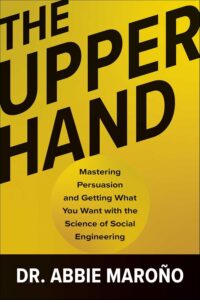
Your three-year-old is a social engineer. Don’t believe it? Watch what happens when Mom says no to a cookie — suddenly, Dad becomes the mark in an elaborate con involving sad eyes, strategic timing, and a convenient case of amnesia about that first rejection. Here’s the uncomfortable truth: the same psychological levers that toddlers instinctively pull are the exact ones that con artists use to drain retirement accounts and steal identities. The difference isn’t the technique — it’s the intention. Manipulation and influence are twins separated at birth, using identical tactics for radically different purposes. One builds empires of trust; the other leaves a trail of empty wallets and broken spirits. And the scariest part? When someone triggers your emotions — urgency, fear, exclusivity — your prefrontal cortex essentially clocks out, leaving your critical thinking skills on an unpaid lunch break while your impulses sign checks your future self will regret.
Dr. Abbie Maroño (author of The Upper Hand: Mastering Persuasion and Getting What You Want with the Science of Social Engineering) has trained 29 federal agencies — including the Secret Service, FBI, and CIA — on the psychology of persuasion, and she’s here to flip the script on everything you thought you knew about social engineering. Abbie walks us through how scammers weaponize scarcity and artificial time pressure to make you act before you can think, why shame keeps victims silent long after the damage is done, and how the same tactics that empty bank accounts can actually build lasting relationships when wielded ethically. She shares her own experience turning an angry, refund-demanding customer into a five-star reviewer and loyal mentee — simply by refusing to take his emotions personally and appealing to his identity as a curious learner. Whether you’re navigating a salary negotiation, trying to spot a scam before it spots you, or just attempting to figure out where your partner actually wants to eat dinner, this conversation hands you the psychological playbook that separates the manipulated from the influential. Listen, learn, and enjoy!
Please Scroll Down for Featured Resources and Transcript!
Please note that some links on this page (books, movies, music, etc.) lead to affiliate programs for which The Jordan Harbinger Show receives compensation. It’s just one of the ways we keep the lights on around here. We appreciate your support!
- Sign up for Six-Minute Networking — our free networking and relationship development mini-course — at jordanharbinger.com/course!
- Subscribe to our once-a-week Wee Bit Wiser newsletter today and start filling your Wednesdays with wisdom!
- Do you even Reddit, bro? Join us at r/JordanHarbinger!
This Episode Is Sponsored By:
- Function Health: $100 credit: functionhealth.com/jordan, code JORDAN100
- LinkedIn: Post your job for free: linkedin.com/jordan
- Progressive Insurance: Free online quote: progressive.com
- Land Rover Defender: landroverusa.com
- Homes.com: Find your home: homes.com
Thanks, Dr. Abbie Maroño!
Click here to let Jordan know about your number one takeaway from this episode!
And if you want us to answer your questions on one of our upcoming weekly Feedback Friday episodes, drop us a line at friday@jordanharbinger.com.
Resources from This Episode:
- The Upper Hand: Mastering Persuasion and Getting What You Want with the Science of Social Engineering by Dr. Abbie Maroño | Amazon
- Website | Dr. Abbie Maroño
- Joe Navarro | How to Identify and Protect Yourself from Harmful People | The Jordan Harbinger Show
- Robert Cialdini | A New Look at the Science of Influence | The Jordan Harbinger Show
- Office of Communication and Media Relations | US Secret Service
- Internet Crimes Against Children Task Force | ICAC
- DEF CON Hacking Conference | DEF CON
- When the FBI Found Out About Def Con’s ‘Spot the Fed’ Contest | Vice
- Security Through Education | Social-Engineer
- The Antisocial Network: Memes to Mayhem | Netflix
- Justice Department Announces Court-Authorized Action to Disrupt Illicit Revenue Generation Efforts of DPRK IT Workers | DOJ
- Pig Butchering Scam | Wikipedia
- Winston Sterzel | Don’t Lose Your Bacon in a Pig-Butchering Scam | The Jordan Harbinger Show
- Achille Lauro Hijacking | Wikipedia
- Chris Voss | Negotiate as If Your Life Depended on It | The Jordan Harbinger Show
- Combating COVID-19 Fraud | DOJ
- Florida Man Sentenced after Fraudulently Obtaining $3.9 Million in PPP Loans | DOJ
- Hyperbolic Discounting | Wikipedia
- Identify Anonymous Child Predators | Innocent Lives Foundation
- The Social-Engineer Podcast | Social-Engineer
- Embodied Cognition | Stanford Encyclopedia of Philosophy
- Mind over Milkshakes: Mindsets, Not Just Nutrients, Determine Ghrelin Response | PubMed
- Mind over Milkshake: How Your Thoughts Fool Your Stomach | NPR
- Ghrelin | Wikipedia
- Disney Utilidor System | Wikipedia
- Been There, Smelled That: The Smellitized Smells of Disney World | McSweeney’s
- Automated Vacuum Collection (AVAC) | Wikipedia
- David Eagleman | How Our Brains Construct Reality | The Jordan Harbinger Show
1255: Abbie Maroño | Mastering Persuasion with Social Engineering
This transcript is yet untouched by human hands. Please proceed with caution as we sort through what the robots have given us. We appreciate your patience!
Jordan Harbinger: [00:00:00] Welcome to the show. I'm Jordan Harbinger. On The Jordan Harbinger Show, we decode the stories, secrets, and skills of the world's most fascinating people and turn their wisdom into practical advice that you can use to impact your own life and those around you. Our mission is to help you become a better informed, more critical thinker through long form conversations with a variety of amazing folks, from spies to CEOs, athletes, authors, thinkers and performers, even the occasional Fortune 500, CEO, rocket scientist, music mogul, or tech luminary.
And if you're new to the show or you wanna tell your friends about the show, I suggest our episode starter packs. These are collections of our favorite episodes on topics like persuasion and negotiation, psychology, geopolitics, disinformation, social engineering, China, North Korea, crime, and cults and more.
That'll help new listeners get a taste of everything we do here on the show. Just visit Jordan harbinger.com/start or search for us in your Spotify app to get started. Today's guest trained the fricking United States Secret Service, which by the way, I did not [00:01:00] realize were out there catching pedophiles in addition to protecting presidents.
So when Dr. Abby Morono talks about influence, persuasion, and social engineering, let's just say she's not pulling stuff from, uh, the weird fringes of TED Talks or some pickup artist forum. I'm excited for this one because influence and social engineering are a couple of my favorite topics. Not the creepy, pretend to be from it and steal passwords kind of thing.
But we're talking about pro social engineering, white hat stuff, getting what you want because people want to collaborate with you. Big difference. Influence versus manipulation. White hat versus black hat. It's the difference between building trust and conning someone into shutting off their ability to think critically.
We're gonna talk about the psychological levers that con men pull. Why shame is such a powerful manipulation tool. How people shut down your critical thinking, how criminals weaponize your brain's reward system. And then we'll flip the script to how the good guys can use the same psychology for positive influence.
Creating comfort building tribes appealing to somebody's identity, speaking their language, mimicry, self-disclosure, shelving, emotional reactions, and yes, [00:02:00] how to find out where your girlfriend wants to eat. Here we go with Dr. Abby Morono. I heard you trained the Secret Service. That sounds pretty interesting.
Can you talk about that a little? I'm wondering what they take from your methods.
Abbie Maroño: I've trained 29 federal agencies. I,
Jordan Harbinger: I didn't even know there were 29 federal. Well, I guess it makes sense.
Abbie Maroño: Neither did I, but like
Jordan Harbinger: law enforcement agencies, right? So
Abbie Maroño: yes. Secret Service, Homeland, F-B-I-N-S-A, the F Sheb.
Jordan Harbinger: And 26 others that nobody, that nobody's heard of.
I
Abbie Maroño: don't even know what the others are.
Jordan Harbinger: Forestry service. I
Abbie Maroño: just know that they were all there. Yeah.
Jordan Harbinger: That's crazy. I'm trying to think. I'll just have Chad GBT spit out a list, but it's gonna be like Forest Service or something like that.
Abbie Maroño: Yeah. And they're all for investigative interviewing because it was the inter-agency polygraph event that I did recently.
Jordan Harbinger: I see.
Abbie Maroño: So CIA was there, but I don't think I'm allowed to publicly say CIA, even though everybody knows CIA. It's just one of those like pretend
Jordan Harbinger: it was like the guy who's there and they're like, what do you do, which agency? And he is like, I sell farm equipment. And you're like, okay, you're the CIA guy. [00:03:00] Yeah.
Abbie Maroño: And everybody knows which ones they are because they're the only ones that don't work with everybody else and they're like, oh, I'm just an agent. You're like,
Jordan Harbinger: yeah, who's been here for 20 years but hasn't met any of you before at anything else you ever go to Defcon. So for people who don't know, it's like a hacker conference.
There's like the spot, the Fed, which is where people try and spot who's working for a federal agency. And it's, it's never that hard. 'cause everyone has like, yeah, pink hair and like an LED eyebrow piercing or tongue piercing that like Bluetooth connects to some device they made that they're wearing.
Yeah. And then there's a guy who's like, I'm wearing Banana Republic today. And you're just like, that's the Fed. Even the corporate guys are like, at least wearing like a Metallica t-shirt and you know Crocs. Yeah. And the feds are like, yeah, the only guys dressed like they could, I don't know, get through airport security without extra scrutiny.
Um,
Abbie Maroño: yeah.
Jordan Harbinger: So what were you training the federal agencies to do?
Abbie Maroño: So I trained them in the upper hand about a year and a half ago before my book [00:04:00] was published, I did a conference and for the first time I released that I had created this framework for influence and persuasion. And it was a framework that I had spent about seven years developing.
'cause I'd started it when I'd started my PhD, kind of putting the ideas together, and then through my PhD and through being a professor and then coming here, I'd kind of ironed out all of the principles and it was the first time I was ready to say, okay, I've actually got this framework. So the book wasn't even released and there was an agent at the conference.
So he went back to the Secret Service and I had already worked with them before. I had trained icac, which is the Internet Crimes against Children. I trained them in nonverbal behavior before. So when they found out that I had created this framework, their secret service reached out to me and invited me to come and train it.
Jordan Harbinger: Cool.
Abbie Maroño: So after I trained the Secret Service event, they provided me with an [00:05:00] award for outstanding contribution to their forensic services. And then I was invited to keynote the Interagency Polygraph event, which was 29 federal agencies including FBI, secret Service, Homeland Security, and all of the rest.
Jordan Harbinger: Yes. All of the rest. Which we,
Abbie Maroño: all of the rest we don't have
Jordan Harbinger: time to get into here. Yeah, exactly. Exactly. The Forestry service, never forget.
Abbie Maroño: Yes, the hush hush.
Jordan Harbinger: I'm excited today because we get to talk influence and social engineering, which is a couple of my favorite topics. I used to be the ho co-host of the social engineering podcast with Chris Hena, who I know you work with.
Interesting. But that was a million years ago and I don't think they even do that anymore. I could be wrong. They might.
Abbie Maroño: We do. We now have, um, a few different series. One of the series is The Doctor Is Inn. Where I just talk psychology.
Jordan Harbinger: Nice. Yeah, it was a fun show, but I think it needed somebody to take the reins and get us off the small talk, which lasted for a long time.
So our mutual friend, Chris Haeg, is like a brilliant social engineer and [00:06:00] not the guy you want deciding the direction of your podcast, but that's one of his few flaws. So we can say that on the air. But yeah, he is a brilliant, brilliant writer, social engineer, and a funny dude. His most redeeming quality, in my opinion is he's hilarious.
And we'll keep you Yeah. In stitches
Abbie Maroño: when we train, we have very different approaches. I am more formal in my training. The way that I speak is more formal.
Jordan Harbinger: Mm-hmm.
Abbie Maroño: And he is not formal. No,
Jordan Harbinger: he is not formal. That's a good way to put it. No, he is not
Abbie Maroño: formal.
Jordan Harbinger: No.
Abbie Maroño: And we've done a couple of courses together. And it, it's really interesting seeing the dynamic and people seem to like it because they get the science from me and then they get a bit of the break from the science and get the
Jordan Harbinger: dad jokes.
Yes. Yeah. From him. Yes, exactly. Exactly. The dad jokes and I, I was giving a keynote once and he was like, Hey. Drink this and he handed me like a vodka can and I was like, okay, it's nine o'clock in the morning I think. Maybe. Almost. Yeah. Um, I [00:07:00] was like, okay, yeah. Drink
Abbie Maroño: this, eat this without telling you what it is.
I'm familiar.
Jordan Harbinger: Exactly. Yeah. It's one of those. Let me pour this shot down your throat. It's seven 30 in the morning before your talk.
Yes.
Um, so, so let's define social engineering first. 'cause I think a lot of people are like, oh yeah, this is what those people do when they ask you to send them crypto into Indonesia or whatever.
Abbie Maroño: Yeah. So social engineering has a really negative connotation. People think that it is just scamming and trying to get passwords and social security numbers and things like that. And that is absolutely a part of social engineering, but that is the malpractice of it. That is the manipulative side of it, where you have actual bad actors.
Social engineering in general really is just getting information from someone or influencing someone to make a decision. That's really all it is. Kids use social engineering.
Jordan Harbinger: Tell me how,
Abbie Maroño: if I ask mom, Hey mom, please, can I have a cookie? And mom says, no, I'm going to go to dad and [00:08:00] pretend I haven't spoken to mom and ask dad for a cookie as if mom hasn't just said no.
Jordan Harbinger: My 3-year-old already does this.
Abbie Maroño: Yes.
Jordan Harbinger: And I'm like, did mommy say it was okay? And she is like, um yes. And I'm like, did you ask mom? Yes. And I'm like, okay. So that part's true, but the previous part was not true. And then I'm like, why don't you go ask Mommy now? And she'll come back and say, mommy. And then she'll just tell me a story about something random to try to distract me.
And I'm like, this is a pretty good for a 3-year-old, but I'm not buying it.
Abbie Maroño: Yeah. And they'll look, you know, really sad before they make a request. They might cry a little or they give you the baby, I really want that. Oh, okay. And that emotion isn't there. It's a false emotion because they wanna get what they want and they don't think in their head, I'm going to use social engineering.
It's just something we naturally do. But the art of social engineering is understanding really how people respond to emotions, how to influence decisions, how people think, and then utilizing that for your best interest.
Jordan Harbinger: So maybe [00:09:00] we separate influence from manipulation then. Can you do that?
Abbie Maroño: Yes. So yes and no.
I like to separate them with intention because they are one and the same thing, the same tactics you use to influence. Like if I am selling a car, I can use those same tactics to do it for my best interest or because I think this car will actually really benefit these people. The difference between manipulation and influence is really intention.
So if your intention is to get someone to do something, regardless of the consequences to them, so it may cause psychological harm and okay, fine, I don't care. That's manipulation. Influence is that lack of psychological harm. It's either in your best interest or I influence you to build trust. So we build a good relationship.
So you work with me. That's influence. If you have intention to cause psychological damage or any harm, then that is class as manipulation.
Jordan Harbinger: Right. Yeah, that makes sense. I always wonder, do you [00:10:00] ever look at those scams, like the scams where people send money to an Indian scammer using, or Pakistan, whatever, using like Apple gift cards?
I always wonder what the people on the other end of the phone are like, you kind of have to be a really evil son of a bitch to rob an 80-year-old of their life savings. You really do.
Abbie Maroño: Yeah. And the way that they do it is dehumanizing the person on the other end.
Jordan Harbinger: Mm-hmm.
Abbie Maroño: So if you just see them as a target and you just see a goal and you don't humanize that person, it makes it really easy to get what you want.
And it's a tactic that I found that terrorists use in radicalization. They dehumanize the other side. So it makes it very easy to now move forward with the mission because we're not going against people. We're going against a problem. And scammers really do that same thing. They dehumanize the target just to get what they want.
And there are some really awful cases, and I've seen videos where people have recorded phone calls where, you know, they've pretended [00:11:00] that they've been in a car crash and they're on the phone to a scammer. The scammer's asking for a, could you please provide your card number so we can continue with this transaction?
And they're like, I've just been in a car accident. And the scammer's on the phone like, oh, I'm so sorry to hear that. Can you access your card
Jordan Harbinger: right
Abbie Maroño: though? And you know, that level of just complete lack of empathy or care is, is hard to consider. But also the fact that it's over a device, which is often how social engineering occurs online or over the phone.
There's a buffer. So it's not like when you're face to face with a human, it becomes harder to try and engage in manipulation because you can physically see that person. So it's harder to dehumanize them over the phone. There is that buffer, so it's really easy to be like, oh, I dunno anything about them.
They're just a target.
Jordan Harbinger: I mean, we've all seen this in action, right? Where I was reading something the other day about this terrorist attack several decades ago, but they shot an old Jewish man in a [00:12:00] wheelchair and then dumped his body overboard. This is the PLO and I was just thinking like, man, you gotta get to a crazy dark place in your head and probably already be a sociopathic, malfunctioning human being.
'cause this is way deeper of a cut than I thought I would get here early in the show. But do you think anyone can get to that level of dehumanizing somebody or is this like the combination of already a sociopath and radicalized and trained to dehumanize the other side?
Abbie Maroño: That is a really great question and one that the answer is not particularly comforting.
Because the percentage of people who are actually psychopaths is very low. Just like the percentage of people that are genuinely a classified narcissist, my clinical definition is very low. So to get to that point, you would think, oh, they have to have these psychopathic tendencies or be a psychopath because we function via empathy.
There are a lot of things that decrease empathy. It's been shown in the research that as we obtain more [00:13:00] power naturally, it can subdue empathy processes in the brain. So as you become more powerful, that drive to get more power, more power, more power, reduces empathy processing and which is why it's important for us to remind ourself that we need these things.
That's why it's really important to work on self-development. So there are natural things or there are processes that naturally decrease empathy. But when it comes to these scammers, especially these big ones, we see a lot of them are based in, say, India. Often they're a whole organization. And it does work in a similar way to radicalization and actually very similar to how the psychological process works of abuse victims.
You take an individual and you start to chip away at their sense of self. Maybe you find someone who has gone through trauma, someone who is not very regulated, their emotions, someone who is struggling, someone who's a little lost. You, chip, chip, chip, chip, chip away at their sense of self. [00:14:00] And now you feed in a new identity, they feel a little lost.
Now you make the other person the enemy. Now you make the goal to get that thing and these other people are stopping you.
Jordan Harbinger: Mm-hmm.
Abbie Maroño: And with radicalization, it can be that they have a huge amount of empathy for their side, but you've now made their whole identity about protecting this side. And the other side is the enemy.
You do see these people that have become scammers by, they have been recruited often. They're very, very lost individuals, people who have gone through quite a lot. So they're the perfect people to now turn into soldiers, um, for your mission. And it's that case of you see young kids, usually the bully was the bullied.
They've suffered and now they want to get their own back. They're very mad at the world. And that anger at the world and that self-righteousness of why have I suffered? It's now my time to [00:15:00] win and everybody else's time to lose. It's a very fine line for someone who is suffering to walk that.
Jordan Harbinger: Yeah, it's interesting.
I I, this is just top of mind because of that $15 billion crypto seizure that the Department of Justice had the other day from a scam site in, I think Cambodia. Then they sanctioned Prince Group, which is the Chinese group behind this big, big, big scam. It's, I think it's the largest seizure in history by 30 x or 50 x or something like that.
It's just a crazy amount. And that's like thousands of people's life savings in cryptocurrency that got seized, which is incredible. And unfortunately it's whack-a-mole. There's a ton more of these. 'cause they're so profitable in Cambodia's. GDP is 50% made up of these scam sites. I think, and I'm, I don't think I'm exaggerating.
I think it's literally like doubled from the illicit trade. So back to influence. So it sounds like you're, what you're saying is it's essentially getting what you want because people want to collaborate with you instead of manipulation where they're giving you what you want because [00:16:00] you've tricked them into doing it essentially.
Abbie Maroño: Yeah, with manipulation, it's really, people do as you ask, because they fear the consequences of not doing it. When it comes to the principles that I teach, because you can have influence that are still getting what you want, but at the expense of the other person, it may not cause harm. It's just not in their best interest.
The way that I like to think about influence, like I wrote in the upper hand, is about it being mutually beneficial. And it's not about how do I get what I want, it's how do I make you want to give it to me.
Jordan Harbinger: Yeah.
Abbie Maroño: And when you think about it like this, instead of just short-term tactics, they're long-term tactics because it's very easy to use things like fear.
Now, if you don't do this, mm-hmm. There's gonna be a quick consequence. You might make a sale, right? But that person isn't gonna go home to their friend and talk about how great that sale was, and then their friend's gonna come back. So you may get that win, but you just get that win. [00:17:00] When it comes to these long-term tactics, you might not get that win straight away.
But maybe they go home, they think about it, they come back to talk again, and maybe you get the win later. Maybe it's three conversations down the line, but you are building a relationship and then they tell their friend about the experience they had. You've built up trust, you've built up rapport. So it's about the long-term influence rather than just, how do I get what I want quickly?
It's about how do I actually make this something that is lasting and built on connection and cooperation.
Jordan Harbinger: So pro-social engineering or just what used to be regular social engineering? Pro-social engineering, using it for good. And this, it's great because again, social engineering does have that bad. Rap is something that only con men use.
An example of using it for good, and I'm sure there'll be multiple, but one that I'm particularly personally proud of. I used to my girlfriend, like many girlfriends, I would say, where do you want to eat? And she would say, I don't care. And I would be like, Ugh. So I finally [00:18:00] decided to say, guess where I'm taking you tonight to eat.
And she would go, oh God, I don't know. And I'll go, yes, you do. You know? And she'll go, is it the new noodle place on State Street? And I would go, oh God, you're so good at this. Yeah, of course. Yes, exactly. I told you you knew. And then after like a few weeks of this, she's like, how do I get it right Every wait a minute.
So, but, so that's social engineering for good, I feel like. And by the way, feel free to steal that. It works at least five times in a row. I
Abbie Maroño: absolutely will. And the thing with social engineering is it can be really hard to use it for good because we're emotional beings. So if you have someone who is not being super cooperative, you might think in your head, I'll just use the, uh, negative approach.
I'll just try and use an ultimatum. But ultimatums are just threats disguised as choices. Or you try and use more of a pushy t. But one thing I always teach people is you have to remember that other people's emotions generally have nothing to do with you. [00:19:00] And always assume positive intent with other people.
And that's really helpful when it comes to influence because someone might be a little aggressive or someone might be in a bad mood, but it's likely nothing to do with you. We often just get the brunt of other people's emotions. For example, I created a, an elicitation course. It was an online elicitation course, and our courses are very expensive, but I wanted to create something that was accessible to the everyday person.
And our courses just aren't because they're thousands of dollars. Mm-hmm. So I wanted to make something that was just a couple of hundred dollars, but because of the price, we couldn't have it interactive.
Jordan Harbinger: Yeah. You can't have a coaching element. It's not scalable.
Abbie Maroño: Yep. We just couldn't. So we put the course out and I was really excited because again, I was a professor, so.
It felt like I got to kind of reach students again rather than just being in the corporate world. And we were getting a lot of really good responses. But then we got an email from a student [00:20:00] and they'd sent a couple of emails asking questions, and they'd reached out via my personal website asking a question, and we had to email back and say, actually, this isn't an interactive course.
We just can't have it interactive because of the fees. And they sent back a pretty aggressive email and said that, you know, for this price, they would expect some kind of interaction and chat. GBT could write something like this and they want their money back. So my team had responded and said, well, the reason that you know, we have our courses is we don't use AI for anything that we do, that Dr.
Abby created this course. Everything is based on their expertise. And we were pretty upset. And that was something that really got to me too, because science is so core to who I am and I put a lot of love into that course. So I took it personally as a. What I first did of, okay, well that is offensive to me.
And then I sat back and I'm like, okay, has their emotions have nothing to do with me?
Jordan Harbinger: Yeah, yeah, yeah. So
Abbie Maroño: I reached out to him by email and [00:21:00] instead of reflecting back his emotions, I realized the best way to influence someone and to create that positive relationship is not to take those emotions personally.
So I reached out and one of my principles in my book is about self-identity, that it feels really good. We have this image of how we are, and it feels really good when people confirm our image of ourself. So I thought about his email and he's clearly someone that is seeking knowledge because he listened to our course and he was annoyed that he wasn't getting more answers to his questions.
So I reached out and I said, thank you for emailing. It is really impressive to see that you're so passionate about what you do. And you know, I was a professor and seeing curiosity in my students was something that. I love to see and that's a really great trait that's going to get you far. So don't ever lose that.
I'm sorry, this course didn't mean your expectations, you know, we'll give you a full refund, but I'm really impressed with your [00:22:00] curiosity and took him a couple days and he emailed back and thanked me for my email and said that not many organizations would give a refund. So thank you so much and he's gonna use that money and put it into my book.
And he Then
Jordan Harbinger: you got 40 copies of your book?
Abbie Maroño: Yeah. Where he then read my book and it's about influence and cooperation and focusing on using those positive tactics and building connection. And he emailed back a little while later and said that he finished the book and he's actually reflecting on his own management and interviewing style and he is gonna step away and stop reading what he has been reading and focus on cooperation building.
And now him and I have a, a great mentor mentee relationship. He, he emails me with some questions. Sometimes I give him book recommendations, and he wrote a wonderful review and he bought my book and wrote a wonderful review on Amazon five Star. And that relationship could have been a very negative one.[00:23:00]
But again, just stepping back and thinking about the long-term influence of people's emotions, don't always have anything to do with you.
Jordan Harbinger: I would say most of the time I get into any sort of conflict or tussle with anybody online, I'm hungry or I'm tired. Or I write back with, you know, somebody sends me a crazy, nasty email and I'm like, yes, are you okay?
And they'll write back three weeks later, wow. You know what? I was not okay man, here's what was going on. If you really wanna know. And I'm like, I'm really sorry to hear that. That sounds terrible. I'm really sorry about your dog or whatever. Then they're like, I feel so bad. I'm like, don't feel bad. I was a faceless nobody.
Email address. Forget about it. And then five years later, those people are listening, still listening to the show, or they buy your stuff and they gift it to their whole family. Yeah. It's better than being like, oh, you're mad at me. I'm gonna make you feel even worse about that because my ego is wrapped up in you being offended.
Now I'm offended that you are offended. I don't even know what that, the whole thing is about. I remember I learned this lesson a long time ago because somebody had sent me something nasty and [00:24:00] I sent something nasty back. I was probably in college or law school, and I remember this girl that I was friends with that goes, Hey guys, why don't you just put 'em on the table and measure them?
And I was like, that is pretty close to what we're doing right now. You're uh, you're not wrong. And we both kind of laughed about it. We were like, well, we got our number, I think, on that one.
Abbie Maroño: Yep. And that is why actually, when it comes to influence, putting your ego to the side is one of the best tactics because it gets in the way.
Because if someone is getting something you want. Or building that relationship comes at the expense of your ego. We're like, oh, no, no, no. I, I need to act this way. I need to pretend I need to be Right. Exactly. Yeah. And this is one thing we love to be right. We love to be right as human beings correcting someone feels so good, you know, as someone uses the wrong there.
Jordan Harbinger: Yeah.
Abbie Maroño: Oh, doesn't it just feel so good to be like, that's the wrong there. You put the
Jordan Harbinger: star and you write the right one and they're like, ah, son. Up
Abbie Maroño: a bitch. It feels so good because you're like, look how smart I am. Right. Your
Jordan Harbinger: whole point that you made that was totally [00:25:00] valid, ignoring it. Exactly. Just gonna correct your grammar.
Yep.
Abbie Maroño: Or when someone has made a great point, but they made a spelling mistake, it's like, oh, oh
Jordan Harbinger: man.
Abbie Maroño: Oh, I can't wait to respond and ignore everything you said. That's right. Without spelling.
Jordan Harbinger: That's right.
Abbie Maroño: And that's an ego thing because it places us at this kind of above them in the superiority of, I'm right, you are wrong.
But what happens when we have been corrected is it creates embarrassment and it creates often shame. I
Jordan Harbinger: mean, that's why I'm doing it to you in the first place on the internet
Abbie Maroño: and it feels good. The one doing it. That's right. But the one receiving it doesn't feel good. So do I now want to build a relationship with you?
Jordan Harbinger: Not really.
Abbie Maroño: That's why if you want to influence someone long term, trying to suppress that ego when you really want to correct. I use a technique called pants yourself. And pants yourself means show your vulnerability instead of when someone has says something wrong and you really wanna correct them, or maybe someone's being a little bit more aggressive, then you wanna point something out, actually pantsing yourself and say, why don't [00:26:00] we take a break here because I'm struggling to provide you the services that you need or to communicate in the way that I think will be effective to let me take a step back.
And that's instead of saying, you are wrong. I'm right or you are being too aggressive or you are the problem here saying, actually I might be the problem here. I am not able to completely engage the way you need. One phrase I love is it appears I am not able to provide you the support or the service that you need right now.
I would like to be able to support you better. So let's take a five minute breather so I can step back and have a think about how I can support you better instead of you are being rude and I want to leave this interaction. 'cause that's what we are thinking. And when you do that, it makes it really difficult for them to now come back with aggression.
When you have pants yourself like that and when you, instead of letting that ego go, you are wrong. It's the wrong there [00:27:00] kind of attitude. Taking that step back to breathe, pantsing yourself when they come back, usually they step down a little bit and it makes it much easier to build that relationship.
Now, if you're in a negotiation or you're in a meeting, it makes it much easier to meet back on common ground because you haven't created those negative emotions in that person. If someone has created embarrassment, we don't want to collaborate with them because now we feel that our ego has been attacked, and that is one thing if someone attacks our ego, we just wanna keep attacking theirs.
We do not want to build that relationship, so it is a hard thing to do. When that ego is saying, oh, just correct them or just reflect it back just to breathe and pants ourself instead, but it is very effective for long-term influence.
Jordan Harbinger: We're talking about the difference between influence and manipulation, and trust me, you've dated both while you reevaluate your life choices.
Here's a word from our sponsors. We'll be right back. [00:28:00] This episode is sponsored in part by function. I use function because data is everything. You can feel great and assume you're healthy, but without real numbers, you're basically flying. Blind function is the only health platform that gives me access to data most people never see.
And the insights to actually act on it. You get over 160 plus lab markers every year, hormones, toxins, heart health, inflammation, stress, the works. You can even add MRI or chest CT scans for an extra fee. And all your results get tracked securely over time so you can look back and actually see trends instead of just guessing.
And that baseline is huge. Knowing what healthy you looks like gives you something to measure against later. You can spot changes early, see what's improving, what needs attention. I even tweak my vitamins. Knowing what I was deficient in function might be the most meaningful gift you give someone this year.
I gave function health to my brother-in-law who's notoriously impossible to shop for, and he was actually excited about it. He got his results fast and learned things about his health he never would've known otherwise. If you wanna give somebody real actionable clarity, give them access to 160 plus lab tests every year, this is the gift people [00:29:00] actually use and appreciate.
Jen Harbinger: Own your health for $365 a year. That's a dollar a day. Learn more and join using our link. Visit function health.com/jordan or use the gift code Jordan 25 for a $25 credit toward your membership.
Jordan Harbinger: This episode is also sponsored by LinkedIn. As a business owner, you're on the clock 24 7. When it comes to hiring, you need a partner that works just as hard as you do.
That's where LinkedIn jobs comes in. Hiring can definitely be a grind writing job, descriptions, posting them, hoping the right people will see 'em. LinkedIn makes it easy. Their tools help you craft the description, then put it in front of the right candidates. With deep insights, you can post for free. You can pay to promote promoted jobs, get three times more qualified applicants, and the results speak for themselves.
72% of small businesses say LinkedIn, help them find higher quality talent so the candidates already feel vetted. Plus, you can share your listing with your network, even at a hashtag hiring frame to your profile photo, which doubles the qualified candidates. Checking out your job more than 2.5 million small businesses already use LinkedIn for hiring because at the end of the day, you don't just want somebody who [00:30:00] can do the job, you want the right fit, and LinkedIn helps you find that person.
So if you're ready to make your next great hire, head to LinkedIn Jobs and see why so many small businesses trust them.
Jen Harbinger: Post your job for free at linkedin.com/harbinger. That's linkedin.com/harbinger to post your job for free terms and conditions apply.
Jordan Harbinger: If you're wondering how I managed to book all these great authors, thinkers, creators every single week, it is because of my network.
The social engineering stuff really piggybacks very, very well on our Six Minute Networking course, which is free. It's a relationship building course. It's very non cringe down to earth. Very practical stuff that'll make you a better connector, colleague, friend, and peer. Again, it jives very well with the stuff you're hearing in today's episode.
Six minutes a Day is really all it takes. It's a systemized course. You can binge it and practice it right away, and many of the guests on the show subscribe and contribute to the course. So come on and join us. It'll be in Smart Company where you belong. You can find the course free of charge and free of any shenanigans at Six Minute Networking dot com.
Now, Dr. Abby Morono, [00:31:00] I find myself doing that a lot because I'm good at arguing, right? So I'll be like really into it and I'm like, I'm winning this, and then I'm like, wait, I'm winning the battle and losing the war, right? And so I'll have to back up and go, I. I'll maybe make a point and then go, you know what, all that aside though, I, I think it's admirable that you care so much about this and like, I gotta admit that I got wrapped up in being right about this and none of what I said matters.
And, and I remember I, this is recent. This guy wrote back, wow, this took a wholesome turn. And I was like, yeah, yeah, yeah, because otherwise, what am I doing? I'm arguing with somebody who I'm trying to get something from on Reddit. I mean, none of it makes any sense. And it's just like, okay, you basically have to get sight of your goal once again, which is like, yes, this person's business policy is stupid.
And yes, I can be like, I'm gonna tell my podcast audience not to buy from you. Or I can be like, I'm actually trying to help you. Here's how I'm doing it. I'm just doing it the wrong way. I went about it the wrong way. What do you think is the best way to do this? And they're like, oh, you just wanted me to help you with this thing that you bought.
God, I didn't even understand that. Like, sure, here's my whole like [00:32:00] PDF on how this works. And it was just like, why the hell were we arguing about? The finer points of this other thing that had nothing to do with either of our goal because we were two dudes that needed to just put 'em on the table and get 'em measured and then go on with our lives.
Yes. So you pants yourself. Yep. And fortunately that works exactly with the other analogy. I think you should add that to your next edition of the book. Yeah, you should throw that in there.
Abbie Maroño: I would possibly think about it. Yeah.
Jordan Harbinger: Possibly think about it. Yes. You should possibly think about that. Depends what your publisher Run it by the editor, see what they think.
Abbie Maroño: Yes. Yeah. Yeah. I'm not sure Matt Holt would love it, but you know, you never know. Exactly.
Jordan Harbinger: Penguin Random House doesn't love dick metaphors in the books, but
Abbie Maroño: no, and they are my distributor, so
Jordan Harbinger: I mean it's, look, they did publish the Subtle Art of Not Giving a Fuck by my friend Mark Manson. And that was on the cover.
Yes. I'm just saying. Yeah.
Abbie Maroño: So
Jordan Harbinger: maybe one dick metaphor. Just one.
Abbie Maroño: Maybe
Jordan Harbinger: one dick metaphor per book. So I'd love to talk about the way that Dark Hat Con men use things like selectivity and exclusiveness to gain trust and then give a white [00:33:00] hat example of that. 'cause. In the book, you give Bernie Madoff as a good example of selectivity and exclusiveness, and we can use things like this without robbing people of their life savings and investments.
Abbie Maroño: Yep. So often when we say you have access to this, but not everybody else, only you, and for this really specific reason you have access, it makes it feel scarce. And we know from cini and years and years and years of research that as soon as something is scarce and not everybody has access to it, we want it so much more because it's, if we have it, that makes us have some kind of advantage of other people.
And this is also why sales work so well. This sale is only on for 24 hours. If I don't do it now, I won't get it. So it becomes a scarce resource when you are trying to build a relationship with someone or say, I'm offering access to this investment. [00:34:00] If I say, look. I don't really give this opportunity to many people, but because you and I have a mutual friend, I'll give this opportunity to you.
And what this does is we often trust via our network. So when we trust someone and that someone else trust another person, we can kind of utilize the trust for our friend to ourself. You don't know me, but because this other person has vouched for me. Now you feel this sense of familiarity. You feel a sense of trust.
So now when I say, look, because of our mutual friend, I'm gonna give you access to this really exclusive thing, it now feels like, okay, well this is a really trustworthy thing for those two reasons. One, I really want it 'cause it's scarce and because I trust this person, therefore I trust you. And actually, I saw a friend of mine do this on Instagram this morning.
They posted on their private story, this big investment opportunity that they have, and they posted a second private story, so it's friends only [00:35:00] and saying, I am opening up three slots to this investment, but only to my close friends because it's such a good deal. I can't open this to everybody else. So now it's exclusive and wow, it's on the private friends list.
Jordan Harbinger: Sure.
Abbie Maroño: So people use that and then often their intention is extremely negative. This is a play on trustworthiness, right? Because the main factor for why we do something is because we trust it. If I'm gonna invest in something and I'm gonna invest a lot of money, the main factor is trust. I need to trust either the person or I need to trust the credibility of the thing.
What social engineers are really, really good at is the perception of trust, and this is why scarcity. And time restrictions are so effective because when we're emotional, our emotional centers override our prefrontal cortex and prefrontal cortex where critical thinking happens. That's where I go, oh, is this a good idea?
[00:36:00] Oh, is everything really correct? And that's where we notice, oh, hmm. That doesn't seem quite right. But when we're emotional, those processes often get overridden. That's why when we're in our emotions, we write that angry email without thinking about the consequences. So when our emotions are engaged, we are more likely to act impulsively.
Now, that is really quick. So trust has two sides, just like two sides of a coin. We have the perception of being trustworthy, which is the nonverbals. How do I appear that really quick? Do they look like they're trustworthy now? That's the perception. That's the first side. We forget that trust has. Two sides.
We have perception, which is opening the door, and then we have being trustworthy, which is staying in the room. Social engineers know that if they can get you to act quickly, they just need to appear [00:37:00] trustworthy. They don't need to be it because if it's a long-term deal, if it's something that goes over time, it's very difficult for them to stay in that room because there are often cues that this is false, that they're not really trustworthy.
So they use tactics to get you to act very quickly. They're very composed. They use the right kind of language, they use great nonverbals to boot connection. They have that whole image of this is legitimate. So you act really quickly and it's 12 hours and then it's gone. Okay. I haven't had time to actually confirm this is a trustworthy person, but I'm gonna do it because it looks like it.
So that's what social engineers are so good at. Which is why when it comes to protecting yourself, obviously long cons are very, very difficult to test. But often these tactics of when someone asks you to do something very, very quickly, you have to remind yourself, trust has two sides. But we often feel like this person's [00:38:00] trustworthy.
But we have to remind ourself I couldn't possibly know that because I haven't had enough time with them to actually confirm if they're trustworthy. Because the only factor that confirms that is consistency of behavior over time. And if you act quickly, you couldn't possibly have confirmed that.
Jordan Harbinger: That's right.
So when I used to sell training in my old company, I had this show or a version of this show. So when people would call in, they would be like, oh, I feel like I've known you for years 'cause I've listened to a thousand hours of your voice or whatever, 700 hours. Yeah. And that was really helpful. And then also it was a really expensive program.
I think, you know, our cheapest was like 6,000 or most expensive was like 9,000. They usually didn't buy on the first phone call. Some people did, but instead of Act now I'll give you $500 off. I was like, when they would be like, Hey, I need some time to think about it. I would say something like, oh yeah, no, I don't expect you to buy on this phone call, man.
Take all the time you need. I would call. Other companies that offer something similar, here's what I would ask them. And sometimes I'd go, no, if I [00:39:00] buy this, I'm only buying it from you. 'cause I really, I like what you put out all the free stuff on the podcast. Or they would say, oh yeah, I was gonna call a competitor.
Actually, what, what were those questions? And I'm like, here, I'll send you a PDF of what you should ask them. And of course, those competitors, they were terrible at this. They'd call the competitor and they'd go, Hey, I was calling Jordan Harbinger. And they'd go, oh, that guy, that guy's such a loser, right?
And then be like, uh, okay, well I really like him. But anyway, I was wondering, do you provide accommodation if I do your program? Uh, no. You just need to get a hotel in the city. Okay. Do you cover that? No. Anyway, do you wanna buy now? If you do, I'll give you 500 bucks off. And they're like, no. And they're like, look man, last chance tomorrow the price goes up.
And they're like, uh, okay. Bye. And then they would call me back a couple weeks later and be like, yeah, I did call those guys. Oh, how did it go? Yeah, not buying from them. Or they would tell me specifically that because that's how I got that exact example. And I was like, wow, these guys don't know what they're doing.
What's funny is they're trying to use scarcity on somebody when really they have the scarcity mindset themselves, right? Like, if this lead [00:40:00] gets off the phone, they're never gonna convert, so I've gotta do whatever I can. Bull crap, like fake time constraint, discounting, hey, that if you go with them, that guy's a lose.
Like trying to just shame or whatever the person, and I'm like, if you had the mindset that you're the only, you're the best option and that these people are smart enough to figure that out and just need a little nudge, you would be making millions of dollars a year. But instead, you view people as like dumb drones who have, as soon as they hung up the phone, are gonna get distracted and call somebody else or do something else.
Abbie Maroño: It's a really common mistake. I see that instead of focusing on, it's not me versus you to the competitors, it's, we all really have the same goal and. It's just focusing on what you do well when people aren't as confident that they do things well.
Jordan Harbinger: Yeah,
Abbie Maroño: a great tactic is everybody else is really terrible.
And I remember I was coaching this student about a year ago [00:41:00] and he had developed an app and he was looking to get investment and it was the first time he'd ever asked for investment. So he had run his debt cards by me. So these are the things that he's using to pitch why his app is so different. And the mistakes he made were the same mistakes that I see so often in people in negotiations or even in interviews, especially trying to get investment money of, well, here's all the competition and this is why they are terrible.
This is everything they're doing wrong. These are all the bad things and this is why I'm the best. And I said that is a, a really typical approach to take, but it's the wrong approach. Because it doesn't make you appear trustworthy. And we know from the literature that as soon as someone else tries to discredit another person, or if someone uses really aggressive language, instantly they become less trustworthy.
And then by [00:42:00] association, the information they're presenting is also less trusted. So it is not the most effective approach. The most effective approach is to say, these are the competitors. This is what they do. Great. These people are great at doing this. The thing they do lack though is this. And this is where I come in.
And that is a much more effective approach.
Jordan Harbinger: Yeah, it was incredible. How many. Competitors would say something negative, guys I knew. And they'd be like, don't take it personally, man. It's all just part of the game. And I'm like, I don't take it personally. I just think you're doing it wrong. And I have the receipts to prove that because I'm making way more money than you are.
And there's a reason for that, right? Like say if, if we, if it's just business, here's my business, here's your business. Maybe you should take some of my advice and stop being a dickhead. I mean, it worked out in my favor. 'cause I just, I remember people going, that's pretty expensive. I could get, you know, I'm gonna call that guy.
And I'm like, okay, when you call that guy, ask him these three things or these five things. And then they would call me back like, wow, okay. They failed all five of those tests. I'm like, what else did you ask? And of course, they didn't really [00:43:00] have anything else to ask. They just wanted a better pitch, which they didn't get.
And then when they asked their questions and they got the wrong answers to each of those questions. It was just a no brainer. And it makes it great because you can, it's hard to hack that. Yes, you could probably trick your competitors into doing something bad, but it's actually easy to provide a better product and or service and then point out the flaws or where your competitors are lacking.
And then have people go find that out for themselves. Like I can say they don't offer accommodation, they don't offer post-program tutelage or whatever they don't offer. I'm like, no, no, no. I want you to go there and for them to tell you to your face that they don't offer any of the things that I just told you, we give you.
I want them to tell you because otherwise you have to trust me and I have to be right about their product and service. Go straight to them and let them tell you why they are inferior to what we do and what we offer.
Abbie Maroño: And that's the difference between taking the long road and the short road. If you want to get what you want and you think, okay, I'm gonna get it.
And anyone that gets in my way, I'm just gonna get 'em out my way. [00:44:00] And if I need to. Say that this is my information. When it's someone else's, I'm gonna do that because I'm gonna get what I want at the expense of other people. And often those people, they're not as good at what they do because they're not as confident in their ability.
They have to discredit other people or they're using other people's stuff. And I had a, a great example of this with a speaker. She was in the same kind of speaker circle as me, but whereas I produce my own material and I do my own research, I create my own frameworks. And she, on the other hand, listens to lots of other speakers, including myself, and will take their information and I say, repackage it, but often just steal it, copy, paste it to her own.
Jordan Harbinger: Wow. That's bold. And
Abbie Maroño: it is. And often because she's great at anybody else that gets in my way. No, this is mine. She has been getting a lot of really big speeches and really big opportunities. So she took the short rope and often she's very, very good to it. Oh, this is what you want to hear. This is what I'm [00:45:00] gonna give you.
The long road is the honest road of, no, actually that wasn't mine. That was his, like me and Joe Navarro, he, we will often send each other work. If someone has come to me, they wanna interview me for this, and I'm like, actually, I think Joe is better suited, go to him and he does it to me. I lose opportunity sending them his way, he loses opportunity sending them my way.
But it's the right thing to do. And we take the long road and now we end up getting more because often we share things. So with the work that I do, I'll never tell you what you want to hear. I'll tell you what you need to hear. So I didn't get as many opportunities. My progress was much slower. And you think, gosh, if I just manipulated or if I did this, I get this right.
The thing with taking the short road though, is you leave reputation behind. And when you leave people feeling like you have done something against them or you have been unjust. Or you have been unfair, they don't want to help you. When you leave people feeling like you are [00:46:00] fair and cooperative, when they get opportunities to help you, often they do so you then get opportunities that you wouldn't have otherwise.
You may not have gotten that initial win, and you see these people using the negative tactics, but reputation comes back to you. And then if you kind of manipulated your way there, they're not necessarily as good. So you may get the opportunity, but you don't get called back. You don't get invited back.
And when you take that short road, the wins you get, you might get them, but that person's taken the long road. Eventually they overtake you. So I think it's always better to take that long road because you leave people feeling good. You leave people wanting to help you, rather than wanting to tear you down.
As soon as you leave people feeling like you have hurt them or done something against them, people are very dangerous. If you leave people hurt. You never know when they're going to try and hurt you back. It's always better to just try [00:47:00] and do the right thing and try and do it, honestly. And if it isn't your work, or it's like if I don't provide that service, I don't pretend I provide that service.
Jordan Harbinger: So if pro social engineering skills like we're discussing are so effective, why do criminals and con men use the negative manipulative route because it's faster? Is that the only reason?
Abbie Maroño: Because it's faster and because they don't care about building a relationship. So if I'm just focused on getting what I want, those short-term tactics, they work beautifully.
Because if I want to build genuine connection, I have to invest a lot of time. Building rapport is hard because I actually have to be trustworthy. It's actually, I don't have to just pretend I'm organized. I have to reorganize to get the job. I don't have to pretend I have your best interest. I actually have to try and figure out what it is it that you need and how can I provide you value.
It takes time, it takes investment. It's much harder to do and I may not get as [00:48:00] big a wins as quickly. If I just care about getting the thing, I'm gonna use the negative ones. I'll make your more money really, really quickly. I don't care about that lasting relationship.
Jordan Harbinger: The thing is though, if you look at this over time, you still get better results over time, even if it's a little bit harder.
So I always thought about this, right? When I was a kid, I was always into like some shit, basically like I was like, oh, I can generate credit card numbers and they don't. You have the internet so they can, I can put it in and it passes the check some, and then when they reconcile on Friday, I'm long gone with the pizza, whatever it is, right?
I used to do that and then I was like, yeah, there's risk here and I'm making people feel bad and that sucks. But also like it, wouldn't it just be better if I made a bunch of money I could buy pizza? Right. And so that was like kind of my thought process. And now that I'm older, I'm glad because I don't want to go to federal prison.
But also, yes, it's just easier to build a real business even if it takes longer. And that's what I kind of never understood about small time con men and whatnot. 'cause I'm like, [00:49:00] man, it's actually easier if you had put all this energy into making a real product or service, it might have taken you an extra 18 months to hit it, but you would have a viable business that you could have sold for $20 million instead of stealing $200,000 from a bunch of dumb ass kids on TikTok and then getting caught.
And now you're going to like these people who do the PPP loans, right? They get the PPP loans and they buy a Lamborghini. And I'm like, dude. You are going to get caught and then you are going to go to federal prison where they don't have parole because you wanted to flex on Instagram. What you could have done is continue to run the business that you already have and save a little bit of that money and then buy a rent a Lamborghini.
And you would have, you'd be in the exact same spot right now, except you wouldn't be going to jail. Right. And it's just like, I don't understand it. These people, they're not dumb. The PPP loan people are dumb, don't get me wrong, but the people who run these scams, they're not dumb. They created a very involved scam to take over people's Facebook accounts and then sell them to other people online to [00:50:00] spam people.
And I'm like, what if you just ran a legitimate social media company? You'd make way more money. You wouldn't be working with a bunch of fricking thieves all the time. I never really got it. If you do, these people have an inability to think long term, or are they, it's almost like a lack of confidence.
Like I can't make a real business. I'm not smart enough. But what I can do is trick people. I can't think of the explanation is it eludes me because if you think long term and you map this out, you lose short term every single time doing something illegal or unethical. You just, you do.
Abbie Maroño: Yep. So it's a really common psychological phenomena that if we get something now, the value feels greater than if we get it in the future.
And this is something that we all have. So if you say to someone, do you want $150 in three months, or do you want a hundred dollars next week? Most people are like, I want a hundred dollars next week because the value feels higher. And when we think about having to wait for something, often there is that fear of not getting it.
And it's also very impulsive. [00:51:00] The value of things, the sooner we get them, it feels higher.
Jordan Harbinger: But this is stupid people thinking, or am I, am I the idiot? Feel free to tell me if I'm the idiot. Because what you're basically explaining to me in terms that are much better than what I would've put this is basically payday loans.
Hey man, do you want your paycheck two weeks early? Yeah, great. It's gonna cost you 25% of your check. Well, that sounds like a problem for future Jordan. I don't envy that guy.
Abbie Maroño: And it is a really common thing, and that's why loan sharks are so effective, because they're like, you know what people think, oh well in the future things will be better.
And it creates this kind of buffer, right? I'll
Jordan Harbinger: be rich next year.
Abbie Maroño: Exactly. And that's why the mindset is so important, like to have this mindset of future thinking. Yeah. A lot of people are just so focused on the present right now, and actually there's a lot of advice about being so present and not always being, you know, focused on the future, really focusing on the right now and.
I don't really stand by that mindset. I think it's important to be present generally and every [00:52:00] day, but we should always be future focused because the mindset of Will, this thing I'm doing right now, take away from future me is important and this mindset of I really want this thing. That is what it is.
So if I want you to do something and I use manipulation, I can get you to do it really, really quickly. Otherwise I have to sacrifice my time and energy in building this relationship. I'm not willing to sacrifice my time, not willing to make that investment. I want it now. So it feels like I get more value to doing it now because I'm putting less investment in.
And it's that mindset of just the quick wins. It's kind of like a high that we chase, we do this thing, we get a really quick win, we go up and now we haven't had a win. So we need another really quick win. We need that dopamine. The anticipation of getting another win really closely. Now we kind of chase.
And it makes us also, for someone who has got narcissistic or psychopathic tendencies, [00:53:00] not is a narcissist or psychopathic, kind of a different league, but most of us do have these tendencies. But people that really do have them and crave power, when you get what you want are the expense of another person.
It can make you feel above them. So if you have this kind of anger at the world or this self-righteousness of, I deserve this, I'm entitled to this. When you get those things from someone else at their expense makes you feel really powerful. And think about people who maybe they go home to a relationship and they don't have a very good relationship.
Maybe their wife tells 'em what to do, they don't feel like a man. So now they can go on their job and I can have this power over you. I can take your savings now I feel like this strong man, and then I come home and I don't feel like a man. So I need this outlet. It's that seeking of power, it makes me feel like I'm better than you.
Jordan Harbinger: Yeah, that's interesting. I remember I used to work in, a long time ago, I used to work in Detroit and I used to work in the hood. We'd meet all these young guys who were [00:54:00] dealing drugs and in gangs and stuff like that. And sometimes it was, they were on the other end of things, but sometimes we had to work with them to keep security in the area, whatever, especially gangs.
And I remember there's one guy who was like, you're smart. What are you doing?
Mm. And
he, he was selling drugs and in a gang. And he is like, this is how you survive. And in my area. And I'm like, dude, you're thinking so small. You know, you're thinking like, how am I gonna get my next sale? How am I gonna get another block of territory?
This is your whole world. This is all bullshit. I drive here from a place called Birmingham, it's near Bloomfield. Have you heard of this? And he is like, that's where the rich people live. And I was like, I am not one of those people. But like I know all those people. They're my neighbors. You're thinking so small, like you're thinking of your literal neighborhood in Detroit.
Get out of this BS place and do something with your life. And he is like, I can't. I remember talking with this guy for a long period of time, 'cause I'm just standing around waiting for people to start throwing full beer cans at two o'clock in the morning at this club. And he's there selling drugs to people in this club.
I remember after a while he went to jail and he came out and then I was like, he's right back to it. And I was like, you realize eventually you're just gonna get killed, right? And he's like, well that's kind of how it [00:55:00] works, so I'll go to jail. And I was like, so what is your plan? It was all short-term thinking and I felt bad for him because everyone around him was all short-term thinking and I was just like, man, you would be better off bagging groceries at Target long-term because you won't be dead and you would eventually be able to do something with yourself because you're not an idiot.
I don't even understand how this happened. But he ended up, he went to jail again, of course, but he ended up going back to school, which he had dropped outta high school. He got his GEDI think maybe in prison or possibly afterwards. And he ended up doing some kind of, not quite engineering, but like something adjacent to that.
I'm like, it's almost like a miracle, right? So he eventually, it's not like some people can't think long term. They've just been conditioned not to by whatever environment that they're in. Have, have you thought about this at all?
Abbie Maroño: It's also when we're in these situations where it feels like everything is so chaotic, we get stuck in survival mode.
And his situation, it [00:56:00] sounds like he's just trying to survive and it's a really sad thing. I, I do a lot of volunteering with the Innocent Lives Foundation, so we see a lot of children who have gone through really horrible circumstances and people who've gone through trauma, they're stuck in survival mode.
So every single day they don't think about the future. It's just about getting through that day. And if you are just thinking about, I need to survive. I need to survive. I need to survive. You don't think about Now if I do this tactic. It may come back to bite me in a month, in a year. Because you're just thinking about, I need to get through this, I need to get through this interaction.
I need to get through this day. I need to survive. So we get stuck in that loop of future us. We regret what we're doing, but we don't care about future US because right now I just need to survive. We get in this survival loop. That's why shifting the mindset of accountability, we all have accountability and sometimes our situations feel like I [00:57:00] have no other escape, but we do.
There are often other options and route we can take, but it's just feeling like we don't have any other options. And this is the victim mentality too. I see it with a lot of people that have, you know, not in the situation that the young man you described, but these are people that have education or have access to education and they might have access to parents that have money or just.
They have a generally okay situation, but I can't do it because of this. I remember when I was in my undergrad degree, there was an individual and she was saying about, oh, you know, my friend, she doesn't get very good grades on her essays and she's always really late. And I was like, you need to make sure your hand things in on time.
And she was like, oh yeah, yeah, but she's dyslexic, so you know, you gotta give her the benefit of the dao. I'm severely dyslexic. I've never handed anything in not early because I take accountability and it's like [00:58:00] everybody has something that holds them back. You take accountability for it and you figure out a way around it.
But if you go, oh, well this is the thing that I'm now going to use. I can't do it because of this, you won't be able to do it. Because you've now adopted that as a crutch. Now this is going to stop you being able to be successful because you've said that it's going to stop you. So a lot of it is just mindset that we go into things with.
Jordan Harbinger: All right, after the break, we'll talk about how Disneyland uses architecture to socially engineer millions of people a year, really. But first, let me engineer a quick moment for our sponsors. We'll be right back. This episode is sponsored in part by Progressive you chose to hit play on this podcast today.
Smart Choice. Progressive loves to help people make smart choices. That's why they offer a tool called Auto Quote Explorer that allows you to compare your progressive car insurance rates with rates from other companies so you save time on the research and can enjoy the savings when [00:59:00] you choose the best rate for you.
Give it a try after this episode@progressive.com. Progressive Casualty insurance company and affiliates not available in all states or situations. Prices vary based on how you buy. This episode is sponsored in part by the defender. Most of us like to think we're adventurous, but real life is usually school runs errands, maybe a weekend hike if we're lucky.
That's why I like the Defender. It fits both versions of you. The everyday driver and the Let's Get Outta Town Version Defender is engineered for exploration. It's got that tough, purposeful look because it's built with robust materials and a rigid body design that's made to handle real world challenges.
Inside it's comfortable and functional. Lots of usable storage, plenty of room, and the kind of cabin you actually wanna spend time in. There's a whole defender family, the two door defender 90, the Defender one 10, and the Defender one 30, which seats up to eight. So whether it's you and a buddy heading for the trail or the whole family plus gear, there's a setup that works.
The tech is what dials you in 3D surround cameras with ClearSight Ground view, so you can see beneath the vehicle and spot obstacles. ClearSight Rear View keeps your view clear even when the cargo area is packed. [01:00:00] Driver assist features make driving and parking easier, and the PV Pro Infotainment system gives you customizable, easy to use displays.
If you're ready to bring a little more adventure into your day-to-day, the defender is ready to design your defender one ten@landroverusa.com. I've got homes.com as the sponsor for this episode. homes.com knows what when it comes to home shopping. It's never just about the house of the condo, it's about the homes.
And what makes a home is more than just the house or property. It's the location. It's the neighborhood. If you got kids, it's also schools nearby parks, transportation options. That's why homes.com goes above and beyond To bring home shoppers, the in-depth information they need to find the right home.
It's so hard not to say home every single time. And when I say in-depth information, I'm talking deep. Each listing features comprehensive information about the neighborhood complete with a video guide. They also have details about local schools with test scores, state rankings, student teacher ratio.
They even have an agent directory with the sales history of each agent. So when it comes to finding a home, not just a house, this is everything you [01:01:00] need to know all in one place. homes.com. We've done your homework. If you like this episode of the show, I invite you to do what other smart and considerate listeners do, which is take a moment, support the amazing sponsors who make the show possible.
All of the deals, discount codes, and ways to support the podcast, they are searchable and clickable on the website at Jordan harbinger.com/deals. If you can't remember the name of a sponsor, you can't find a code, you're just too lazy to do it. Email us. Seriously. We would love to surface codes for you because it is that important that you support those who support the show.
Now for the rest of my conversation with Dr. Abby Morono, your book, by the way is full of practical exercises and drills, none of which I have covered on this episode. It's fine. It turned out even better than I think it would've if I'd just gone through chapter by chapter. But I'd love to talk about the self-disclosure.
This example really stuck with me, the Disney example, but also because I feel like I've been using this in my life a lot ever since I was young all the way through adulthood. This idea of self-disclosure, not the same [01:02:00] thing as pantsing yourself, but kind of the other side maybe of that same coin.
Abbie Maroño: Yeah.
So self-disclosure is a tactic that I found to be really, really effective in creating feelings of closeness. So self-disclosure is instead of one person sharing, say you are asking them questions like an interview. Self-disclosure is where it's mutual. So mutual self-disclosure, and this is a tactic that I train for federal officers to use when they're trying to elicit a confession or create cooperation instead of just asking questions, they give some information because if you want someone to provide you something sensitive.
Say I want something about your childhood, or I want you to tell me something that might be a very difficult thing to talk about. The best way to get that information is to provide them something to show them, Hey, I'm not asking you to do something I'm not doing. One thing that I would say to my clients when [01:03:00] I'm coaching is say I have a a federal officer and he knows that the individual he's going to be interviewing has had a very difficult past, and part of that past may be the reason for why they're doing things, but they're not talking about their history.
Say, you know, maybe they had a very difficult relationship with their parents. Don't say, what's your relationship like with your parents? Start and disclose your relationship with your parents so you could be lying. I say this to the officer, you don't necessarily need to be telling the truth, but if you say.
I am sorry I'm a little late. I was just on the phone too. Oh my dad. You know, it's not been a, a great day, you know, and you kind of disclose, you know, there's some family difficulties this you wouldn't use in an investigative interview. But say you're about to go into a meeting, you now disclose a little bit of information about yourself, something that you know would matter to them.
You kind of paved that way. So now you've kind [01:04:00] of set the scene of, okay, I've disclosed something about myself, and now it opens the door for them to disclose about themself. And then you validate their information and then you disclose a little bit more about yourself, and then they do, and then you give them the reigns.
So that's kind of the tactic of. You pave the way by disclosing a little bit of information about yourself, not too vulnerable. You start off at kind of a basic level, and then they often match, they disclose a bit about themself, and you know, you wanna get really deep. So you now go a little bit more vulnerable, a little bit deeper and disclose a little bit of information.
And then they will often match that because now you've created this kind of matching vulnerability and you don't want to keep doing this. You don't wanna keep disclosing more about yourself if you want that information from them, but you are just opening the door for them to feel safe enough. Because what it does is it humanizes you.
So, for example, going back to the investigative interviewing, if you want to learn about their childhood [01:05:00] and you drop a little bit of information about yours, you've now not only opened the door, but you've humanized yourself. Now you are not on opposing sides of your asking me questions, and you just want my information.
Hey, I'm relating to you. So it's bridging that gap now, and it's been shown to be one of the most effective techniques for creating feelings of closeness. And when we feel closer to someone, we understand them. It increases how likely we are to cooperate with them.
Jordan Harbinger: I see. Are we extending trust to others so that they extend trust to us?
Is that kind of the idea behind this?
Abbie Maroño: Yes.
Jordan Harbinger: Okay.
Abbie Maroño: It shows, say you are in a negotiation. Often we go in with the mindset of this person is just in the way of the goal. We see them as the opposition. It's a really natural thing that we see us as the ingroup them. As the outgroup because we have difference in goals.
I want this. You want that? Okay. So we're opposing parties. When we start to disclose information [01:06:00] about ourself and we humanize ourself in that way, you kind of stop seeing them as the opposing party and see them as more like you.
Jordan Harbinger: I see.
Abbie Maroño: And it bridges that gap of, Hey, I'm being vulnerable with you. And as soon as someone is vulnerable, it increases that perception of trustworthiness.
And it also, if you are really nervous to share something and you're like, I would never, I would never do that, and someone goes, oh, I actually have done that. And you go, oh, okay. Well maybe I've done that too. One thing that I have found that stops people reporting when they have fallen for a scam is the shame.
They pretend that, oh, I've never done this. So often when I'm training or doing a talk, because I'm an expert in this field, I'll say, Hey, I train people not to do this. I did it. Who else has done it? Then they're like, oh, okay, well I might have done it. If you just start and say, who is falling for this?
People are like, I wouldn't. But it opens the door of, Hey, we [01:07:00] are all human. I'm human just like you. I've done this, and it makes it feel safer for them to then disclose their information.
Jordan Harbinger: That's a lot of people listening right now are probably like, that sounds terrifying. Can't this be used against me if I start disclosing things?
What do you think about that?
Abbie Maroño: That's why you need to be careful of what you disclose. So mutual self-disclosure doesn't mean oversharing. You don't have to be like, this is my trauma that I have been through, and then just assume they're gonna give you all of their information too. It's about appropriate information sharing.
So with the federal officers, they won't sit down with the suspect and being like, oh, so you're abused as a child. I was too abused as a child. You know it, it's not quite that level of disclosure. It's appropriate. So they might share something about their personal life. Something appropriate, but just to humanize themself, they say, you know, I always listening to your other interview and it seems like you and your girlfriend have had really [01:08:00] difficulties communicating here.
I know what that's like. I am always saying the wrong thing. You know, I come home late at night, I'm stressed, I'm always saying the wrong thing to my partner. You like that too? And it kind of opens that door in an appropriate manner and you'll be able to see for your context what is appropriate and what is not.
But oversharing and just giving loads and loads of information and going really, really deep is not effective. And that's why it's important to kind of level it. You don't wanna start sharing something really personal. You open the door. Then again, you validate that information and you let them take the reins.
You don't just keep sharing more about you if it's clear that they're not reflecting back.
Jordan Harbinger: Tell me the Disney example, because this was kind of like a non-verbal self-disclosure that did a lot of heavy lifting in a more casual situation.
Abbie Maroño: Yep. So this was often, if someone is slow, I gets really frustrated, I'll just get on with it.
Get on with [01:09:00] it. But this lady, she had a trainee on her badge and she was struggling. So because you see it, it's the non-verbal self-disclosure. The same way that when you are driving and you're a learner, you put a learner badge on because you're basically disclosing, Hey, I'm still trying. Please give me the benefit of the doubt.
So it's kind of that nonverbal self-disclosure and people are really receptive to it when you say, Hey, I don't fully know what I'm doing yet, but I'm trying. People usually are a little bit more, it's okay, I understand. I've seen it in cues where people are, oh, come on, come on, come on. And they're being pretty aggressive.
And then the person will say, sorry, this is my first day. And then you, oh,
Jordan Harbinger: take your time. So
Abbie Maroño: sorry.
Jordan Harbinger: Yeah.
Abbie Maroño: And all that aggression goes because again, it's that when someone is in the way of what we want, we just see them as the obstacle and we see their lack of [01:10:00] ability to get us what we want as their fault.
And it frustrating us and it creates anger and we just see, I wanna get the goal. And we forget that other people have their lives too. We don't even consider that. It's really hard when we are in that emotional state to engage in that empathy. And when someone, they repent themself, whether they have the trainee badge or say, you know, it's my first day, it brings us back to humanizing them.
And we're like, Ooh, we almost feel bad. For how negative we felt towards them. And then it's like you said, often it now makes us want to help them more. Like that person of, oh, now you know, I'm going to buy all your courses. Now I'm going to do this because we feel bad.
Jordan Harbinger: This is something I could probably talk about for hours, but I, I remember often, you know, man, when, especially when I was working in Detroit, you know, you'd accidentally step on someone's foot and I was wearing combat boots and they're wearing nice new shoes and then they look at you like you have deliberately disrespected me.
'cause stepping on someone's foot is like a big deal down there in [01:11:00] certain areas where. Your new shoes are everything. And if someone doesn't do anything about it, you're, you know. So I just remember going, I always had to do this. I would say, sorry man, these boots are the wrong size and I've been stepping on my own feet.
It's not just you and I deeply. I'm so sorry. And these guys are like, the security guy just apologized to me for stepping on my foot. They don't even know what to do with it because they're like, oh, he's challenging me. This punk stepped on my new shoes. Do I hit him? 'cause then the other security guys are gonna come after me.
Now I'm just gonna get in his face and start yelling. They're like, what the hell man? And I'm like, dude, I'm so sorry if these boots are the wrong size. They just gave them to me. I've really, I'm so sorry. Have you had a good night so far though, man? And they're like, oh, they don't even know how to handle that because nobody apologizes down there.
Yeah. 'cause it's a sign of weakness. But I'm like, I am armed. I'm not weak. Right. And I have three giant men behind me who are gonna back me up. So the fact that I'm apologizing is like, doesn't even compute. It really just takes the snow globe and shakes it up. Yeah. All over again.
Abbie Maroño: I found it to be one of the most effective tactics [01:12:00] in business to not take other people's behavior personally and emotions personally.
I remember I was recently in New Mexico as an expert witness on an attempted homicide case, and I was there for a nonverbal analysis. And one of the things that served me really well as an expert witness is I don't take anything personally, and that's what the opposition count on. So their entire job is to try and discredit you.
And I train the secret service. Their approach to trying to discredit me because they couldn't discredit my qualifications. They couldn't discredit my practical achievements. So they went for, Trump was shot at an official rally, so you don't train them very well. That's my fault that Trump was shot because I, I provide train to secret service and I remember after giving my testimony, one of the people on my side had said, did you not find that really offensive?
That they tried to say that? It just [01:13:00] really belittles the work you do. It was such a absurd approach, and I said, no, not a tool, because their whole job is to try and discredit me. If they didn't do a good job, then they wouldn't be doing their job very well. I treat them exactly the same as I treat the people on my side because I don't take any of that personally.
It's not about me. They're doing a role. Having that mentality when they're using those approaches against you and they're trying to get you into your negative emotions. So you don't use critical thinking when you are like, oh, I'm not taking offense by this. It stops you from blocking that critical thinking.
So I stick on, I'm able to make my point very clearly and logically because I'm not stuck in that survival mode and I'm not fighting with my negative emotions and that anger that's blocking my critical thinking. And if you take that into meetings or interviews or negotiations and you stop taking everything they do so personally, and you remember they have a goal and they see you [01:14:00] as the thing in the way of their goal and actually just focus on.
Their emotions really have nothing to do with me. It has more to do with them. It is a really effective tool,
Jordan Harbinger: man. Being an expert witness would be, I think, a lot of fun because something about being cross examined or having opposing counsel talk to me, it just lights a fire. And I, I love it because I remember so many times they try to discredit you and they try and get you on the back foot.
I remember one guy was like, is this the signature on the document? And I was like, yeah. And he's like, how do you know? And I said, I watched him sign it and they would go, I have his driver's license right here and the signature is different. And I would go, I'm pretty old. Can you come up here and show me?
I can't see that far. And he got up and walked up to me and I looked at the judge and I go, is this how we do handwriting analysis? Someone just holds up the driver's license and then takes a look at it and doesn't show anyone else. And the judge goes, no, that is not how this is done. And you counselor should know that to him.
And he just like flinks back down in his seat. And I was like. [01:15:00] Judge, I'm sorry, what am I supposed to do with that? And she goes, disregard. And strike it from the record. It was a waste of the court's time. And the jury was just like, yep. And I was like, yeah, dude. Not the flex you thought it was, was it? No, I don't think so.
Abbie Maroño: And that is a perfect example of you acting in critical thinking and staying calm and him being in survival mode.
Jordan Harbinger: Yeah,
Abbie Maroño: because critical thinking is blocked. And whenever I always say that if you want to be a really good debater, you have to have the ability that someone is shouting in your face and you don't take it personally because the second you get emotional about something, you don't make good choices.
It's
Jordan Harbinger: true. I've seen this happen when I'm a witness. I witnessed a break in whatever this guy had broken in and started stealing bikes and I was there, the cops caught him. I witnessed the whole thing. And I remember the prosecutor was like. What did he look like? And I'm like, he looked like the defendant.
And they're like, no, no, no. Like what did he look like? And I described what he was wearing and they would go, aha, [01:16:00] what ethnicity was he? And I'm like, I don't know. He was wearing a mask. And they're like, so you can't even be sure it was him. And I'm like, no, I'm sure it was him. And he's like, what makes you so sure?
And I was like, because I watched him get dragged out under the fence by the police and he was the only person in the building which was well lit. And I saw the whole thing. And then again, he was like, shit, I didn't know that you were gonna answer the question like that. And it's like, dude, cross-examination 1 0 1.
Never ask a question that you don't know the answer to already. I don't know what it is, but like having a judge up there, a jury watching you, and then watching somebody step into your trap and totally fucking blow it is like the best feeling in the world. '
Abbie Maroño: cause it is a very difficult ability when people around you get emotional.
You can watch them make mistakes, and when you stay calm. Often the people trying to push you and push you, they get more aggressive and more aggressive because their tactic against you isn't working. So it works in your favor. If you can really maintain that [01:17:00] level of calmness and critical thinking. And again, okay, I'm not taking your emotions or your attack personally, it makes them more frustrated so they make more mistakes.
Jordan Harbinger: Yeah. It's just, there's something, I don't know what it is, man, about it. I just, I love it because the stakes are high, I think, and there is a like an adrenaline thing going and you're like, is this gonna work? Yes. And then it does. It just, I don't know. There's something about it. I just can't get over it.
But anyway, look enough about that. I think a lot of people can relate, even if you're not in court, there's a feeling like that, that you get doing something that you love and it's that scratches whatever itch I have. You had an interesting tangent in the book about Disneyland using environmental influence for social engineering.
Can you speak to that? 'cause I found this endlessly fascinating. I would love to do a whole show about this if I could find somebody who knew Disneyland well enough to discuss it.
Abbie Maroño: It's called embodi cognition. So embodied cognition is
Jordan Harbinger: cognition.
Abbie Maroño: Embodied cognition.
Jordan Harbinger: Okay.
Abbie Maroño: So we are connected to our environment.
The sight smell sounds around us affect our inner workings. [01:18:00] So our psychological processes, like my thoughts, feelings, emotions, affect my outer world. So my behaviors, how I interact with people, my perceptions. And we know that there is this MINDBODY Connect because there's been some amazing studies, for example, even just basic of if there wasn't this MINDBODY Connect, no placebo would ever work.
And there is this great study done where they, um, had these yogurts and they would, same yogurt, but one was labeled high fat, one was labeled low fat. When people ate the high fat yoga, it increased ghrelin in the stomach, which is the satiety hormone telling us we're full. And if there was no connection between this biological effect and psychological effect, no ghrelin would be released.
So we know that there is something going on with the mind where we think something, and it changes the biology, but also when there's something on the outside, it changes the [01:19:00] psychology and it can change the biology. So there's no argument that there is this effect of the outside effects. The inside. The inside effects.
The outside places like Disney know this, and they use this really, really effectively. So if I can create a smell that is warm and comforting, it makes you feel warm and comforting. And when we feel positive, we are more trusting. We spend more. So if I can create this environment that is conducive to feeling really good, I can make you spend more.
So what they will do is if you go to Disney World or Disneyland, it smells like freshly baked cookies. It smells amazing. And they do this because they trigger those S senses and they make you feel good. So you feel more positive and you spend more money,
Jordan Harbinger: you even though you cross a moat to get in. So it's like leaving reality.
It's crossing the moat to get into [01:20:00] Disneyland.
Abbie Maroño: Yeah. All created on purpose. Where you do you, you cross that moat. All the sight or the sound or the smells is kind of like otherworldly. It brings you out of that outside world. And all of it is to create this feeling of community and positive feeling.
Because when you feel positive, you spend more money.
Jordan Harbinger: There's another famous thing that they do with the underground tunnels, right? So you have. The pirate area in the Alice Wonderland area, in the Snow white area or whatever, but you don't wanna see a dwarf walking through the pirate area. And you don't wanna see storm troopers on their lunch break walking through, I don't know, snow white.
Yeah. So they built this system of tunnels to help the staff essentially get around. Also, they don't want you to see Snow White with her head off, and it's like a middle-aged man or whatever, whoever's in there, they
Abbie Maroño: have also done it. So the, the bins where they collect the trash, they come [01:21:00] from the bottom under the tunnel.
So you never see someone collecting rubbish on the ground.
Jordan Harbinger: Ah,
Abbie Maroño: because it would ruin the image. It's this fairy tale that they're creating. So those tunnels is where they get the rubbish from underground. So you never see someone ruining this image of we're in a different world.
Jordan Harbinger: It's really fascinating. I think I told this story the other day, but they do such a good job with, I saw a kid crying.
Might've been my own, not saying, 'cause it was, the ride was too scary. 'cause the dumb parents, which were definitely, definitely wasn't me. He took them on a ride that they were not ready for. And one of the Disney princesses was like, what's wrong princess? And the daughter was like looking up through the tears, like, what do you mean and what's wrong?
Was the, oh, was this ride too scary? And I was like, dad might have taken her on Magic Mountain when she wasn't ready for, you know, and they were like, oh, let's do something fun together. And I don't know where this came from, but she went and got, I guess they have authority to just go and get a balloon somewhere, like a Mickey balloon for free.
And they gave it to her and then they [01:22:00] were like, what else do you wanna do? Do you wanna go on another ride? And she was like, come on, dad. And took my daughter's hand and we walked to another ride, she cut in front of everybody and my daughter got like on some kid ride and I was like, wow, this took this, oh no, I don't like Disneyland.
It's scary moment. And turned it into. Snow White gave me a balloon and took me to the front line of, I can't remember, Alice in Wonderland, something, something. And it was like, by the time you're done, you're like, I don't care that the tickets were $120. I got blown away by this experience.
Abbie Maroño: Yeah. They keep you in that state of, everything feels magical because they know that that is the optimal state, right.
To spend.
Jordan Harbinger: Yes.
Abbie Maroño: And they don't want any negative emotion because, okay, well now I don't trust it and now I don't want to spend, they wanna make sure that everything is perfectly created and crafted for this image and these emotions. So they're gonna do everything they can. They do it so well with the environment.
The sounds, like I said, the people, even them [01:23:00] staying in character for every single moment, the underground, the no rubbish and no trash on the streets and cleaning up it is so perfectly crafted because that's the perfect environment where you're like. I just spent thousands of dollars. Who cares? I feel great.
Jordan Harbinger: It's the difference between overpaying at the airport where you're just getting screwed and you have to rationalize it and you take it 'cause you're like, whatever. There's, I'm at the airport and overpaying at Disneyland. Well, you don't have to go, but you're happy to go there and overpay by 10 times.
But when you buy a Caesar salad that's prepackaged at the airport, you resented and it's like, yep. It's the difference between those two things. And it's really incredible how Disney engineers it. Again, I would love to do a whole show on that. I just. I don't know who's even authorized at Disney to discuss how they do this, because some of it is, you know, supposed to be hush hush.
Yeah. Hush hush. Magical. Yeah. So Abby, thank you so much for coming on the show. This is really interesting stuff. Again, the book has a ton of practicals that we didn't even get to here because we were diving in the deep cuts, and I appreciate you coming along for the ride,
Abbie Maroño: and thank you so much for having me.[01:24:00]
Jordan Harbinger: You are about to hear a preview of The Jordan Harbinger Show about how technology can augment our brains and allow the blind to see, and the deaf to hear.
JHS Trailer: The conscious mind just gets access to the very top little bit, the, the newspaper headlines. And the reason is, you know, you've got almost a hundred billion neurons.
Neurons are the specialized cell type in the. These are doing incredibly complicated things, and by incredibly complicated, I mean things we haven't even scratched the surface of yet in terms of the algorithms that they're running that make us up. I don't think we could even function at our scale of space and time if we had access to that level of detail.
I mean, you can't keep a hundred billion things in mind, and you know, each one of these neurons is talking about 10,000 of its neighbors. I mean, just look at riding a bicycle if you really pay attention, okay, how exactly am I moving my, you'll probably crash. If you play a musical instrument, you know that if you start paying attention to what your fingers are doing, you're dead.
You can't do it anymore because what's happening is so fast and sophisticated that you can't possibly address that with the slow, low bandwidth [01:25:00] consciousness. This has to be something that the rest of your brain takes care of and just does for you. These are all zombie routines. They're just completely automatized.
Most of them we'd never even have access to. The vest is probably our best bet for the next 50 years or something until we figure out better ways to get. Deeper in there and plug things directly into the brain, but that is not as easy as people think. We're just now at this moment in history for the first time in billions of years, where we can suddenly feed in completely new senses to the brain.
In a year from now, the human species starts proliferating into all these different kinds of experiences that can be had
Jordan Harbinger: to learn how it's possible to create completely new superhuman senses. Check out episode 6 55 with David Eagleman on The Jordan Harbinger Show. Great conversation, and I really hope listeners picked up the big point here.
The white hat version of influence isn't just the moral choice, it's the more effective choice. [01:26:00] Manipulators go dark because it's easier in the short term, maybe they're less skilled, but if you care about long-term results, long-term relationships, and keeping your reputation intact, ethical influence wins every single time.
Dr. Abby Moron's book is the Upper Hand. It'll be linked in the show notes. Buying books from the show notes does help support the show in a very minor way. Supporting the sponsors helps even more. So if you want the links to our books, those are on the website. And if you want the links to the sponsors, those are also on the website at Jordan harbinger.com/deals.
Please consider supporting those who support the show. Also, our newsletter is waiting for you. You guys love reading it. We love writing it. It's practical. It's a two minute read, comes out every Wednesday morning. It'll affect your decisions, your psychology of relationships. It is something you can apply right away, and if you haven't signed up yet, I invite you to come check it out.
Again, a great companion to the show, Jordan harbinger.com/news is where you can find it. Of course, Six Minute Networking available for free all the time at Six Minute Networking dot com. I'm at Jordan Harbinger on Twitter and Instagram. You can also connect with me on LinkedIn where the [01:27:00] mostly sane people seem to be.
This show is created in association with PodcastOne. My team is Jen Harbinger, Jase Sanderson, Robert Fogarty, Tadas Sidlauskas, Ian Baird, and Gabriel Mizrahi. Remember, we rise by lifting others. The fee for the show is you share it with friends when you find something useful or interesting. In fact, the greatest compliment you can give us is to share the show with those you care about.
If you know somebody who's interested in influence or social engineering, definitely share this episode with 'em. In the meantime, I hope you apply what you hear on the show so you can live what you learn, and we'll see you next time.
Sign up to receive email updates
Enter your name and email address below and I'll send you periodic updates about the podcast.


 Tiktok
 Spotify
 Apple Podcasts
 Overcast
 Podurama